
Desserts
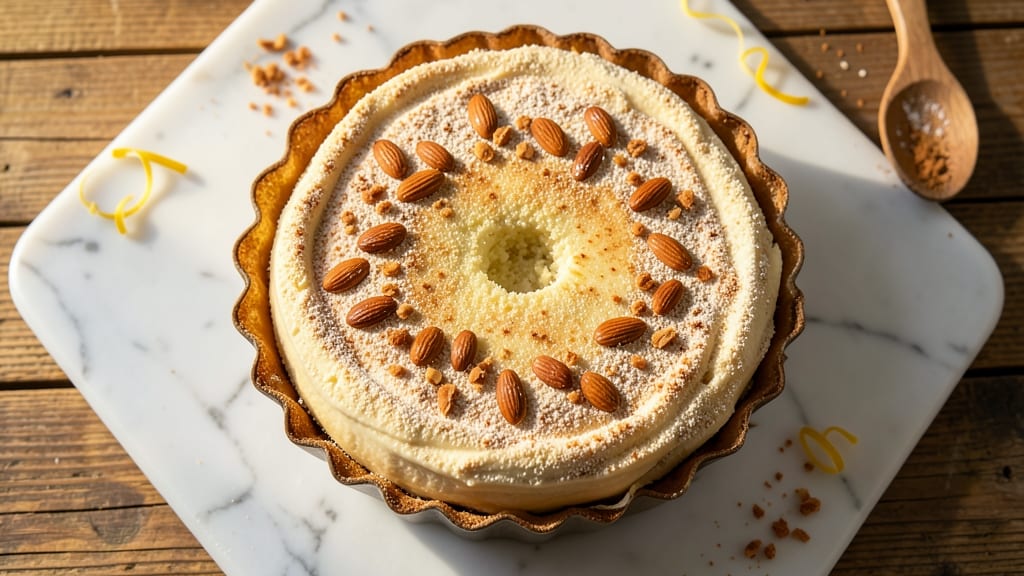
This almondy cake recipe delivers moist, nutty perfection with every slice—thanks to a perfect blend of almond flour, extract, and vanilla. The secret lies in the tender crumb and subtle almond aroma that lingers with every bite, making it ideal for special occasions or a cozy dessert treat.
I’ve perfected this recipe to ensure it stays rich yet light, with a delicate crunch from toasted almonds on top.
What sets this cake apart is the vanilla infusion, which harmonizes beautifully with the almond flavor, creating a balanced sweetness that’s neither too heavy nor overly floral. The recipe uses a combination of almond flour and regular flour for structure, while eggs and butter keep it moist and velvety.
Baking at the right temperature ensures a golden crust without drying out the interior.
Once baked, the cake emerges with a golden-brown top and tender layers that slice cleanly. A simple glaze or dusting of powdered sugar adds an elegant finish, while toasted almond slices on top provide a satisfying crunch.
Whether served at a gathering or enjoyed solo, this cake is designed to impress with its nutty depth and comforting texture.
For those with dietary preferences, substitutions like almond milk or vegan butter can be used without sacrificing flavor. The recipe is flexible enough to accommodate adjustments while keeping the signature almondy essence intact. Ready to bake a cake that’s as delicious as it is impressive?
Ingredients for almondy cake
These twelve ingredients blend almond richness with vanilla harmony for a moist, golden cake.
| Ingredient | Amount | Notes |
|---|---|---|
| Almond Flour 🌰 | 2 cups | Fine texture preferred |
| All-Purpose Flour 🌾 | 1 cup | For structure balance |
| Unsalted Butter 🧈 | 1 cup | Room temperature preferred |
| Granulated Sugar 🍚 | 1 ½ cups | Superfine for smooth texture |
| Almond Extract 🌿 | 1 tbsp | Pure almond extract |
| Pure Vanilla Extract 🍯 | 1 tbsp | High-quality preferred |
| Large Eggs 🥚 | 4 whole | Room temperature |
| Baking Powder 🧂 | 1 ½ tsp | Aluminum-free preferred |
| Salt 🧂 | ½ tsp | Fine sea salt |
| Whole Milk 🥛 | ½ cup | Room temperature |
| Sliced Almonds 🌰 | ½ cup | Toasted for crunch |
| Powdered Sugar 🍚 | ¼ cup | For glaze finish |
The almond flour is the heart of this cake—Bob’s Red Mill or Anthony’s Goods brands deliver the finest texture. Lightly toast your sliced almonds before baking for deeper flavor (5 minutes at 350°F, stirring often). For the extract, McCormick or Goya are reliable choices, but any pure almond extract works. The butter should be room temperature—soft but not melted—to ensure even mixing. If you're using a stand mixer, the creaming process becomes effortless with properly softened butter.
No almond flour? Substitute with 1.5 cups ground almonds (blend in a food processor), but expect a slightly denser texture. Running short on vanilla extract? Vanilla bean paste at half the amount works beautifully, though the seeds will add little flecks of color. For dairy-free needs, unsweetened almond milk replaces whole milk, though the cake may be slightly less tender. The baking powder is crucial—double-check freshness by testing in hot water (should bubble vigorously). Pre-toasted almonds can be swapped for pecans or walnuts if preferred, though the almond flavor remains signature.
Store the cake in an airtight container at room temperature for up to 3 days, or refrigerate for 5 days if you prefer longer freshness. For best texture, slice and serve at room temperature. The glaze keeps for 1 week in the fridge, so make extra for quick garnishes. If making ahead, bake and cool completely, then wrap tightly in plastic wrap. The cake actually improves overnight as the flavors meld—perfect for special occasions where prep ahead is ideal.
Why You'll Love This Recipe
- No-Fuss Mixing: I swear by this recipe because it’s just three bowls—no sifting, no weird techniques. Toss the dry ingredients together, cream the butter and sugar, fold it all in. Even my toddler could help (and she did—mostly with the almond extract).
- Nutty Magic: That almond extract isn’t just there—it’s the star. One whiff of the batter baking and you’re hooked. The flour gives it a tender crumb, but the extract? It’s like a warm hug in every bite, especially with a cup of tea.
- Weeknight Hero: I’ve used this for breakfast (sliced thin with jam), dessert (drizzled with honey), and even packed it for lunch. The butter keeps it rich enough to satisfy, but the almond flour keeps the portions light—no one skips seconds.
- Budget-Friendly Luxury: Almond flour can be pricey, but this recipe stretches it with all-purpose flour. Plus, the butter and sugar are pantry staples. Make it once, and you’ll want to bake it again—without breaking the bank. (Yes, even on a Tuesday night.)
Step-by-step instructions for almondy cake recipe
Here's how to craft a tender, nut-infused cake with perfect moisture and rich vanilla-almond flavor.
Prepare the Base Ingredients
Begin by preheating your oven to 350°F and greasing an 8-inch round cake pan or line it with parchment paper. I like to use a light coating of butter followed by a dusting of flour to ensure easy release. Let the pan sit while you prepare the batter.
In a medium bowl, whisk together the 2 cups almond flour and 1 cup all-purpose flour. Sift the mixture to remove any lumps, which helps create a lighter texture. Set this aside for now—it's the foundation of our cake's structure. The almond flour gives that signature nutty flavor while the all-purpose flour provides the necessary structure to hold the cake together.
Cream Butter and Sugar
In a large mixing bowl, combine the 1 cup unsalted butter and 1.5 cups granulated sugar. Using an electric mixer, beat on medium speed for 3-4 minutes until the mixture is light and fluffy, nearly doubling in volume. You're looking for a pale, airy consistency that resembles whipped cream. This step is crucial—it incorporates air into the batter, which helps create that tender crumb we're after.
I always let my butter sit at room temperature for about 30 minutes before starting. Cold butter won't cream properly, and you'll end up with a dense cake. If your mixture looks grainy or doesn't lighten in color, keep beating for another 1-2 minutes—patience here pays off in the final texture.
Add Eggs and Extracts
Add the 4 whole large eggs, one at a time, mixing well after each addition. Once all eggs are incorporated, stir in the 1 tbsp almond extract and 1 tbsp pure vanilla extract. Mix on low speed just until combined—overmixing at this stage can develop gluten and make the cake tough. The extracts infuse the batter with their signature flavors, creating that perfect balance of sweetness and nutty aroma.
I like to use room-temperature eggs as well. They blend more smoothly into the butter mixture, creating a more uniform batter. If your eggs are cold, they might not incorporate as well, leading to streaks in the final cake. The mixture should be smooth and slightly thick—almost like a thick custard at this point.
Combine Dry Ingredients and Fold Gently
Gradually add the flour mixture to the wet ingredients, mixing on low speed just until combined. Be careful not to overmix—the batter should have a few small lumps remaining. Add the 1.5 tsp baking powder and 0.5 tsp salt at this stage, mixing just until evenly distributed. The baking powder will help the cake rise properly, while the salt balances the sweetness.
Finally, stir in the 0.5 cup whole milk using a spatula. This adds moisture and helps create that tender crumb. The batter should be thick but pourable. If it's too thick, add an additional 1-2 tablespoons of milk to reach the right consistency. Fold in the 0.5 cup sliced almonds at the end—they'll add texture and crunch to each bite.
Bake to Golden Perfection
Pour the batter into your prepared cake pan and smooth the top with a spatula. Bake in the preheated oven for 35-40 minutes, or until a toothpick inserted into the center comes out clean. The cake should be golden brown on top and slightly pulled away from the edges of the pan.
I like to check for doneness at the 30-minute mark—every oven is different, and you don't want to overbake. The cake should spring back slightly when gently pressed in the center. Let it cool in the pan for 10 minutes before transferring to a wire rack to cool completely. This resting period helps the cake set properly and prevents it from falling apart when you try to remove it.
Glaze and Serve
Once the cake is completely cool, prepare the glaze by whisking together the 0.25 cup powdered sugar with 1-2 tablespoons of milk until smooth. You want a consistency that's thick enough to coat the back of a spoon but still pourable. Drizzle or spread this glaze evenly over the top of the cooled cake.
The glaze adds a beautiful finish and enhances the cake's natural sweetness. Serve slices at room temperature for the best texture. Each bite should be moist, tender, and infused with that perfect balance of almond and vanilla flavors. Store any leftovers in an airtight container at room temperature for up to 3 days, or refrigerate for up to 1 week if you prefer a firmer texture.
Pro Tips For Making Almondy Cake
- Mix Dry Ingredients First: The almond flour and all-purpose flour combo can get gummy if you add wet ingredients too fast. Whisk them together before cutting in the butter—this keeps the texture light and prevents a dense, crumbly mess.
- Use Room-Temp Butter: Cold butter creates pockets that don’t dissolve evenly, leaving streaks in your cake. Let the butter sit out for 30–45 minutes until it’s soft but not melted—this ensures a smooth, even crumb.
- Don’t Overmix the Batter: Almond flour is finicky. Once you fold in the eggs and almond extract, mix just until combined—overworking it turns the cake into a dense brick. Stop when there are a few streaks left.
- Test for Doneness Early: Almond cakes can dry out fast. Check at 30–35 minutes (depending on your oven) with a toothpick—it should come out with moist crumbs, not wet batter. If it’s browning too quickly, tent it with foil.
Troubleshooting your almondy cake
Dense Cake Texture
If your cake turns out dense instead of tender, it’s likely due to overmixing the batter or using cold ingredients. I’ve found that almond flour can absorb extra moisture, so ensure your butter and eggs are at room temperature before mixing.
Also, avoid overmixing after adding the dry ingredients—just combine until just combined. For extra moisture, add 1 extra tablespoon of milk to the batter. 💡
Cake Sticks Together
When the cake crumbles or sticks together, it usually means it didn’t bake long enough or the oven wasn’t hot enough. Check your oven’s accuracy with an oven thermometer—many run 25°F hotter or colder than set.
If the cake pulls away from the pan edges but a toothpick has moist crumbs, bake for another 5-10 minutes. Let it cool completely before slicing to prevent sticking. A parchment-lined pan also helps with easy release.
Dry or Crumbly Cake
Overbaking is the most common cause of dryness. Remove the cake from the oven as soon as a toothpick comes out clean (or with a few moist crumbs). If your cake still feels dry, try reducing the baking powder to 1 tsp next time—too much can make cakes dry.
For extra moisture, brush the warm cake with 2 tbsp simple syrup (equal parts sugar and water, heated) while still in the pan. 🌟
Uneven Baking
If the edges bake faster than the center, your oven likely has hot spots. Rotate the pan halfway through baking to ensure even heat distribution. For a more even rise, place a baking sheet on the lower rack to reflect heat upward.
If your oven has a reputation for uneven heating, consider using an oven thermometer to monitor temperature fluctuations. Preheating for 15 minutes also helps stabilize the oven environment.
Almond Flavor Too Strong
If the almond flavor overpowers the vanilla, reduce the almond extract to ½ tbsp and increase the vanilla to 1.5 tbsp for balance. Alternatively, swap ½ cup of the almond flour for all-purpose flour to mellow the nutty intensity.
For a subtler almond taste, lightly toast the sliced almonds before adding them to the batter—this intensifies their flavor but in a more controlled way. 🌰
Cake Collapses After Baking
Collapsing usually happens when the cake is overmixed or the baking powder is old. Test your baking powder by mixing 1 tsp with 3 tbsp hot water—it should bubble vigorously. If it doesn’t, replace it immediately.
Also, avoid opening the oven door during the first 20 minutes of baking, as sudden temperature drops can cause the cake to sink. For extra support, bake the cake on the middle rack where heat is most even. ✨
Nutrition facts
Frequently asked questions
Can I make this almondy cake without almond flour?
Yes! You can substitute with 1.5 cups ground almonds (blend in a food processor), though the texture will be slightly denser. For a closer match, blend 1 cup almond flour with ½ cup all-purpose flour to maintain moisture. The nutty flavor will still shine, but the crumb may be firmer.
How do I store leftovers to keep them fresh?
Store the cake in an airtight container at room temperature for up to 3 days. For longer storage, refrigerate for 5-7 days—bring slices to room temperature before serving. The glaze stays fresh for 1 week in the fridge, so make extra for quick garnishes!
Why does my cake taste more vanilla than almond?
This happens when the almond extract isn’t strong enough or the almond flour isn’t fresh. Boost the almond flavor by adding ½ tsp extra almond extract or toasting the sliced almonds before baking. For a balanced taste, reduce vanilla to ½ tbsp while keeping almond extract at 1 tbsp.
Can I use this recipe for a layer cake?
Bake the batter in three 6-inch pans instead of one 8-inch pan, reducing baking time to 25-30 minutes. For layers, use a vanilla buttercream or almond-infused cream cheese frosting. Chill between layers for 30 minutes to set properly.
What’s the best way to serve this cake?
Serve slices at room temperature with a dusting of powdered sugar or a drizzle of warmed almond syrup (melt 2 tbsp butter + ¼ cup sugar + 2 tbsp almond milk). Pair with a cup of chai tea or espresso to complement the nutty flavors. For a festive touch, garnish with toasted almonds and edible flowers.