
Desserts
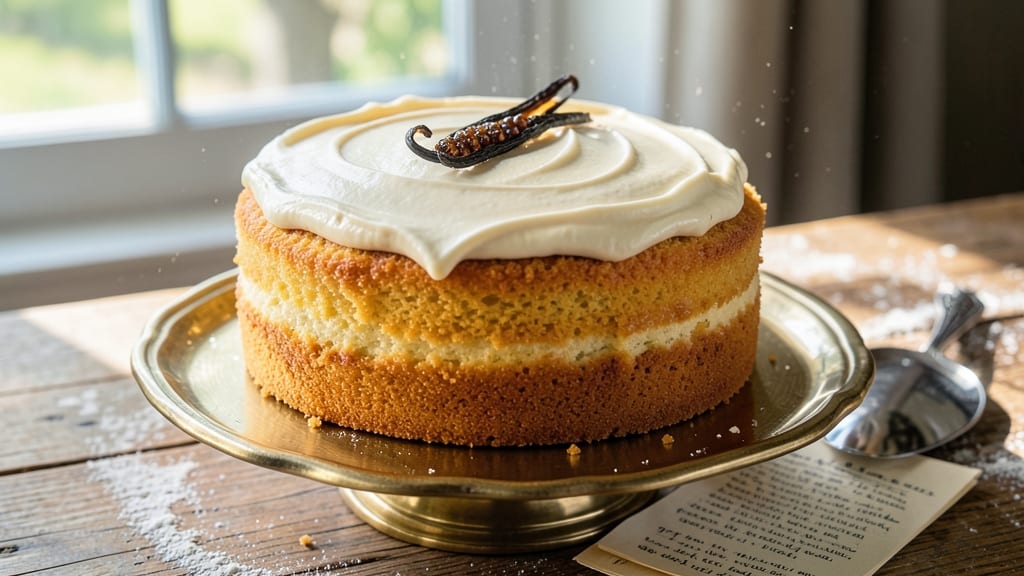
Alton Brown’s yellow cake recipe delivers moist, tender layers that stand up to rich frosting without crumbling. The secret lies in precise measurements and a creaming method that incorporates air for lightness—no heavy-handed mixing here.
I’ve baked this version countless times, and it never disappoints, whether you’re feeding a crowd or treating yourself to a classic slice.
This recipe relies on butter, not oil, for unmatched flavor and texture, paired with vanilla bean for depth instead of imitation extracts. The cake bakes in a single layer, making it easier to frost evenly, but you can stack two for a towering dessert.
The frosting—a silky vanilla bean buttercream—isn’t just sweet; it’s rich, velvety, and perfectly balanced to complement the cake’s subtle sweetness.
What sets this apart is the foolproof technique: no overmixing, no guessing. The batter comes together in stages, ensuring maximum moisture retention and a fine crumb.
By the time it emerges from the oven, you’ll have a cake that’s golden, tender, and irresistibly fluffy—the kind that disappears faster than you can frost it.
Serve it at birthdays, potlucks, or as your go-to dessert for special occasions. The frosting pairs beautifully with fresh berries or a sprinkle of toasted nuts for added texture. Let’s get baking—this recipe is your ticket to showstopping results every time.
Ingredients for alton brown yellow cake
Butter, sugar, and vanilla bean—these are the stars of Alton Brown’s legendary yellow cake.
| Ingredient | Amount | Notes |
|---|---|---|
| Unsalted Butter 🧈 | 1 cup | Cold, cubed for creaming |
| Granulated Sugar 🍚 | 2 cups | White or light brown preferred |
| Vanilla Bean Paste 🌿 | 2 tbsp | High-quality for authentic flavor |
| Large Eggs 🥚 | 4 whole | Room temperature for even mixing |
| All-Purpose Flour 🌾 | 2 ½ cups | Sifted, spooned lightly |
| Baking Powder 🍞 | 2 tsp | Diamond Crystal preferred |
| Diamond Crystal Kosher Salt 🧂 | ½ tsp | Fine grain for even distribution |
| Whole Milk 🥛 | 1 cup | Room temperature for smooth batter |
| Yellow Cake Extract 🍋 | 1 tsp | Optional for extra flavor |
| Vegetable Oil 🫒 | ¼ cup | For moisture retention |
| Vanilla Bean Buttercream Frosting 🧁 | 3 cups | Homemade recipe provided |
The butter is non-negotiable here—unsalted, cold cubes create air pockets for that signature fluffiness. Plugrá or Land O’Lakes are reliable brands, but any high-fat unsalted works. For the vanilla, Madagascar beans from Trader Joe’s or Williams Sonoma deliver that rich, floral depth. The flour? King Arthur or Gold Medal are my go-tos—they’re sifted for you, saving time. Pro tip: measure flour by spooning it into cups, then leveling—don’t pack it down. The baking powder? Diamond Crystal is twice as potent as other brands, so use exactly what’s called for.
No vanilla bean paste? Pure vanilla extract doubled works in a pinch, but you’ll miss that complex aroma. Short on butter? Vegetable oil at 1:1 ratio keeps moisture, though texture won’t be identical. The milk can be swapped for evaporated milk or buttermilk for tang. For the frosting, if you’re short on time, store-bought vanilla buttercream (like Wilton) can be used, but homemade is worth the effort—it’s where the magic happens. The yellow cake extract is optional but adds that signature depth; if you skip it, boost vanilla to 3 tbsp.
This batter keeps for 2 days in the fridge, covered tightly. The frosting? 3 days max—it’s best fresh. For make-ahead baking, assemble the cake (unfrosted) 1 day ahead, then frost just before serving. The cake freezes beautifully too—wrap tightly in plastic, then foil, for up to 3 months. Just thaw overnight in the fridge before frosting. And if you’re making a crowd version? Double the recipe, but bake in two 9-inch pans—they’ll come out perfectly even.
Why You'll Love This Recipe
- No Mixing Madness: I’ll be honest—this cake requires zero fussing. Just cream butter and sugar until light, toss in eggs and vanilla, then fold in flour. No stand mixer, no overmixing, no stress. My lazy Sunday mornings thank me every time.
- Vanilla Bomb: That vanilla bean paste? It’s the star. One little squirt turns a basic yellow cake into something rich and aromatic—like a hug in dessert form. (Yes, even my vanilla-averse brother asks for seconds.)
- Budget Baking: Butter, sugar, eggs, flour—these are pantry staples that won’t break the bank. Plus, the recipe scales effortlessly, so whether I’m feeding two or ten, I’m not scrambling for extra ingredients. Smart, simple, and satisfying.
Step-by-step instructions for Alton Brown's signature yellow cake
Here's how to achieve that legendary moist texture and perfect rise every time.
Cream Butter, Sugar, and Vanilla for Maximum Moisture
In a stand mixer fitted with the paddle attachment, beat the 1 cup unsalted butter (cold, cubed) with the 2 cups granulated sugar on medium speed for 3-4 minutes. You're looking for a pale, fluffy mixture that nearly doubles in volume—this incorporates air that creates tender layers. Scrape down the sides of the bowl with a rubber spatula to ensure even mixing.
Add the 2 tablespoons vanilla bean paste and mix for another 30 seconds until fully combined. The vanilla bean paste adds depth of flavor while preventing the cake from tasting overly sweet. I like to press the vanilla directly into the butter mixture to maximize flavor infusion. Here's the thing—don't skip this creaming step. Properly creamed butter and sugar create the air pockets that make this cake famously moist.
Incorporate Eggs and Dry Ingredients for Light Texture
Add the 4 whole large eggs (room temperature) one at a time, mixing on low speed for 30 seconds after each addition. This gradual incorporation prevents the eggs from curdling. Then add the 1 teaspoon yellow cake extract and mix for 10 seconds—this subtle addition enhances the vanilla notes without overpowering.
In a separate bowl, whisk together the 2.5 cups all-purpose flour, 2 teaspoons baking powder, and 0.5 teaspoon diamond crystal kosher salt. I always sift the flour first to prevent lumps and ensure even distribution. With the mixer on low speed, gradually add the dry ingredients to the wet mixture, mixing just until combined—you should still see some flour streaks. Overmixing develops gluten, which can make the cake tough. Stop mixing as soon as the batter comes together.
Add Milk and Oil for Perfect Texture Balance
Pour in the 1 cup whole milk and 0.25 cup vegetable oil while mixing on low speed until just combined. The milk adds moisture while the oil helps create a tender crumb. The batter should be smooth but slightly thick—like a thick pancake batter. This is where the magic happens for that signature moist texture. If the batter looks too thick, add 1 tablespoon of milk at a time until it reaches the perfect consistency.
Real talk: Don't worry if the batter looks too thin or too thick at this point. The cake will still come out perfectly moist as long as you've properly creamed the butter and sugar. The key is in the creaming—everything else is just bringing it all together.
Bake to Golden Perfection with Even Heat
Preheat your oven to 350°F and grease two 9-inch round cake pans with butter and flour, or use parchment paper liners. Divide the batter evenly between the pans and smooth the tops with a spatula. Bake for 25-30 minutes until a toothpick inserted into the center comes out clean and the tops are golden brown. I recommend checking at the 25-minute mark—your oven might run hot or cold, so start checking early.
Don't open the oven during baking—this causes the cakes to sink. The cakes should spring back slightly when gently pressed in the center. Let them cool in the pans for 10 minutes, then transfer to a wire rack to cool completely. This gradual cooling prevents cracking and helps set the structure for smooth frosting later.
Frost with Vanilla Bean Buttercream for Ultimate Decadence
Once completely cooled, level the tops of the cakes if needed and place one layer on a cake stand or plate. Spread 1.5 cups of the vanilla bean buttercream frosting evenly over the top, then add the second layer. Frost the entire cake with the remaining 1.5 cups frosting, creating smooth sides and swirling the excess frosting on top for a professional finish. The buttercream should be at room temperature for easy spreading.
Here's where it gets fun—if you want to take it to the next level, dust the cake with powdered sugar or add fresh berries between the layers. The frosting should create a beautiful, glossy finish that complements the cake's tender crumb. Serve immediately or refrigerate for up to 4 hours before serving for the perfect balance of texture and flavor.
Pro Tips For Making Alton Brown Yellow Cake
- Melt Butter Slowly: I learned this the hard way—dumping cold butter into hot sugar creates butter lumps that never fully dissolve. Instead, place the butter in a microwave-safe bowl and heat it in 20-second bursts until just melted (about 45 seconds total). The sugar will incorporate like a dream, and your cake won’t turn out greasy.
- Whisk Eggs Until Ribbon Stage: This isn’t the prettiest method, but it’s the tastiest. After adding the eggs to the butter-sugar mix, whisk them for a solid 30 seconds until the batter looks thick and pale with a clear ribbon trail when the whisk is lifted. Overmixing here makes the cake dense; undermixing leaves it dry. (Yes, even if you’re impatient like me.)
- Sift Flour Twice: I skip this when I’m lazy, but the cake is noticeably better when I don’t. Alton’s recipe relies on a light, airy crumb, and sifting the flour before folding it in removes those stubborn little clumps that weigh down the batter. Do it once, then give the bowl a quick shake—this catches any stray bits you missed.
- Test Doneness with a Thermometer: That toothpick trick is unreliable for this cake. Instead, pull it out when the internal temp hits 205–210°F—the edges will look set, but the center stays just slightly springy. Overbaking dries it out; underbaking leaves it gummy. (Your future self will thank you for not guessing.)
Regional styles of this dish
Southern Comfort Style
In the South, yellow cake often gets a richer twist with additions like 1 cup sour cream or ½ cup buttermilk to the batter, creating an ultra-moist texture. I like to add ½ teaspoon cinnamon and ¼ teaspoon nutmeg to the dry ingredients for warmth.
A classic Southern touch is topping the cake with peanut butter glaze instead of buttercream—just mix 1 cup powdered sugar with 2 tablespoons peanut butter and 2 tablespoons milk for a drizzle that pairs perfectly with the vanilla frosting. 🌶️
Midwest Classic
The Midwest version often features a lemon zest twist—add 1 tablespoon lemon zest to the batter for a bright, citrusy note that cuts through the richness. I’ve seen this style served with a cream cheese frosting instead of buttercream, which adds a tangy contrast.
For a true Midwest touch, bake the cake in a bundt pan and dust with powdered sugar—this creates a stunning presentation perfect for celebrations. The bundt shape also makes it easier to serve individual slices.
New England Tradition
Up north, yellow cake often gets a maple syrup infusion—replace ¼ cup of the milk with ¼ cup pure maple syrup for a subtle woodsy flavor. Pair it with a maple buttercream frosting by adding 1 tablespoon maple syrup to the buttercream recipe.
New England bakers also love topping the cake with candied walnuts or pecans for crunch. This version is a favorite for fall gatherings and Thanksgiving desserts. 🍁
Modern Twist
For a contemporary take, try a matcha-infused yellow cake by replacing 1 tablespoon of flour with 1 teaspoon culinary-grade matcha powder. The earthy notes balance the sweetness beautifully. Frost with a white chocolate buttercream for a striking contrast.
Another modern favorite is a black sesame swirl—add 1 tablespoon black sesame paste to the batter and swirl it in before baking for a visually stunning and nutty depth. This version is perfect for brunch or dessert menus at trendy cafes.
Texas-Style Funfetti
Texans love their funfetti cakes, and this yellow cake is no exception. Fold in ½ cup rainbow sprinkles into the batter before baking for a playful, colorful twist. For extra flair, use edible glitter or colored sugar mixed into the frosting.
This version is a hit at birthday parties and kid-friendly events. Pro tip: Use Wilton sprinkles for consistent color distribution and avoid overmixing the batter to keep the sprinkles evenly distributed. 🎉
Nutrition facts
Frequently asked questions
Why does Alton Brown's yellow cake turn out so moist?
The secret lies in the creaming method—beating cold butter and sugar for 3-4 minutes incorporates air, creating light, tender layers. The vegetable oil and whole milk also boost moisture retention, while avoiding overmixing keeps the crumb fine and airy.
Can I substitute vanilla extract for vanilla bean paste?
Yes, but the flavor won't be identical. Use double the amount (4 tbsp) of pure vanilla extract, but you'll miss the complex, floral notes of real vanilla bean. For best results, invest in a high-quality vanilla bean paste or scrape seeds from a pod yourself.
How do I prevent my cake from cracking?
Let the cake cool in the pan for 10 minutes before transferring to a wire rack, and avoid opening the oven during baking. Overmixing the batter or underbaking can also cause cracks. If cracks appear, simply frost over them—they won't affect the flavor!
What's the best way to store leftover cake?
Wrap tightly in plastic wrap, then place in an airtight container. Store at room temperature for 2 days or refrigerate for up to 5 days. For longer storage, freeze the unfrosted cake layers for 3 months. Thaw overnight in the fridge before frosting.
Can I make this cake in a bundt pan instead of round pans?
Reduce baking time to 20-25 minutes and check for doneness early. The batter quantity is designed for two 9-inch rounds, so you may need to adjust if using a different pan size. A bundt pan creates a beautiful presentation perfect for special occasions!