
Desserts
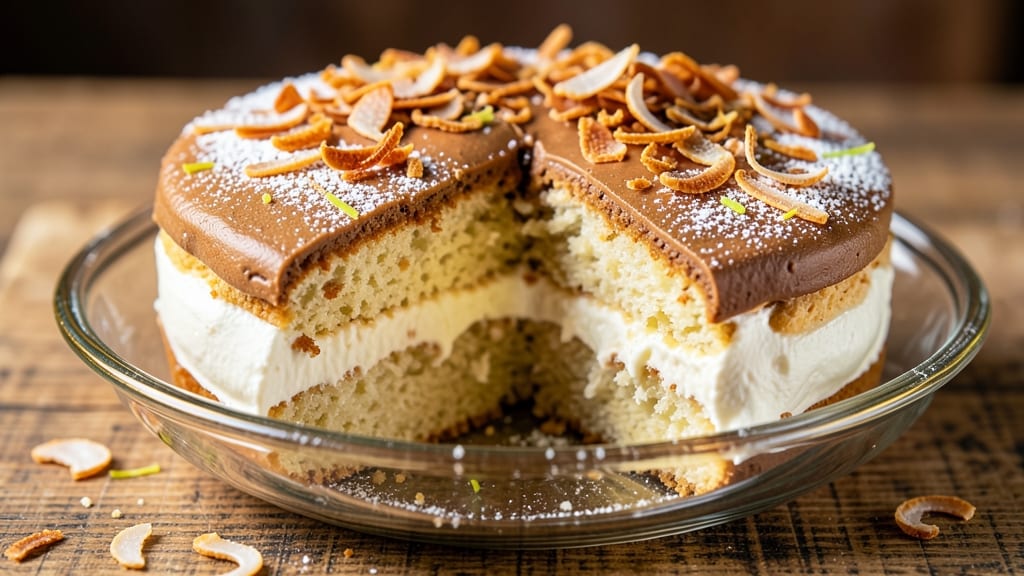
This amazing coconut cake recipe delivers layers of tropical flavor with a moist center and irresistible toasted coconut crunch. 🌴 The secret? A mix of sour cream and yogurt keeps it tender while shredded coconut on top transforms into golden, crispy perfection when baked.
I've perfected this over years of baking—no dry crumbs or soggy middles here.
What makes this recipe truly special is the balance: rich, moist cake layers with a crunchy coconut crown that adds texture and flavor. The cake bakes at 350°F for about 40 minutes, creating that perfect golden-brown finish while keeping the inside soft and fluffy.
Trust me, the aroma alone will have everyone gathering in the kitchen.
Topped with a simple coconut cream frosting or classic buttercream, this cake is foolproof for birthdays, holidays, or just because. The toasted coconut adds a sweet, nutty crunch that makes every bite unforgettable. Whether you're a baking beginner or a seasoned pro, this recipe delivers restaurant-quality results with minimal fuss.
Pro tip: Toast your coconut separately before adding it to the batter for extra crunch. Serve with fresh berries or whipped cream for the ultimate tropical dessert experience. Let's bake this masterpiece!
Ingredients for amazing coconut cake
Here's what you need to bake this tropical masterpiece with perfect moist layers and crispy coconut crown.
| Ingredient | Amount | Notes |
|---|---|---|
| All-Purpose Flour 🌾 | 2 ½ cups | Sifted for light texture |
| Granulated Sugar 🍚 | 1 ½ cups | White or light brown |
| Unsalted Butter 🧈 | 1 cup | Room temperature, full-fat |
| Large Eggs 🥚 | 4 whole | Room temperature for blending |
| Plain Yogurt 🥛 | ¾ cup | Full-fat preferred |
| Sour Cream 🥛 | ½ cup | Full-fat for moisture |
| Vanilla Extract 🌿 | 2 tsp | Pure extract preferred |
| Baking Soda 🧂 | 1 tsp | Not baking powder |
| Salt 🧂 | ½ tsp | Fine sea salt |
| Shredded Coconut 🥥 | 2 cups | Sweetened, unsweetened works too |
| Coconut Milk 🥛 | ½ cup | Canned, full-fat preferred |
| Powdered Sugar 🍚 | 2 cups | For coconut cream frosting |
| Heavy Whipping Cream 🥛 | 1 cup | Chilled for frosting |
The shredded coconut is your secret weapon—unsweetened from Trader Joe's toasts up best, but sweetened works too. Toast it separately in a dry pan until golden (about 5 minutes), then sprinkle half over the batter and half on top for that signature crunch. Costco sells bulk bags if you're making multiple cakes. For the butter, I always use Land O'Lakes unsalted—it's reliable and melts smoothly. Room temperature is key: if it's cold, microwave 20 seconds to soften. The yogurt and sour cream? Full-fat makes all the difference—Greek-style yogurt adds extra creaminess.
No shredded coconut? Toasted coconut flakes work too—just measure by weight (2 cups = 8 oz). Out of vanilla? Almond extract at half the amount gives a similar depth. For the frosting, if you're avoiding dairy, coconut cream from a can whipped with powdered sugar does the trick. The cake itself is pretty flexible—substitute almond flour for 1/4 cup flour if you're nut-conscious. And if you're in a pinch, Greek yogurt replaces sour cream in a 1:1 ratio, though the texture will be slightly denser.
Store the cake in an airtight container at room temperature for 3 days or in the fridge for 5 days. The frosting? Keep it chilled until ready to use—it'll firm up nicely. For extra-long storage, freeze the unfrosted cake for 3 months. Just thaw at room temperature before frosting. Pro move: Toast extra coconut for garnish right before serving—the aroma alone makes it feel special. And if you bake ahead, assemble the cake the day before—flavors meld beautifully overnight.
Why You'll Love This Recipe
- No Mixer Needed: I swear by this trick—folding the yogurt into the dry ingredients cuts the butter into flour without standing there with a wooden spoon. The eggs bind it so well, you’ll get that tender crumb without overworking it.
- Tropical Magic: That first bite? Pure coconut euphoria. The yogurt keeps it moist while the sugar caramelizes just enough to give it a subtle buttery depth—like a vacation in your mouth, but with the simplicity of pantry staples.
- Birthday or Breakfast: Honestly, I’ve served this at celebrations and packed slices for lunch. The frosting (if you add it) feels special, but even plain, it’s the kind of cake that disappears fast—whether it’s a 30th or a 3 PM sugar craving.
- Pantry Goldmine: Between us, this recipe uses ingredients you already own. No specialty flours, no obscure extracts—just flour, sugar, butter, and eggs. And leftovers? They stay moist for days, so you’re not scrambling to bake again. My secret weapon for lazy Sundays.
Step-by-step instructions for tropical coconut cake
Here's how to create a cake that's wonderfully moist inside and perfectly toasted on top.
👨🍳 Step 1: Prepare the Cake Batter
Preheat your oven to 350°F and grease two 9-inch round cake pans with butter or line them with parchment paper. I like to use a mix of butter and flour to create a good barrier for easy release later. In a large mixing bowl, combine the 2.5 cups all-purpose flour, 1.5 cups granulated sugar, 1 tsp baking soda, and 0.5 tsp salt. Sift this mixture together to remove any lumps and create a light, airy base for our cake.
In a separate bowl, cream together the 1 cup unsalted butter (make sure it's room temperature) and the 4 whole eggs until light and fluffy—about 3-4 minutes with an electric mixer. This step is crucial for a tender cake. Add the 0.75 cup plain yogurt, 0.5 cup sour cream, and 2 tsp vanilla extract, mixing until everything is well combined and smooth.
🥘 Step 2: Combine Wet and Dry Ingredients
Gradually add the dry ingredients to the wet mixture, mixing on low speed just until combined. I like to use a spatula to fold in the 2 cups shredded coconut at the end—this keeps the coconut pieces more intact for that beautiful toasted crunch. Be careful not to overmix; just combine until you see a few flour streaks remaining. The batter should be thick but pourable.
Divide the batter evenly between the prepared cake pans. For an even bake, gently tap the pans on the counter to remove any air bubbles. Sprinkle the top of each cake with a little extra shredded coconut for that signature toasted crunch. Bake for 30-35 minutes or until a toothpick inserted in the center comes out clean. The edges should be golden brown while the center remains moist.
🔥 Step 3: Make the Coconut Cream Frosting
While the cakes are cooling, prepare the frosting. In a medium bowl, whip together the 1 cup heavy whipping cream (chilled) until soft peaks form. Gradually add the 2 cups powdered sugar and 0.5 cup coconut milk, continuing to whip until the mixture is smooth and holds stiff peaks. This should take about 2-3 minutes with an electric mixer. The frosting should be thick enough to hold its shape but still spreadable.
For extra flavor, you can fold in a tablespoon or two of the shredded coconut at this stage. This adds a lovely texture contrast to the smooth frosting. Let the frosting sit at room temperature for 10 minutes before using—this helps it reach the perfect consistency for spreading.
🍽️ Step 4: Assemble and Decorate
Once the cakes have cooled completely, place one layer on a serving plate. Spread a generous layer of the coconut cream frosting on top, then place the second cake layer on the frosted cake. Cover the entire cake with the remaining frosting, spreading it evenly to the edges. I like to use a spatula to create a smooth finish, then swirl the frosting lightly with a fork for a decorative touch.
For that perfect toasted crunch, sprinkle the remaining shredded coconut evenly over the top of the cake. Place the cake in the refrigerator for 30 minutes to allow the frosting to set slightly before serving. This step ensures clean slices and helps the coconut adhere beautifully to the top. Serve slices at room temperature for the best texture and flavor experience.
Pro Tips For Making Amazing Coconut Cake
- Let the batter rest: After mixing everything—especially with yogurt and eggs—give it 20-30 minutes in the fridge. I used to skip this and ended up with a dense, rubbery cake. The rest lets the flour absorb moisture and the flavors meld, so it bakes up light and tender.
- Use room-temperature butter: Cold butter creates pockets of air, but soft butter blends smoother with sugar. Take it out of the fridge 30 minutes before creaming—no need to microwave it. I learned this the hard way when my cake turned out greasy and uneven.
- Check doneness with a toothpick: The cake might look done at 30 minutes, but pull it when a toothpick comes out with moist crumbs (not wet batter). Overbaking dries out the coconut flavor. I’ve ruined cakes by waiting too long—trust the toothpick, not the timer.
- Swap yogurt for buttermilk: If you don’t have plain yogurt, mix ¾ cup milk + 1 tbsp lemon juice or vinegar, let it sit 5 minutes. Buttermilk adds tang and moisture without altering the cake’s structure. I was skeptical until I tried it—now it’s my go-to for extra richness.
Troubleshooting this dish
Dry Batter Too Dense
If your batter feels too thick or heavy, it’s likely from overmixing or using cold ingredients. I’ve found that gently folding the shredded coconut at the end (instead of mixing it in) keeps the texture light.
Also, ensure your butter and eggs are at room temperature—cold ingredients make the batter denser. If the batter still seems too thick, add 1-2 tablespoons of coconut milk to loosen it just enough for smooth pouring. 🥥
Coconut Not Toasting
The key to perfectly toasted coconut is baking it separately before adding it to the batter or topping. Spread 1 cup of shredded coconut on a baking sheet and toast in a 350°F oven for 5-7 minutes, stirring halfway, until golden brown.
If you skip this step, the coconut will stay raw and soggy. For extra crunch, toast another ½ cup and sprinkle on top of the baked cake before serving. 🔥
Cake Sticking to Pans
Grease your pans thoroughly with butter and dust with flour, but don’t overdo it—too much flour can make the cake dry. I like to use parchment paper circles at the bottom for extra insurance.
If the cake still sticks, run a thin knife around the edges while still warm, then place the pan upside down on a cooling rack for 5 minutes before removing. This helps release it cleanly. ⏱️
Frosting Too Runny
If your coconut cream frosting isn’t holding its shape, it’s likely too warm or the cream wasn’t chilled enough. Whip the heavy whipping cream until stiff peaks form, then gradually add the powdered sugar and coconut milk while mixing.
For extra stability, chill the bowl and beaters in the freezer for 10 minutes before whipping. If it’s still too thin, add 1 tablespoon of powdered sugar at a time until it thickens. 🧊
Uneven Baking
Uneven baking usually happens when the oven isn’t preheated long enough or the cakes aren’t placed on the middle rack. Always preheat your oven for at least 15 minutes before baking.
Rotate the pans halfway through baking (after 15-18 minutes) to ensure even heat distribution. If one side browns faster, tent the cake with foil to prevent over-browning. 🌡️
Cake Too Dry
A dry cake often means overbaking or using too much flour. Check for doneness at 30 minutes—the toothpick test is your best friend. If the cake pulls away from the pan but feels dry, it’s done.
To prevent dryness, don’t overmix the batter, and make sure your sour cream and yogurt are full-fat. For extra moisture, brush the cooled cake layers with a simple syrup (equal parts sugar and water, heated until dissolved) before frosting. 💧
Nutrition facts
Frequently asked questions
Can I make this cake without coconut milk?
Yes! You can substitute ½ cup heavy cream or ½ cup evaporated milk for the coconut milk in both the batter and frosting. For the frosting, use an extra 1 tablespoon of powdered sugar to help it hold its shape. The texture will be slightly less tropical, but still delicious.
How do I store leftover coconut cake?
Keep your cake fresh in an airtight container at room temperature for 3 days or refrigerate for 5 days. For longer storage, freeze the unfrosted cake layers (wrapped tightly) for up to 3 months. Thaw overnight in the fridge before frosting. The toasted coconut stays crispy when stored properly!
What's the best way to make this cake gluten-free?
Replace the all-purpose flour with a 1:1 gluten-free baking flour blend (like Bob's Red Mill) and add ½ teaspoon xanthan gum to improve texture. For the coconut, use certified gluten-free shredded coconut. The cake will still be moist but may have a slightly denser crumb. Always check labels on all ingredients!
Can I use this recipe for a single-layer cake?
Use the same batter but bake it in a single 9-inch round pan for 30-35 minutes. The baking time remains similar, but check for doneness at 25 minutes since single layers bake faster. Top with extra toasted coconut and your favorite frosting—perfect for small gatherings!
Why does my cake have a crumbly texture?
Overmixing or using cold ingredients usually causes crumbly cakes. Mix just until combined (a few flour streaks are fine), and ensure your butter and eggs are at room temperature. For extra moisture, add 1 tablespoon of coconut milk to the batter. Also, don't overbake—pull it when a toothpick comes out clean!