
Desserts
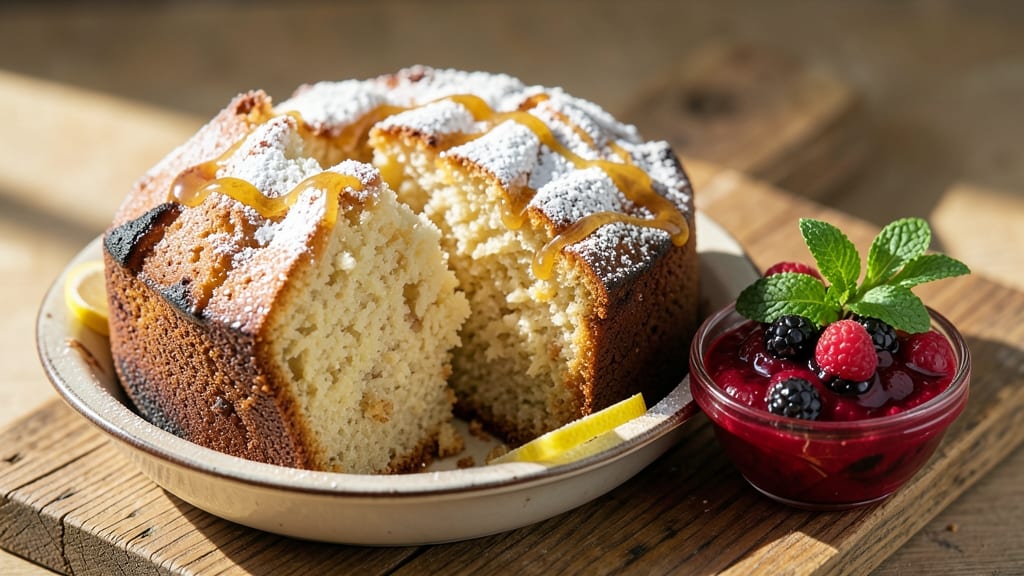
This amazing pound cake recipe delivers layers so moist and buttery they’ll make you question why you ever bought store-bought. The secret? Creaming butter and sugar until light and fluffy, then folding in eggs and dry ingredients just enough to keep the crumb tender.
I’ve baked this version for birthdays, holidays, and random cravings—it never disappoints.
What sets this apart is the vanilla depth—real extract, not imitation—and the perfect balance of sweetness. No one will guess it’s made with basic pantry staples like flour, sugar, and eggs.
The cake bakes up golden with a crackly top, and every slice stays moist for days, thanks to a simple trick: wrapping it in foil during the last 10 minutes of baking.
By the time you pull it from the oven, you’ll have a cake with ultra-moist layers, a tender crumb, and that signature buttery vanilla aroma that fills the kitchen.
The texture is light yet rich, and the flavor? Pure comfort in every bite. This isn’t just cake—it’s the kind that gets passed down at family gatherings.
Serve it plain with fresh berries, or dress it up with a dusting of powdered sugar and a drizzle of glaze. The best part? It’s foolproof—no fancy techniques, just a few simple steps that guarantee restaurant-quality results every time. Let’s get baking!
Ingredients for amazing pound cake
Nine simple ingredients for a pound cake that tastes like a bakery secret.
| Ingredient | Amount | Notes |
|---|---|---|
| Unsalted Butter 🧈 | 1 lb | Room temperature, not melted |
| Granulated Sugar 🍚 | 2 cups | White or light brown |
| Large Eggs 🥚 | 4 whole | Room temperature |
| All-Purpose Flour 🌾 | 2 ½ cups | Sifted, spooned lightly |
| Pure Vanilla Extract 🌿 | 2 tbsp | Not imitation |
| Baking Powder 🧂 | 2 tsp | Aluminum-free preferred |
| Salt 🧂 | ½ tsp | Fine sea salt |
| Whole Milk 🥛 | 1 cup | Room temperature |
| Vegetable Oil 🫒 | ½ cup | Light, like canola |
The butter is non-negotiable—use unsalted and let it sit out for an hour before creaming. Land O'Lakes or Plugrá are my go-tos, but any good-quality brand works. Room-temperature butter creams better and gives those signature fluffy layers. Sugar? White or light brown—no need for fancy specialty sugars here. The vanilla extract matters too—real extract, not imitation. I grab mine from Williams Sonoma or the bulk section at Whole Foods. Eggs should be at room temperature too (pull them out 30 minutes before baking).
No vanilla extract? Vanilla bean paste works in a pinch, or scrape seeds from a pod. Short on milk? Heavy cream or buttermilk both work, but whole milk keeps it classic. The baking powder is key—aluminum-free ensures no metallic taste. If you've got double-acting baking powder, even better. Vegetable oil is just for insurance (in case the butter gets overworked), but you could skip it if you're confident in your creaming. Flour? Sifted is crucial—no lumps in that batter.
This cake keeps beautifully—3-4 days at room temperature wrapped in foil, or 1 week in the fridge. For longer storage, freeze slices wrapped individually—they thaw in 10 minutes. I always bake an extra loaf and freeze half. The foil trick? Wrap the cake in foil for the last 10 minutes—prevents over-browning while keeping it moist. Slice with a serrated knife for clean cuts, and always let it cool completely before serving.
Why You'll Love This Recipe
- No-Fuss Mixing: I swear by the creamy butter-and-sugar swirl—just whip it together until it’s light, then fold in eggs one at a time. No food processor, no stress, just a sturdy bowl and a whisk. Honestly, the hardest part is waiting for the oven to finish.
- Vanilla Butter Bliss: That first bite? Rich, buttery layers with a whisper of vanilla that lingers like a hug. The sugar caramelizes just enough to give it a subtle depth, and the eggs keep it moist without being heavy. (Yes, even on a Tuesday night.)
- Slice It Any Way: Breakfast? Toast a slice and slather with jam. Dessert? Dust with powdered sugar. Brunch? Stack it with berries and whipped cream. It’s the blank canvas of cakes—simple enough to eat as-is or dress it up.
- Leftovers That Last: One cake feeds six, but it’ll still taste fresh three days later wrapped tight. Between us, I’ve reheated slices in the toaster for 10 seconds and called it a win. Budget-friendly? Absolutely. Reliable? Even more so.
Step-by-step instructions for ultra-moist pound cake
This method delivers tender, rich layers with perfect moisture every time.
Cream Butter and Sugar to Fluffy Perfection
In a stand mixer fitted with the paddle attachment, beat the 1 lb unsalted butter and 2 cups granulated sugar on medium speed for 5-7 minutes. You're looking for a light, pale yellow color and a ribbon-like consistency when you lift the paddle—this incorporates air that creates that signature tender crumb.
I like to scrape down the sides every minute or so to ensure everything gets evenly incorporated. The butter should be completely smooth with no graininess remaining. This step is crucial for that ultra-moist texture—don't rush it. If your mixture looks curdled at first, don't worry; it will come together as you add the eggs.
Add Eggs and Vanilla for Rich Depth
Add the 4 whole large eggs, one at a time, mixing on low speed after each addition until fully incorporated. Then add the 2 tbsp pure vanilla extract and mix for another 30 seconds on low speed. The vanilla will infuse completely during the mixing process, giving that authentic vanilla depth.
Here's where it gets fun—the mixture should be thick and pale. If it looks too thin, that's okay; the flour will bring it together. I always use room temperature eggs for this recipe—they blend more smoothly and help create a lighter texture. Don't worry if you see a few streaks of egg white; they'll disappear when you add the dry ingredients.
Alternate Dry and Wet Ingredients for Even Moisture
In a separate bowl, whisk together the 2.5 cups all-purpose flour, 2 tsp baking powder, and 0.5 tsp salt. With the mixer on low speed, add about one-third of the flour mixture and mix just until combined. Then add ½ cup of the whole milk and mix again until incorporated.
Repeat this process, alternating between the remaining flour mixture and the remaining milk in three additions each, ending with the flour. This alternating method ensures even moisture distribution throughout the batter. You want a thick, smooth batter that coats the back of a spoon—it should be like thick pudding, not runny. If it looks too thick, you can add the 0.5 cup vegetable oil now to help with moisture.
Bake in Prepared Pans for Perfect Layers
Preheat your oven to 350°F. Grease and flour three 9-inch round cake pans or line them with parchment circles. Divide the batter evenly among the pans—you should have about 1 cup batter per pan for even layers. Tap each pan gently on the counter to remove any air bubbles.
Bake for 25-30 minutes, or until a toothpick inserted in the center comes out clean. The cake should spring back slightly when pressed in the center. I like to rotate the pans halfway through baking for even browning. Don't overbake—this is where many pound cakes go wrong and become dry. The edges should be golden brown, but the top should still look slightly underbaked when you take it out.
Cool and Layer for Maximum Moisture
Let the cakes cool in their pans for 10 minutes, then transfer to a wire rack to cool completely. This gradual cooling prevents cracking. Once completely cool, you can layer them with buttercream or serve them as-is—they're delicious plain too!
The key to keeping this pound cake moist is proper storage. Wrap each layer tightly in plastic wrap and store at room temperature for up to 3 days, or refrigerate for up to 1 week. For the best texture, bring to room temperature before serving. This cake stays moist for days because of the butter-to-flour ratio and the careful baking technique—no one will believe it's homemade!
Pro Tips For Making Amazing Pound Cake
- CREAM BUTTER AND SUGAR LOW: Mix the butter and sugar until it’s pale, not just smooth—about 3-5 minutes with a stand mixer. I used to rush this, and the cake turned out dense; patience here makes all the difference.
- CHILL THE BATTER: Let the batter sit for 10-15 minutes before baking—this helps the flour absorb moisture and prevents a dry crumb. I learned this the hard way when my first batch cracked like a dried riverbed.
- WEIGH YOUR FLOUR: Scoop and level the flour in your measuring cup, then tap it gently to settle—don’t pack it down. Overpacking adds too much flour, and the cake will taste flat and dry.
- BAKE IT UNTIL COOL: Check for doneness with a toothpick, but don’t pull it out too soon—wait until it comes out clean and the cake has cooled slightly in the pan. Cutting it too early makes it gummy, and nobody wants that.
Pro cooking tips for great amazing pound cake
Butter Temperature Matters
The butter must be room temperature—no warmer, no colder. I test by pressing my finger into it: if it leaves a slight indent but holds shape, it's perfect. Cold butter won't cream properly, while warm butter can cause the batter to separate.
For best results, take the butter out of the fridge 1 hour before mixing. I swear by Land O'Lakes or Plugrá for consistent performance. 🧈
Creaming Like a Pro
Use a stand mixer with paddle attachment (not whisk) to cream the butter and sugar for 5-7 minutes until pale and fluffy. The mixture should form a ribbon when you lift the paddle. Scrape the bowl every 1-2 minutes to prevent uneven mixing.
If your butter looks curdled at first, don't panic—it will smooth out as you add eggs. This step is non-negotiable for that signature tender crumb. 🔥
Eggs at Room Temp
Room temperature eggs blend more smoothly and create a lighter texture. Take them out of the fridge 30 minutes before mixing and let them sit in a bowl. Cold eggs can cause the batter to curdle.
I always add them one at a time, mixing just until combined after each addition. This gradual incorporation prevents overmixing and keeps the cake tender. 🥚
Foil Wrap Trick
For the last 10 minutes of baking, wrap each pan tightly in heavy-duty aluminum foil. This prevents over-browning while keeping the cake moist. The foil traps steam, creating that perfect crackly top and ultra-moist interior.
Just be sure to remove it right when the timer goes off—you want that golden finish. 💫
Don't Overmix
Once all the dry ingredients are incorporated, mix just until combined—about 10-15 seconds more. Overmixing develops gluten, which makes the cake tough. The batter should be thick and smooth, coating the back of a spoon like thick pudding.
If it looks too thick, add the ½ cup vegetable oil to help with moisture. 💡
Baking Time Precision
Bake until a toothpick inserted in the center comes out clean—25-30 minutes at 350°F. The cake should spring back slightly when pressed. Overbaking is the #1 reason pound cakes turn dry.
I like to rotate the pans halfway through for even browning. The edges should be golden, but the top should still look slightly underbaked when you remove it. ⏰
Nutrition facts
Frequently asked questions
Why does this pound cake recipe use so much butter?
The 1 lb of butter creates that signature rich, moist texture pound cakes are famous for. Butter adds fat that keeps the cake tender and flavorful. The classic pound cake ratio is 1 lb butter : 1 lb sugar : 1 lb flour (plus eggs), which gives it that ultra-rich, velvety crumb.
Can I make this pound cake in a different pan shape? Yes! This recipe works perfectly in 9-inch round pans (for layers) or a 9x5-inch loaf pan (for a single cake). For a bundt cake, use a 10-cup bundt pan and reduce baking time by 5-10 minutes. Just
What if my cake turns out too dense?
Dense cake usually means overmixing or overbaking. Mix the batter just until combined after adding flour, and bake until a toothpick comes out clean (25-30 minutes). If it's still dense, try adding 1 extra tablespoon of milk next time or reduce flour by 1 tablespoon. Also, ensure your butter and eggs are room temperature.
How do I store leftovers to keep them moist?
Wrap each layer tightly in plastic wrap and store at room temperature for 3 days or refrigerate for 1 week. For longer storage, freeze slices wrapped individually—they thaw in 10 minutes. The foil wrap trick during baking also helps maintain moisture. Never store uncovered, as air dries out the cake.
Can I substitute butter with oil?
You can replace up to ½ cup of the butter with vegetable oil (like canola) for a slightly lighter texture, but the flavor and richness will change. For best results, stick with butter—it's what makes pound cake special. If you must substitute, reduce the oil by ¼ cup since it's more concentrated than butter.