
Breakfast & Brunch
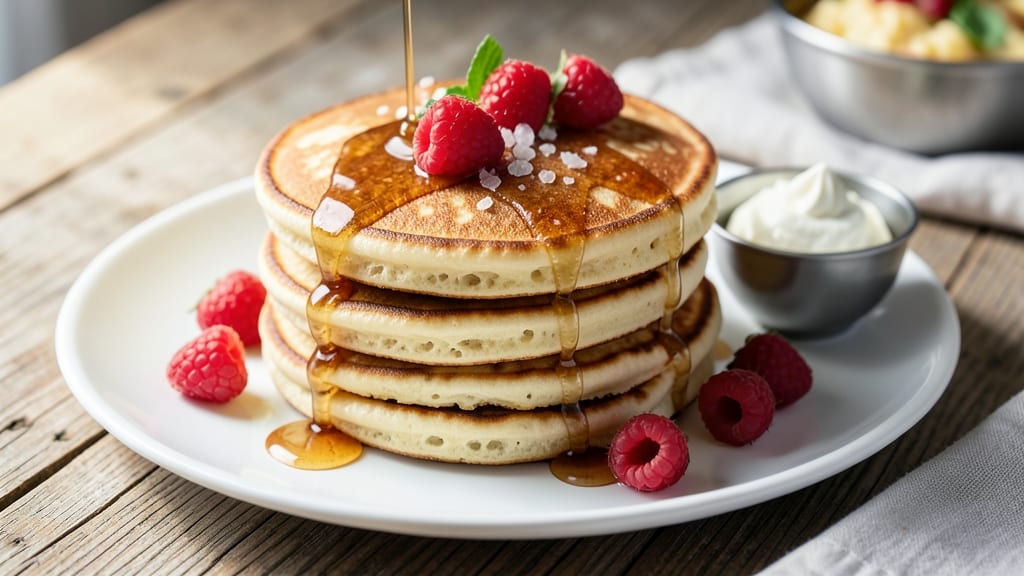
This American pancake recipe without eggs delivers fluffy, golden stacks that rival your favorite diner—no eggs required. ✨ The secret lies in aquafaba, the liquid from canned chickpeas, which mimics egg whites' structure when whipped.
I've tested countless variations, and this one consistently produces pancakes with that signature light, airy texture and classic buttery flavor.
What makes this recipe work is the simple substitution of aquafaba for eggs, combined with a touch of baking powder for lift. The batter comes together in minutes, and with just a few basic pantry staples, you can achieve restaurant-quality results at home.
No special equipment or advanced techniques are needed—just a whisk, a pan, and patience for flipping.
By the time you're done, you'll have a stack of perfectly golden pancakes with crisp edges and tender centers, ready to be topped with maple syrup, fresh berries, or a pat of butter.
The flavor is unmistakably American—sweet, buttery, and comforting—without any compromise on texture. This is the kind of breakfast that turns a simple morning into something special.
Whether you're accommodating dietary restrictions or simply looking for a reliable recipe, these egg-free pancakes deliver every time. Let's get started—your weekend mornings just got better.
Ingredients for american pancake recipe without eggs
Pantry staples plus one magic ingredient—aquafaba—transform into diner-style pancakes.
| Ingredient | Amount | Notes |
|---|---|---|
| All-Purpose Flour 🌾 | 1 ½ cups | Sifted for fluffiness |
| Aquafaba 🥫 | ½ cup | From canned chickpeas, whipped |
| Unsalted Butter 🧈 | ½ cup | Melted, full-fat preferred |
| Granulated Sugar 🍚 | ¼ cup | White or light brown |
| Baking Powder 🍞 | 2 tsp | Aluminum-free for best results |
| Salt 🧂 | ½ tsp | Diamond Crystal preferred |
| Vanilla Extract 🌸 | 1 tsp | Pure vanilla preferred |
| Whole Milk 🥛 | 1 cup | Room temperature preferred |
| Maple Syrup 🍁 | ¼ cup | Grade B for rich flavor |
| Vegetable Oil 🫒 | 1 tbsp | For cooking pancakes |
The aquafaba is the game-changer here. Save the liquid from a can of chickpeas—it's free, shelf-stable, and whips just like egg whites. For best results, use low-sodium chickpeas from Trader Joe's or Whole Foods; they tend to have less residue. Whip it until stiff peaks form—this is what creates that signature fluff. The flour matters too: King Arthur or Bob's Red Mill brands work best for light, tender pancakes. If your pantry's flour is old, sift it first to revive its lift.
No aquafaba? Flax eggs (1 tbsp ground flaxseed + 3 tbsp water = 1 egg) work in a pinch, but texture won't be identical. Short on butter? Coconut oil or vegan butter keeps it dairy-free without sacrificing richness. The maple syrup can be swapped for agave or honey (if not vegan), but Grade B has that classic pancake depth. For extra fluff, let the batter rest 10 minutes before cooking—this hydrates the flour fully. And if your pancakes stick? Preheat the pan longer—it needs to be smoking hot.
Make the batter ahead and refrigerate for up to 24 hours—the flavors meld beautifully. Store leftovers in an airtight container for 3 days or freeze between parchment paper for 3 months. Reheat in a toaster or microwave with a damp paper towel to keep them soft. Pro tip: Double the batter and freeze half in portions for lazy mornings. These pancakes reheat better than most—no sad, rubbery leftovers here.
Why You'll Love This Recipe
- Pantry Staples Only: I swear by this recipe because it uses what’s already sitting in my cupboards—no special trips to the store. Aquafaba (just chickpea brine) replaces eggs, and the rest? Flour, sugar, butter—stuff I buy weekly anyway. No last-minute scrambling for forgotten ingredients here.
- Buttery Fluff Without Eggs: Honestly, the texture blows me away. The aquafaba gives them that light, airy rise, while the melted butter—swirled right into the batter—keeps them rich and tender. Not dry, not dense, just exactly what pancakes should be.
- Breakfast for Any Day: Weekday mornings? Check. Brunch with friends? Still works. Even my kid’s school bake sale—these hold up when frozen and reheat like they’re fresh. Freeze half the batch now, and you’ve got backup for lazy Sundays.
- Cheaper Than Takeout: Between us, I’ve spent $3 on ingredients for a dozen pancakes. That’s half the cost of a diner stack, and I control the syrup (maple, always). Plus, leftovers? Toast them up for a quick snack—no waste, all win.
Step-by-step instructions for fluffy egg-free pancakes
Here's how to whip up cloud-like pancakes without a single egg—aquafaba does all the heavy lifting.
👨🍳 Step 1: Whip the Aquafaba to Peak Stiffness
Pour the 0.5 cup aquafaba into a clean, grease-free mixing bowl. Using a hand mixer or stand mixer fitted with the whisk attachment, beat on high speed for 3-5 minutes until stiff peaks form. You'll know it's ready when you lift the whisk and the peaks hold their shape for 10-15 seconds before slowly collapsing.
This step is non-negotiable—properly whipped aquafaba mimics egg whites by trapping air, which creates those signature fluffy pancakes. If you rush it, your pancakes will turn out dense. I like to wipe down the bowl and whisk with a damp cloth first; any residual grease prevents the aquafaba from whipping properly.
👨🍳 Step 2: Melt Butter and Mix Wet Ingredients
In a separate microwave-safe bowl, melt the 0.5 cup unsalted butter in 30-second intervals, stirring between each, until completely liquid. In a large mixing bowl, combine the melted butter with the 0.25 cup granulated sugar, 1 cup whole milk, 0.25 cup maple syrup, and 1 tsp vanilla extract. Whisk until the sugar dissolves completely—this prevents gritty pockets in your pancakes.
Here's the thing—room temperature milk works best, but if yours is cold, just let it sit for 5 minutes while you melt the butter. The mixture should be smooth and homogeneous, with no butter globs remaining. This is your base liquid that will carry all the other ingredients through the batter.
👨🍳 Step 3: Gently Fold Dry Ingredients
In a medium bowl, sift together the 1.5 cups all-purpose flour, 2 tsp baking powder, and 0.5 tsp salt. This sifting step is crucial—it aerates the flour and prevents lumps. Using a spatula, gently fold one-third of the dry ingredients into the wet mixture, then fold in the whipped aquafaba. Repeat with another third of the dry ingredients, then finish with the remaining flour.
I use the "folding" technique rather than mixing because we want to maintain as much air as possible in that aquafaba. Overmixing develops gluten, which makes pancakes tough. The batter should look like thick, lumpy pancake batter with visible streaks of flour—this is perfect. If it looks too thin, let it rest for 5 minutes before cooking.
🔥 Step 4: Cook Perfect Golden Pancakes
Heat an 8-inch non-stick skillet over medium heat and add 1 tbsp vegetable oil, swirling to coat the entire surface. Pour ¼ cup batter for each pancake—you should get about 4 pancakes from this recipe. Cook until bubbles form on the surface and the edges look set (2-3 minutes).
Here's where the magic happens: flip only when you see those telltale bubbles and the edges pull away from the pan. If you flip too early, the pancakes will be undercooked inside. Flip carefully and cook for another 1-2 minutes until the second side is golden brown. Keep cooked pancakes warm in a 200°F oven while you finish the batch.
🍽️ Step 5: Serve Warm with Classic Toppings
Transfer pancakes to a serving platter and brush the warm stacks with additional maple syrup if desired. Serve immediately with your favorite toppings—classic choices include fresh berries, whipped cream, or extra maple syrup. These pancakes should be light, airy, and slightly crispy at the edges with a tender interior.
Real talk: the first batch might not be perfect, but once you nail the aquafaba whipping and gentle folding, you'll get consistent results every time. And hey, if a pancake cracks during flipping, just flip it back over—it'll still taste amazing. The secret to great pancakes isn't complicated; it's all about patience and proper technique.
Pro Tips For Making American Pancake Recipe Without Eggs
- WHISK AQUAFABA FIRST: Let that chickpea brine sit out for 10 minutes before whipping—it’s thicker and froths better when it’s room temperature. I used to rush this and end up with pancakes that were dense as bricks.
- MEASURE FLOUR RIGHT: Spoon it into the cup, don’t scoop—packing flour changes the ratio, and these pancakes rely on precise lightness. I learned this the hard way when my first batch turned out like hockey pucks.
- LOW AND SLOW FOR GOLD: Start medium heat, then drop to low once bubbles form—burning the outside before the inside cooks ruins the texture. Sounds obvious, but I still catch myself cranking the heat too high.
- BUTTER THE PAN WELL: Use about ½ teaspoon per pancake, spread it thin, and don’t skimp on the second coat after flipping. The first time I did this halfway, my pancakes stuck like glue.
Make-ahead tips for american pancake recipe without eggs
Batter Prep Ahead
Mix the entire batter the night before and store it in an airtight container in the refrigerator. The flavors meld beautifully overnight, and the batter thickens slightly, making it easier to pour perfect pancakes in the morning.
I like to cover the container with plastic wrap pressed directly onto the surface to prevent a skin from forming. 🌙
Freezer-Friendly Pancakes
After cooking, let pancakes cool completely on a wire rack, then stack them with parchment paper between each layer. Place the stack in a freezer bag, squeezing out excess air before sealing.
These pancakes freeze for up to 3 months—just thaw at room temperature for 15 minutes before reheating. For extra crispiness, toast from frozen in a toaster for 2-3 minutes.
Morning Assembly Hack
Prep your toppings the night before too! Chop berries, measure out syrup, and portion whipped cream into small containers. Keep everything in the fridge so you can assemble pancakes in under 5 minutes on busy mornings.
I also like to preheat my skillet while the coffee brews—this ensures it's ready when I am. ☕
Reheating Like a Pro
For best results, reheat pancakes in a non-stick skillet over low heat for 1-2 minutes per side until warmed through. If using a toaster, set it to medium heat and avoid overlapping pancakes.
Microwave reheating works in a pinch: cover with a damp paper towel and heat for 20-30 seconds. The key is moisture—never reheat dry pancakes, or they'll turn rubbery. 🔥
Double Batch Strategy
Make the batter in double batches and freeze half immediately in pint-sized freezer containers. Portion the batter into ¼ cup measurements for easy use.
When you're ready to cook, simply thaw overnight in the fridge and cook straight from frozen—no need to wait for the batter to come to room temperature. This is my go-to for lazy weekend mornings. 💫
Storage Containers
Use glass containers with tight-sealing lids for refrigerated batter—they keep better than plastic and won't absorb flavors. For cooked pancakes, I prefer parchment-lined plastic containers to prevent sticking.
Label everything with dates so you can track freshness. Pro tip: Store pancakes in a single layer rather than stacked to maintain their fluffy texture. ❄️
Nutrition facts
Frequently asked questions
Can I use regular chickpea water (aquafaba) from any can?
Yes, but low-sodium chickpeas work best for flavor. Avoid high-sodium brands—the excess salt can make your pancakes taste bland. Drain the can thoroughly and use ½ cup of the liquid. If your aquafaba doesn't whip properly, it might be from an older can; fresh is always better for stability.
What if I don't have aquafaba? What's the next best egg substitute?
For fluffy texture, try flax eggs (1 tbsp ground flaxseed + 3 tbsp water = 1 egg) or commercial egg replacers like Bob's Red Mill's mix. If you're in a pinch, 1 tsp baking powder + 1 tbsp vinegar creates lift, though texture won't be identical. The aquafaba method still wins for that classic pancake airiness.
Why are my pancakes dense instead of fluffy?
Dense pancakes usually mean the aquafaba wasn't whipped enough or you overmixed the batter. Double-check that your aquafaba forms stiff peaks (like meringue) before folding. Also, avoid stirring the batter after mixing—fold gently and cook immediately. If the batter seems too thick, let it rest 5 minutes before cooking.
Can I make these pancakes gluten-free?
Replace the all-purpose flour with a 1:1 gluten-free flour blend (like King Arthur's) and add ½ tsp xanthan gum for structure. The rest of the recipe stays the same. Just be patient with cooking time—gluten-free pancakes need slightly lower heat (medium-low) to prevent burning while cooking through.
How do I keep the pancakes warm while cooking the whole batch?
Preheat your oven to 200°F and place cooked pancakes on a wire rack inside. This keeps them crisp at the edges while staying soft inside. Alternatively, use a pancake warmer (like a Chafing Dish) if you have one. Never stack them directly—they'll turn soggy. For a restaurant-style stack, cook all pancakes first, then assemble.