
Desserts
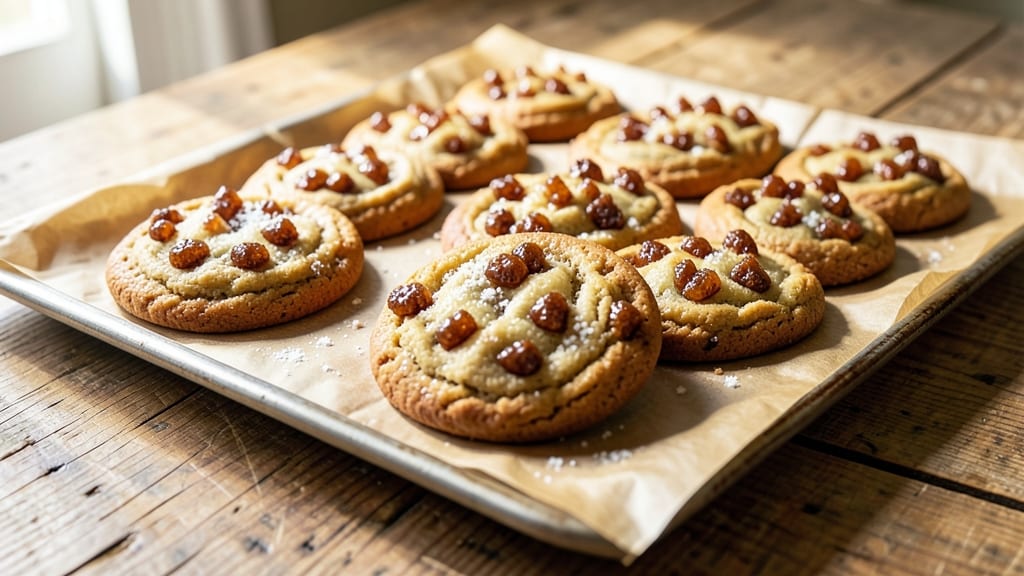
This Amish sugar cake cookie recipe brings the warmth of Pennsylvania farm kitchens to your own oven, with its signature buttery crunch and aromatic spices. 💛 Born from traditional Amish baking traditions, these cookies balance sweetness with subtle cinnamon and nutmeg notes that evoke memories of country kitchens and harvest-time gatherings.
The secret to their perfect texture lies in a precise blend of brown sugar and butter, baked just long enough for crisp edges while maintaining tender centers. Unlike modern cookies, these rely on simple pantry staples—flour, sugar, eggs, and spices—that create a harmonious flavor without needing fancy ingredients.
What makes these cookies special is their ability to transport you to an Amish community gathering, where freshly baked treats were always the centerpiece. The aroma alone will fill your home with nostalgia, while the taste delivers that perfect balance of sweetness and spice that defines Amish baking.
Perfect for holiday cookie exchanges or weekend baking projects, these cookies stay fresh for days and pair beautifully with a warm cup of coffee or milk. The recipe maintains its traditional roots while being accessible for any home baker looking to recreate this beloved treat.
Ingredients for amish sugar cake cookie
Buttery, spiced, and nostalgic—these cookies bring Amish farmhouse baking to life with just 12 simple ingredients.
| Ingredient | Amount | Notes |
|---|---|---|
| All-Purpose Flour 🌾 | 3 cups | Sifted for light texture |
| Unsalted Butter 🧈 | 1 cup | Cold, cubed for even baking |
| Packed Light Brown Sugar 🍯 | 1 ½ cups | For deep caramel flavor |
| Granulated White Sugar 🍚 | ½ cup | Balances brown sugar sweetness |
| Large Eggs 🥚 | 2 whole | Room temperature for even mixing |
| Pure Vanilla Extract 🌸 | 1 tbsp | High-quality for aroma |
| Ground Cinnamon 🌿 | 1 ½ tsp | Freshly ground preferred |
| Ground Nutmeg 🌿 | ½ tsp | Freshly grated for warmth |
| Diamond Crystal Kosher Salt 🧂 | ½ tsp | Fine grain for even distribution |
| Baking Soda 🧪 | ½ tsp | For proper rise |
| Granulated Sugar 🍚 | ¼ cup | For rolling dough balls |
| Heavy Whipping Cream 🥛 | ¼ cup | Optional for extra richness |
The butter and brown sugar are non-negotiable here. European-style butter like Plugrá or Land O'Lakes gives that signature rich flavor, but any good unsalted butter works. For the brown sugar, lightly packed is key—don't compact it too much. I always grab my spices from Penzeys for that extra depth of flavor, but the grocery store stuff works fine if it's fresh. The vanilla? Pure bourbon-infused if you want to splurge, but regular pure vanilla extract works perfectly too. Freshly grind your cinnamon and nutmeg if possible—the difference is night and day.
No vanilla extract? Vanilla bean paste works beautifully, or even a scraped vanilla bean. Short on butter? Coconut oil in a 1:1 ratio keeps things vegan-friendly, though the texture will differ slightly. The baking soda is crucial—don't swap for baking powder. For the rolling sugar, turbinado sugar gives a nice crunchy contrast. If you're making these for a crowd, double the batch—these disappear faster than you can bake them. The dough keeps well in the fridge for 3 days, so make it ahead and let it chill overnight for even better flavor development.
Store the baked cookies in an airtight container with a slice of bread to keep them soft for up to 5 days. For longer storage, freeze them on a tray first, then transfer to a bag—3 months in the freezer without losing any of that buttery crunch. Reheat in a 350°F oven for 3-5 minutes to revive their warmth. These cookies pair perfectly with a cup of Amish-style coffee or warm milk, just like at a harvest-time gathering.
Why You'll Love This Recipe
- No Mixer Needed: I swear by this recipe when I’m in a rush—just cream the butter and sugars by hand, fold in the dry ingredients, and you’re done. The dough’s forgiving, so no stress over overmixing or precise measurements.
- Buttery Caramel Magic: That brown sugar and butter combo? It’s like a warm hug in cookie form. The moment the edges crisp and the center stays soft, you’ll understand why my kids beg for seconds—even when they’re full.
- Holiday or Snack Attack: I’ve made these for Christmas cookie platters, school bake sales, and lazy Sunday afternoons. They freeze beautifully, so I bake a double batch and stash them for when I need a quick treat.
- Pantry Staple Power: Honestly, you’re already halfway there with flour, sugar, and butter. Eggs are the only extra, and they make these chewy, not dry. Plus, they’re cheap enough to bake a whole tray without guilt.
Step-by-step instructions for Amish sugar cake cookies
Here's how to create these classic spiced cookies with buttery crunch and caramel depth.
🍳 Step 1: Cream Butter and Sugars to Peak Fluffiness
In a stand mixer fitted with the paddle attachment, combine the 1 cup unsalted butter (cold from the fridge) with the 1.5 cups packed light brown sugar and 0.5 cup granulated white sugar. Beat on medium speed for 3-4 minutes until light and fluffy—you'll see the mixture nearly double in volume and become pale golden. This step incorporates air that creates those signature crackly tops.
Here's the thing—don't rush this. You want to see ribbons form when the beaters lift. If you skip this, your cookies will be dense instead of tender. I press down on the butter mixture with a spatula halfway through to break up any large sugar crystals that might form.
👨🍳 Step 2: Add Eggs and Flavorings for Rich Depth
Add the 2 whole large eggs (room temperature) one at a time, mixing just until each is fully incorporated after about 30 seconds per addition. Then stir in the 1 tablespoon pure vanilla extract and mix for another 10 seconds. The mixture will look slightly curdled at first, but don't worry—it will come together.
Next, whisk together the 3 cups all-purpose flour, 1.5 teaspoons ground cinnamon, 0.5 teaspoon ground nutmeg, 0.5 teaspoon diamond crystal kosher salt, and 0.5 teaspoon baking soda in a separate bowl. Sift the dry ingredients directly into the wet mixture with the mixer on low speed—this prevents gluten development that makes cookies tough. Mix just until combined, about 30 seconds.
🥘 Step 3: Incorporate Cream and Shape the Dough
Remove the bowl from the mixer and gently fold in the 0.25 cup heavy whipping cream (if using) with a silicone spatula until just combined. The dough will be soft and slightly sticky—this is perfect for Amish sugar cakes. If it feels too wet, chill for 10 minutes before proceeding.
Transfer the dough to a lightly floured surface and gently pat it into a 1-inch thick rectangle. Wrap tightly in plastic wrap and refrigerate for at least 1 hour (up to 24 hours). Chilling firms the butter, preventing excessive spreading and enhancing flavor development. Real talk: this waiting period makes all the difference in texture.
🔥 Step 4: Roll and Cut for Perfect Shapes
Preheat your oven to 350°F and line two baking sheets with parchment paper. On a lightly floured surface, roll out the chilled dough to about 1/4-inch thickness. Here's where it gets fun—use a 2-inch round cutter to cut out circles, or a 1-inch square cutter for classic Amish sugar cake shapes. Press gently on the cutter to ensure clean edges.
Place the cutouts about 2 inches apart on the prepared baking sheets. Roll any scraps back together, re-chill for 10 minutes, and roll out again. The dough is forgiving, but don't overwork it or the cookies will toughen. For extra crunch, sprinkle the tops with 0.25 cup granulated sugar before baking.
⏰ Step 5: Bake to Golden Perfection
Bake for 12-14 minutes until the edges are golden brown and the centers look just slightly underdone. The cookies will continue cooking on the hot sheet after removal. Don't overbake—they should pull away from the parchment easily but still feel soft in the center when pressed gently.
Let the cookies cool on the baking sheets for 5 minutes before transferring to a wire rack to cool completely. Here's the secret: serve them warm for maximum buttery flavor and crunch. These cookies keep well in an airtight container for up to 5 days, though they rarely last that long in my house!
Pro Tips For Making Amish Sugar Cake Cookie
- CREAM THE BUTTER COLD: I learned this the hard way—soft butter makes flat, greasy cookies. Take the butter straight from the fridge, cut it into chunks, and mix it with the sugars until it’s just pearl-sized with a few crumbs left. That texture guarantees chewy centers and crisp edges.
- WEIGH THE FLOUR: Scooping flour from the bag packs too much air, and your cookies will turn out dense. Spoon the flour into a measuring cup, then level it off with a knife—no packing, no pressing. This keeps the texture light and tender, just like the ones from the Amish bakeries.
- DON’T OVERMIX THE DOUGH: After a few batches, I finally stopped beating the dough into submission. Mix just until the flour disappears—maybe 10-12 strokes—then stop. Overworking it develops gluten, and your cookies will turn out tough instead of melt-in-your-mouth soft.
- CHILL THE DOUGH TWICE: Yes, even if you’re impatient like me. First, chill the dough for 24 hours (or at least 4 hours if you’re in a hurry). Then, shape the balls and freeze them for 15 minutes before baking. This prevents spreading and ensures that rich caramel flavor develops properly.
Regional styles of this recipe
Pennsylvania Dutch Roots
The Amish sugar cake cookie traces back to the Pennsylvania Dutch communities of the 18th century, where simple ingredients and resourcefulness defined their baking. These cookies were originally made with molasses and spices brought over from Europe, reflecting the settlers' German and Swiss traditions.
The name "sugar cake" comes from the Dutch word "koek," meaning cake, though these are technically cookies. 🗺️
In Lancaster County, where Amish communities thrive, these treats became a staple at harvest festivals and church socials. The recipe evolved to use local brown sugar from sugar beets—a crop grown extensively in Pennsylvania—and butter from dairy farms.
This regional adaptation made the cookies both practical and deeply tied to the land.
Ohio Amish Adaptations
While Pennsylvania remains the heartland, Ohio's Amish communities developed their own variations using maple syrup instead of some sugar, creating a subtly different flavor profile. In Holmes County, you'll find versions with extra nutmeg and a touch of allspice, reflecting the region's influence from neighboring states.
The texture often leans slightly softer there, too.
One key difference is the rolling technique: Ohio bakers sometimes roll dough thinner for larger, flatter cookies, while Pennsylvania versions stay thicker for a more pronounced crunch. Both methods yield delicious results—it's all about personal preference and local traditions.
Modern Homestyle Twists
Today's home bakers often add white chocolate chips or pecans for texture, though purists stick to the classic recipe. I've seen versions with cinnamon-sugar swirls in the dough, inspired by Amish shoofly pie techniques.
For a festive touch, some bakers brush the tops with egg wash before baking for extra shine.
If you're short on time, many cooks now use pre-rolled pie crust as a shortcut for the dough base—just press it out, cut shapes, and bake as directed.
The flavor stays authentic while saving effort. For a gluten-free adaptation, substitute almond flour for regular flour (reduce by 15% to account for density).
Seasonal Celebrations
These cookies shine at Christmas markets, where vendors sell warm batches alongside hot cider. In summer, they're a hit at county fairs, often paired with Amish-style lemonade. The spices—especially nutmeg—make them perfect for Thanksgiving gatherings, too.
I always bake a double batch during the holidays; they disappear faster than you can say "kumm kumm" (the Pennsylvania Dutch greeting).
For a springtime twist, swap ½ tsp cinnamon for ½ tsp cardamom and add zest from 1 lemon to the dough. The bright citrus cuts through the butter richness beautifully, making them ideal for Easter baskets or brunch spreads.
Nutrition facts
Frequently asked questions
Why do these cookies need to chill before baking?
Chilling the dough for at least 1 hour is crucial for two reasons: it firms up the butter so cookies hold their shape instead of spreading, and it lets flavors meld for deeper taste. The cold dough also prevents over-browning during baking, giving you that perfect golden edge.
Can I make these cookies without a mixer?
Cream the butter and sugars by hand using a wooden spoon or fork—just work it vigorously for 5-7 minutes until light and fluffy. For the dry ingredients, whisk them together in a bowl, then gently fold into the wet mixture with a spatula. The texture won't be quite as airy, but they'll still taste delicious.
How do I store leftover cookies to keep them soft?
Place cookies in an airtight container with a slice of bread to absorb moisture and maintain softness for up to 5 days. For longer storage, freeze them on a tray first, then transfer to a bag—3 months in the freezer keeps them fresh. Reheat in a 350°F oven for 3-5 minutes to revive their warmth.
What's the secret to getting that signature crackly top?
The crackly top comes from proper creaming (beating butter and sugars until pale and fluffy) and baking at 350°F until edges are golden but centers are slightly underdone. Sprinkle the tops with granulated sugar before baking for extra crunch—this melts slightly during baking to create that signature texture.
Can I substitute any of the spices?
While cinnamon and nutmeg are traditional, you can experiment! Try ½ tsp cardamom for a spring twist or ¼ tsp cloves for warmth. For a citrus note, add 1 tsp lemon zest to the dough. Just remember: the spices should complement the buttery-sweet base, not overpower it.