
Desserts
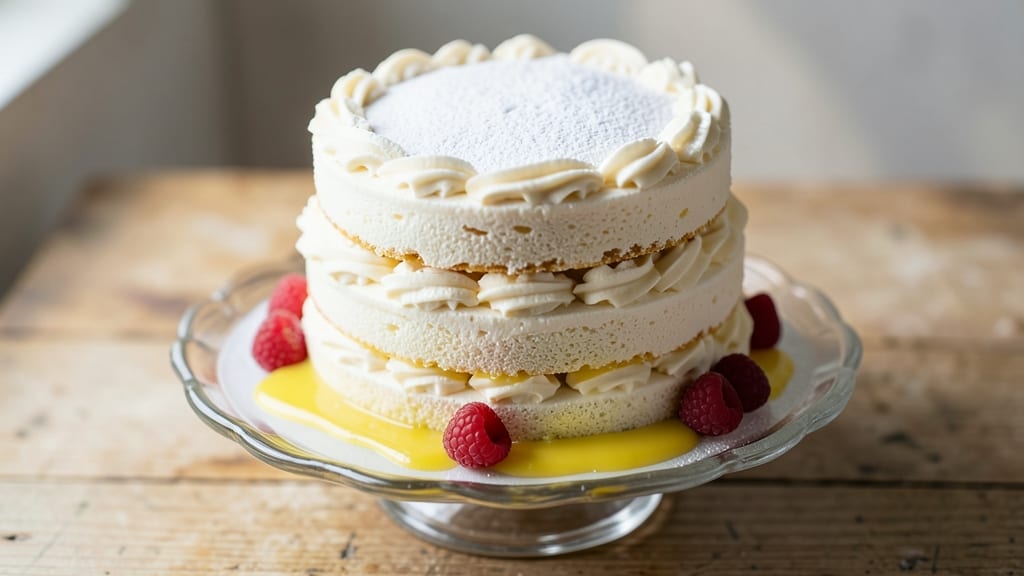
Mary Berry’s angel cake delivers the lightest, airiest sponge you’ll ever bake—so delicate it practically dissolves on your tongue. 💛 The secret lies in perfectly folded egg whites and a gentle touch when incorporating dry ingredients, ensuring those signature fluffy layers stay intact.
This isn’t just a cake; it’s a masterclass in texture, where every bite feels like a cloud. What sets this recipe apart is Mary Berry’s precision: room-temperature eggs, creamed butter and sugar, and a folding technique that preserves airiness without deflating the batter. The result?
A cake so tender it’s nearly weightless, with a crumb so fine it’s almost imperceptible. No dense layers here—just pure, ethereal sponge perfection. The baking process is straightforward but critical: a 350°F (180°C) oven for 30–40 minutes yields a golden dome that springs back when touched.
The cake’s magic comes from patience—no overmixing, no rushing—and the payoff is a dessert that feels luxurious yet effortless. Whether served plain, with whipped cream, or layered with jam, it’s a showstopper for any occasion.
For those who love classic British baking, this is the recipe that puts Mary Berry’s signature touch into your kitchen. Let’s get baking!
Ingredients for angel cake recipe mary berry
Mary Berry’s angel cake relies on precision ingredients for ethereal lightness and delicate fluffiness.
| Ingredient | Amount | Notes |
|---|---|---|
| Unsalted Butter 🧈 | 1 cup | Room temperature, European preferred |
| Granulated Sugar 🍚 | 2 cups | Superfine for finest texture |
| Large Egg Whites 🥚 | 8 whole | Room temperature, separated |
| All-Purpose Flour 🌾 | 2 cups | Sifted, plus extra for dusting |
| Cake Flour 🌾 | ½ cup | For ultra-light crumb |
| Cream of Tartar 🧂 | ¼ tsp | Stabilizes egg whites |
| Fine Sea Salt 🧂 | ¼ tsp | Diamond Crystal preferred |
| Vanilla Extract 🌿 | 1 tsp | Pure Madagascar preferred |
| Lemon Zest 🍋 | 1 tbsp | Fresh, organic preferred |
| Unbleached Cake Release Spray 💧 | 1 spray | Or light oil brush |
| Powdered Sugar 🍚 | ½ cup | For dusting (optional) |
The butter and sugar are non-negotiable for this recipe—European-style unsalted butter with high fat content (82%) creates the signature tender crumb. Whole Foods or specialty grocers carry the best brands like Plugrá or Échiré, but any good-quality unsalted butter works if it’s room temperature. The sugar must be super-fine; Domino or C&H brands work well, or pulse regular sugar in a food processor for 30 seconds. Room-temperature eggs are critical—they whip to stiff peaks without over-aeration, which would deflate the batter. Separate them just before whipping to prevent any yolk contamination, which would ruin the delicate structure. For flour, Gold Medal or King Arthur are reliable, but sift it thoroughly to eliminate any lumps that could create dense spots in the cake.
No cake flour? Substitute by removing 2 tbsp of all-purpose flour per cup and adding 2 tbsp cornstarch—this mimics the protein structure of true cake flour. The cream of tartar is essential for stabilizing the egg whites; if unavailable, use lemon juice at half the amount. For flavor, vanilla bean paste adds depth, but pure extract works in a pinch. The lemon zest should be finely grated—no peels or bitter pith. For the release spray, Baking + Bar or Baker’s Joy are ideal, but a light brush of neutral oil (like grapeseed) works too. Every ingredient here serves a purpose: the butter and sugar create air pockets, the egg whites provide structure, and the flours ensure stability without heaviness.
Store the cake in an airtight container at room temperature for up to 3 days—it’s best enjoyed fresh, but the layers remain tender. For longer storage, wrap tightly in plastic and refrigerate for up to 1 week, though it may dry out slightly. Freezing isn’t recommended as it can alter the delicate texture. To serve, dust with powdered sugar just before slicing for that signature angel cake elegance. Mary Berry’s method relies on patience: let the cake cool completely in the pan before transferring to a wire rack, or the layers may collapse. The result? A cake so light it practically dissolves, leaving only a whisper of sweetness.
Why You'll Love This Recipe
- No Fuss Whipped: The egg whites alone do 90% of the work—just beat them till glossy, fold in the dry ingredients, and bake. No mixer? A balloon whisk works just fine. Honestly, I’ve made this in my kitchen while chatting with a friend on the phone.
- Cloud-Light Texture: That airy, melt-in-your-mouth crumb? All thanks to the sugar and egg whites—no dense heaviness here. One bite and you’ll forget it’s a cake. (Yes, even my kids who hate cake ask for seconds.)
- Tea-Time Hero: Mary Berry’s version is the ultimate companion for afternoon tea—elegant enough for guests but simple enough for a solo Sunday. Slice it thin, add a dollop of clotted cream, and suddenly you’re hosting a proper British affair.
- Budget Baking Win: Uses pantry basics (butter, sugar, flour) and stretches far—leftover slices stay fresh for days. I’ve fed a crowd with one batch, and the cost per serving? Less than half of store-bought pastries. No guilt, all flavor.
Step-by-step instructions for Mary Berry's angel cake
Precision and patience create this signature lightness—follow these steps exactly.
👨🍳 Step 1: Prepare the Egg White Mixture
Separate the 8 whole Large Egg Whites into a spotless, grease-free bowl. I use a fine-mesh sieve to catch any stray yolks—this ensures no fat interferes with the meringue. Add the 0.25 tsp Cream of Tartar and 0.25 tsp Fine Sea Salt to stabilize and season the whites.
Using an electric mixer with the whisk attachment, beat on low speed until soft peaks form. Gradually add the 2 cups Granulated Sugar while mixing on medium-high speed. Increase to high speed and whip for 5-7 minutes until the meringue is glossy, thick, and holds stiff peaks when the whisk is lifted. The bowl should feel cool to the touch—this indicates proper hydration and volume.
👨🍳 Step 2: Fold Dry Ingredients into Meringue
In a separate bowl, sift together the 2 cups All-Purpose Flour and 0.5 cup Cake Flour to aerate the mixture. Gently fold one-third of the flour mixture into the meringue using a spatula, cutting through the center to preserve air pockets. Add the 1 tsp Vanilla Extract and 1 tbsp Lemon Zest now—the citrus brightens the delicate flavor.
Continue folding in the remaining flour in two additions, being careful not to overmix. The batter should resemble thick, pale ribbon when the spatula is lifted. I always check for even distribution by running a finger through the batter—no dry flour should remain. This step is where the cake's signature lightness begins.
🍳 Step 3: Incorporate Butter and Final Folding
Add the 1 cup Unsalted Butter (room temperature) to the batter. Using the same gentle folding technique, incorporate it completely. The butter should melt into the batter without breaking the air bubbles. If the mixture feels too thick, add 1 tablespoon of cold water to maintain proper consistency.
This is the critical moment—Mary Berry's method relies on the butter being fully emulsified without deflating the meringue. The batter should now be smooth, pale, and hold its shape when spooned. If you see any separation, gently fold again until uniform. The texture should resemble thick, glossy cake batter with no visible streaks of butter.
🥘 Step 4: Bake in Layers with Precision
Preheat your oven to 350°F. Grease two 8-inch round cake pans with the Unbleached Cake Release Spray and line the bottoms with parchment circles. Divide the batter evenly between the pans, smoothing the tops with a spatula. Bake for 25-30 minutes until the tops spring back when touched lightly and a toothpick emerges clean.
I always rotate the pans halfway through baking for even rising. The cakes should be golden at the edges but pale in the center—this ensures maximum lightness. Remove from the oven immediately and let cool in the pans for 10 minutes before transferring to a wire rack. The rapid cooling prevents the delicate structure from collapsing.
⏰ Step 5: Assemble and Dust for Finishing Touches
Once completely cool, place one cake layer on a serving plate. Sift 2 tablespoons of Powdered Sugar evenly over the top. Repeat with the second layer, pressing gently to create a clean edge. Dust the entire cake with the remaining 0.25 cup Powdered Sugar using a fine-mesh sieve for an elegant finish.
The final result should be a cake so light it appears almost translucent in places, with a tender crumb that melts in your mouth. Serve immediately for the best texture—this cake doesn't keep its airiness for long. For maximum freshness, assemble just before serving and dust with powdered sugar at the table.
Pro Tips For Making Angel Cake Recipe Mary Berry
- Whisk Egg Whites Cold: Start your egg whites straight from the fridge—no room temp nonsense. Cold whites whip faster and hold their volume better, especially when you’re folding in that delicate butter-sugar foam later. I used to rush this, and my cakes would collapse mid-bake like a sad soufflé.
- Sift Flours Twice: Mary Berry’s recipe relies on that light, airy texture, so don’t skimp on sifting. Do it once, then give the bowl a quick shake to break up any stubborn clumps before adding the flour. I learned this the hard way—lumpy flour = dense cake.
- Bake Until Springy: That cake’s done when it bounces back slowly when pressed in the center, not when it’s golden. Overbaking dries it out, and underbaking leaves it gummy. Pull it at 325°F (163°C) if your oven runs hot—better to check early.
- Use Room-Temp Butter: Softened butter mixes smoother into the sugar, creating a finer crumb. Stick it in a warm spot 30 minutes before starting—no microwave shortcuts. I once used cold butter and ended up with a cake that tasted like it had a heart of butterfat.
Troubleshooting perfect results
Overmixed Batter
If your batter looks dense or curdled after folding, you’ve likely overmixed—this is the #1 angel cake killer. The key is gentle, deliberate folds using a spatula (never a whisk). Stop immediately when the batter resembles thick, pale ribbon—no streaks of flour should remain.
Overmixing deflates the air pockets created by the egg whites, leading to a heavy crumb. If this happens, don’t panic—gently fold in 1 extra tablespoon of stiff meringue to restore lightness. 💫
Cake Collapses or Sinks
A sunken center or collapsed layers usually means overbaking or opening the oven too soon. Remove the cake from the oven when the top springs back lightly (not firmly) when touched.
If the cake sinks after cooling, it likely didn’t set properly—this often happens when the oven isn’t fully preheated or the batter was too thin. Next time, check for doneness at 25 minutes and test with a toothpick.
For a second attempt, reduce baking time by 2 minutes and monitor closely.
Dry or Crumbly Texture
A dry, crumbly cake often results from overwhipped egg whites or too much flour. If your meringue looks grainy or weepy, you’ve overwhipped—this breaks down the protein structure. For future batches, whip the egg whites to stiff peaks (not dry or glossy).
If the cake still turns out dry, try adding 1 extra tablespoon of cold water to the batter during folding—this helps hydrate the flour without deflating the air. Also, ensure your butter is fully room temperature (it should dent slightly when pressed).
Uneven Rise or Flat Top
An uneven rise or flat top usually means uneven heat distribution. Rotate your pans halfway through baking (after 15 minutes) to ensure even rising. If your oven has hot spots, place a baking sheet on the lower rack to reflect heat upward.
For a domed top, avoid opening the oven door during baking—temperature fluctuations cause cakes to sink. If your cake flattens, try baking at 325°F instead of 350°F for the first 10 minutes, then increase to 350°F for the remaining time.
This gradual approach helps the cake set more evenly.
Sticky or Gummy Layers
Sticky layers often occur when the cake doesn’t cool properly or the butter wasn’t fully incorporated. Let the cake cool completely in the pan for 10 minutes before transferring to a wire rack—this allows the structure to set.
If the layers still feel gummy, chill the cake layers for 15 minutes in the fridge before assembling. For future batches, ensure the butter is fully emulsified into the batter—it should disappear completely when folded, leaving no streaks.
If needed, add 1 extra tablespoon of powdered sugar to the batter to absorb excess moisture.
Nutrition facts
Frequently asked questions
Why is this cake called "angel food" cake?
Mary Berry's angel cake earns its name from its heavenly lightness—so delicate it practically dissolves on your tongue! The recipe relies on whipped egg whites (not yolks) and minimal flour, creating a sponge so airy it feels almost weightless. This classic technique dates back to 19th-century America, where it was called "angel food" for its ethereal quality.
Can I make this cake in a single 9-inch pan instead of two 8-inch pans?
Yes, but expect a thicker layer that may bake faster. Reduce the oven temperature to 325°F (165°C) and bake for 35-40 minutes instead of 25-30. The key is to monitor closely—the cake should spring back when touched lightly. For best results, use a water bath (wrap the pan in foil and place it in a larger pan with hot water) to ensure even baking.
What's the secret to getting the perfect fluffy layers?
The magic lies in three critical steps:
- Whipping egg whites to stiff peaks (not dry),
- Folding dry ingredients gently in thirds, and
- Not overmixing the butter. Mary Berry's method emphasizes room-temperature eggs and a spotless bowl—even a trace of fat will prevent proper volume. The folding technique should create a "ribbon" effect when the spatula lifts.
How do I store angel cake to keep it fresh?
Keep the cake in an airtight container at room temperature for up to 3 days, but it's best enjoyed within 24 hours for maximum freshness. For longer storage, wrap each layer individually in plastic wrap and refrigerate for up to 5 days. Avoid freezing—it can make the texture gummy. Always dust with powdered sugar just before serving to preserve that signature delicate crumb.
Can I substitute cake flour if I don't have any?
Yes! Replace the 0.5 cup cake flour with 0.5 cup all-purpose flour minus 2 tablespoons, then add 2 tablespoons cornstarch. This mimics cake flour's lower protein content for a lighter texture. For best results, sift the mixture thoroughly to prevent lumps. The cake will still be tender but may have slightly more structure than the original recipe.