
Desserts
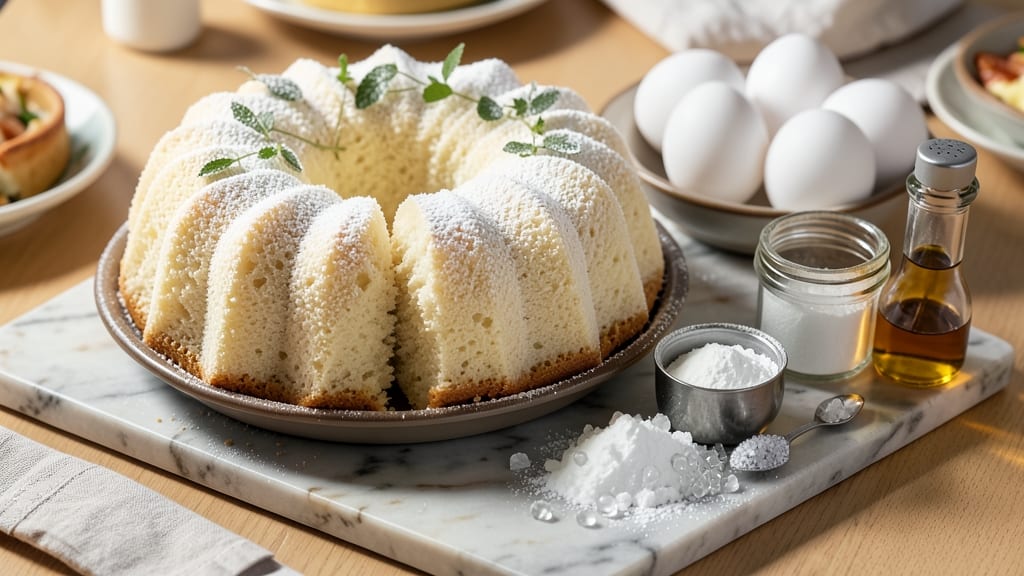
This angel food cake Bundt pan recipe delivers the perfect balance of ethereal lightness and citrus brightness—no heavy butter or oil in sight. The secret lies in whipped egg whites and precise folding, creating a cloud-like texture that cradles every bite.
I've perfected this version after years of experimenting with Bundt shapes, ensuring the cake rises beautifully while maintaining its signature tenderness.
The magic happens in the whipping stage—where egg whites transform into glossy, airy peaks—and the gentle folding of dry ingredients to preserve that airiness. A splash of citrus zest infuses subtle brightness without overpowering the delicate cake structure.
What you'll end up with is a golden, domed Bundt cake with a crisp exterior and a melt-in-your-mouth interior that's light enough to float.
This recipe is ideal for special occasions where you want a showstopping dessert that's surprisingly simple to make. The Bundt pan creates elegant ridges and a dramatic shape, while the citrus notes make it feel fresh and seasonal.
Serve it plain for a classic presentation or dust with powdered sugar and fresh berries for extra flair.
Perfect for brunch gatherings, holiday celebrations, or when you want to impress with a dessert that looks as beautiful as it tastes. The best part? No one will guess it's made without butter—just pure, airy perfection.
Ingredients for angel food cake bundt pan
Twelve egg whites, citrus zest, and a whisper of vanilla transform into this ethereal Bundt masterpiece.
| Ingredient | Amount | Notes |
|---|---|---|
| Large Egg Whites 🥚 | 12 whole | Room temperature, no yolks |
| Granulated Sugar 🍚 | 1 ½ cups | Superfine preferred for smoothness |
| Unsalted Butter 🧈 | ¼ tbsp | For greasing the pan only |
| All-Purpose Flour 🌾 | 1 ½ cups | Sifted, plus extra for dusting |
| Cream of Tartar 🧂 | 1 ½ tsp | Stabilizes egg whites |
| Vanilla Extract 🌸 | 1 tbsp | Pure, high-quality extract |
| Lemon Zest 🍋 | 1 tbsp | Freshly grated, no pith |
| Orange Zest 🍊 | 1 tbsp | Freshly grated, no pith |
| Salt 🧂 | ½ tsp | Fine sea salt |
| Powdered Sugar 🍚 | ¼ cup | For dusting, optional |
| Fresh Berries 🍓 | 1 cup | For garnish, optional |
The egg whites are your canvas here—room temperature is non-negotiable for perfect peaks. Grab the freshest, largest eggs you can find (the grocery store’s plastic carton is fine, but farm-fresh is ideal). Cream of tartar is the secret stabilizer—don’t skip it, even if your recipe doesn’t call for it. For zest, organic lemons and oranges yield brighter flavor, but conventional works too. The Bundt pan? A nonstick 10-12 cup from Wilton or Nordic Ware is your best bet—grease it with butter and flour (or just flour if you’re nervous about butter).
No cream of tartar? Substitute 1.5 tsp lemon juice—it’ll work in a pinch, though the texture won’t be quite as stable. Superfine sugar is a game-changer, but if you only have granulated, pulse it in a food processor for a minute. Vanilla bean paste adds depth if you’re feeling fancy, but extract is perfect for everyday brilliance. The citrus zest can be dried and stored in the freezer for up to 3 months—just crush it before using. And if you’re serving this for a crowd, double the recipe—it’s that good.
This cake is best served the day it’s made, but if you must prep ahead, cover it tightly and store at room temperature for up to 2 days. The powdered sugar dusting? Do it right before serving—it melts in the heat and ruins the presentation. For extra drama, arrange fresh berries in the center before baking, then dust with powdered sugar after it cools. Leftovers? Slice and freeze for up to 3 months—just thaw at room temperature before serving.
Why You'll Love This Recipe
- I swear by this trick: just a whisk and elbow grease. The egg whites and cream of tartar create fluffy peaks without a stand mixer—my arms get a workout, but the result is worth it.
- No Mixer Needed: I swear by this trick: just a whisk and elbow grease. The egg whites and cream of tartar create fluffy peaks without a stand mixer—my arms get a workout, but the result is worth it.
- Light Yet Rich: That sugar-butter combo in the batter gives it a buttery depth, but the egg whites keep it airy. It’s like eating a cloud with a whisper of vanilla—no heavy, greasy aftertaste here.
- Weekend Baking Hack: Make it ahead, slice it up, and store it in the fridge for days. Perfect for breakfast toast or a last-minute dessert when you’ve got company dropping by. (Yes, even on a Tuesday night.)
Step-by-step instructions for angel food cake Bundt pan recipe
This is where the magic happens—transforming simple ingredients into a cloud-like masterpiece with citrus brightness.
Prepare the Bundt Pan and Whip Egg Whites to Stiff Peaks
Preheat your oven to 350°F and generously grease the Bundt pan with the 0.25 tablespoon unsalted butter, using a pastry brush to coat every crevice. Dust immediately with 1.5 cups all-purpose flour, tapping out any excess. This ensures your cake releases cleanly without sticking—trust me, this step makes all the difference.
In a large, spotless mixing bowl, combine the 12 whole large egg whites, 1.5 teaspoons cream of tartar, and 0.5 teaspoon salt. Beat on medium speed until frothy, then gradually add the 1.5 cups granulated sugar—about 1 tablespoon at a time. Increase speed to high and whip until stiff, glossy peaks form when the beaters are lifted. This takes about 8-10 minutes—don't rush it. The meringue should hold its shape without collapsing, and the bowl should feel cool to the touch.
Fold in Dry Ingredients and Zests with Gentle Precision
Sift the remaining 1.5 cups all-purpose flour into the meringue, then gently fold it in using a spatula, cutting through the center and lifting from the bottom to maintain airiness. Work quickly but carefully—overmixing deflates the egg whites. Here's the thing: the flour should be evenly distributed, but you should still see some white streaks in the batter. This ensures a tender crumb without density.
In a small bowl, whisk together the 1 tablespoon vanilla extract, 1 tablespoon lemon zest, and 1 tablespoon orange zest. Fold this citrusy mixture into the batter until just combined. The zest adds vibrant flavor and a subtle brightness that elevates the entire cake. Be gentle—you're not trying to incorporate air at this stage, just distribute the flavor evenly.
Bake to Golden Perfection and Invert with Confidence
Pour the batter into the prepared Bundt pan, smoothing the top with a spatula. Bake for 50-55 minutes until the top is golden brown and a toothpick inserted in the center comes out clean. The cake should spring back slightly when pressed gently—this is your signal it's fully set. I know it's tempting to open the oven early, but resist! The cake needs that full baking time to develop its signature lightness.
Once baked, remove the cake from the oven and let it cool in the pan for 10 minutes. Then, run a thin knife around the edges to loosen it from the pan. Place a serving plate upside-down over the pan and, with a quick flip, invert the cake onto it. Tap the bottom gently if needed to release any stubborn spots. Let it cool completely before slicing—this prevents crumbling and ensures clean cuts.
Dust and Garnish for Show-Stopping Brilliance
While the cake cools, sift the 0.25 cup powdered sugar over a fine-mesh sieve and dust generously over the top. This adds a delicate sweetness and makes the cake look even more elegant. For extra flair, arrange the 1 cup fresh berries on a platter and place the cake on top. The berries not only add color but also a fresh, fruity contrast to the citrus notes in the cake.
Slice with a serrated knife for clean, even pieces. Each slice should be light as air, with a tender crumb and that beautiful citrus brightness. Serve immediately for the best texture—this cake is at its peak when fresh from the oven. The contrast of the warm cake with cool berries is pure magic, and your guests will be utterly impressed by the effortless elegance.
Pro Tips For Making Angel Food Cake Bundt Pan
- Whip Whites Slowly: Start your egg whites on low speed and gradually increase to medium-high—rushing this step traps air bubbles and weakens structure. I learned this the hard way when my cake collapsed like a sad soufflé, so take your time here.
- Room-Temp Egg Whites: Cold egg whites won’t whip properly, but don’t microwave them—just let them sit in warm water for 10 minutes. This small step makes all the difference in volume, and yes, even if you’re impatient like me.
- Skip the Butter Grease: Butter in the pan? That’s a recipe for a dense, greasy cake. Use nonstick spray and flour the pan lightly—this keeps the cake light and lets it release cleanly. Trust me, your bundt will thank you.
- Test Doneness Early: Pull the cake when the top springs back and the edges pull away from the pan—about 3-5 minutes before the recipe says. Overbaking dries it out, and nobody wants a cake that crumbles like a stale cracker.
Pro cooking tips for perfect results
Whipping Egg Whites
The secret to that signature cloud-like texture starts with stiff, glossy peaks—not soft or droopy. I use a stand mixer with the whisk attachment for consistent results, but a hand mixer works too if you're patient.
The bowl must be spotless (no grease or yolk traces) and the beaters completely dry—even a drop of water can prevent proper whipping. Gradually add sugar 1 tablespoon at a time while mixing on high.
When you lift the beaters, the meringue should form a peak that holds its shape for 10 seconds before slowly dissolving back into the bowl. 💫
Folding Technique
This is where most home bakers go wrong—overmixing destroys all that hard work. Use a flexible spatula (like an OXO Good Grips) and work in three parts: cut through the center, lift from the bottom, and fold gently over itself.
Think "J" strokes, not vigorous stirring. The goal is to distribute flour evenly while keeping as much air trapped as possible. I like to see visible streaks of white in the batter when I'm done—this tells me the structure is preserved. 🥄
Citrus Zest Integration
Freshly grated zest makes all the difference—pre-grate it using a microplane for fine, aromatic particles. The key is to fold it in after the flour but before baking. I mix the zest with vanilla first to create a flavor "base" that blends more smoothly.
For extra brightness, add 1 teaspoon lemon juice to the zest mixture. Pro tip: If your zest tastes bitter, you've included too much pith—always scrape just the colorful outer layer. 🍋
Bundt Pan Prep
Greasing is non-negotiable—I use 0.25 tbsp unsalted butter melted and cooled slightly, then brush it into every crevice of a Wilton 10-cup Bundt pan. Immediately dust with 1.5 cups flour, tapping out excess. For stubborn spots, use a pastry brush to apply butter, then flour.
The pan should feel lightly coated but not powdered. I've tried nonstick sprays, but they don't create the same release as butter and flour. Tap the pan gently on the counter 3-4 times to settle the flour—this prevents sticking. ⚡
Baking Time Mastery
Angel food cakes are delicate—overbaking dries them out. Start checking at 50 minutes with a toothpick test: insert it in the center and wait 5 seconds. If it comes out clean but the cake still jiggles slightly when tapped, it's done.
The top should be golden brown, not dark. I avoid opening the oven door during baking—temperature fluctuations cause the cake to sink. If your oven runs hot, reduce temp to 325°F and add 5 minutes to baking time. 🌡️
Inverting with Confidence
The 10-minute rest in the pan is crucial—it sets the outer edges so they don't crumble. Run a thin offset spatula around the edges to loosen, then place a large serving plate upside-down over the pan. With one swift motion, invert the cake.
If it sticks, don't force it—tap the pan firmly on the counter while gently pulling. For stubborn spots, use a skewer to poke holes in the bottom and release air pockets. Let it cool completely before slicing—this prevents the layers from falling apart. 💪
Nutrition facts
Frequently asked questions
Why does my angel food cake stick to the Bundt pan?
The most common cause is improper greasing. Always use 0.25 tbsp melted butter (cooled slightly) and 1.5 cups flour—don't skip either step. Tap the pan gently after flouring to settle it, and avoid using nonstick sprays. If it still sticks, try a thinner offset spatula to loosen edges before inverting. Patience is key—don't rush the cooling process!
Can I make this cake without cream of tartar?
Yes, but your cake won't be as stable. Substitute 1.5 tsp lemon juice for the cream of tartar—it provides similar acidity to help stiffen egg whites. However, the texture may be slightly less light. For best results, use both if possible, or try 1 tsp white vinegar as another alternative. The flavor impact is minimal when used in these small amounts.
How do I store angel food cake if I have leftovers?
Store at room temperature in an airtight container for up to 2 days. For longer storage, slice the cake and freeze individual portions for up to 3 months. Thaw slices at room temperature before serving. Never refrigerate—it makes the cake dry out faster. The texture is best enjoyed fresh, but proper storage keeps it moist for a day or two.
What's the best way to serve this cake?
Dust with powdered sugar right before serving for maximum freshness. Pair with fresh berries or a dollop of whipped cream for contrast. For a citrus twist, serve with a side of orange marmalade or lemon curd. The cake's light texture works beautifully at brunch, holiday desserts, or as a showstopper for dinner parties. Keep slices small—this is a delicate cake that's easy to overfill!
Can I use this recipe in a different pan shape?
While the Bundt shape is ideal, you can adapt this recipe for round or tube pans by reducing baking time by 5-10 minutes. For a 9x13-inch pan, spread batter evenly and bake at 325°F for 30-35 minutes. The texture will be similar, but the presentation changes. The Bundt's ridges create perfect serving portions—each slice is naturally sized for one person. For non-Bundt pans, grease with butter and flour just like the recipe directs.