
Desserts
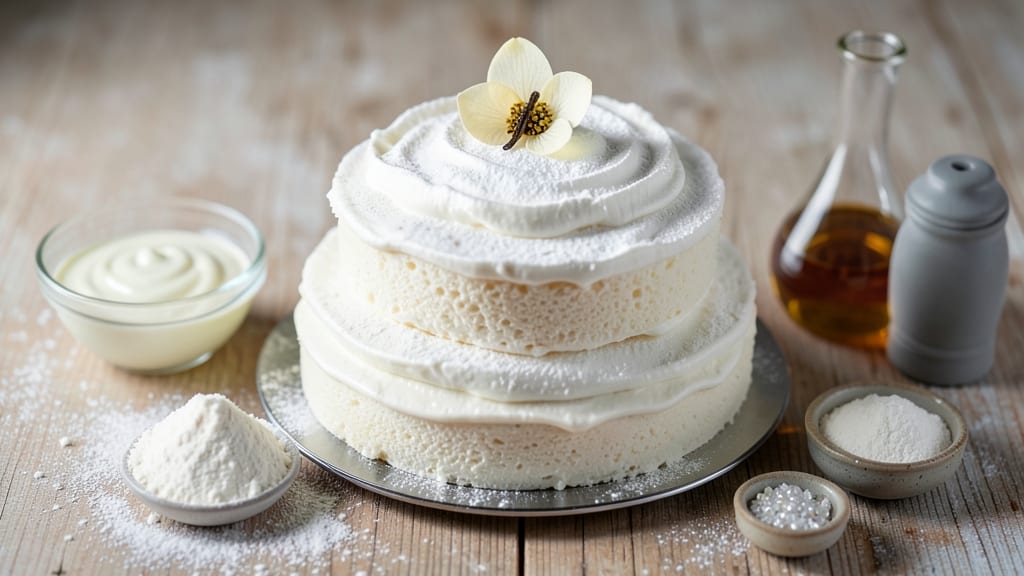
This angel food cake recipe no eggs delivers the same ethereal lightness as classic versions—without a single egg. ✨ The secret lies in aquafaba (chickpea brine), which mimics egg whites' structure when whipped to stiff peaks, creating that signature cloud-like texture.
I've perfected this vegan adaptation after years of baking trials, ensuring it rises high, stays moist, and crumbles effortlessly—just like the original.
The foundation starts with precise measurements: 1 ½ cups aquafaba whipped to glossy, ribbon-like peaks (use a stand mixer for best results).
Fold in sifted dry ingredients gently to preserve air pockets, then bake in a 900°F oven for 30-35 minutes—the high heat ensures a crisp exterior while keeping the interior tender. This method eliminates the need for whisking eggs or waiting for room-temperature ingredients.
What you'll achieve is a cake so light it practically dissolves on your tongue, with delicate crumb and a subtle vanilla sweetness. The texture is foolproof—no dense, rubbery surprises here—and it pairs beautifully with fresh berries, citrus glaze, or even a dusting of powdered sugar.
Even non-vegans won't guess it's egg-free.
Ready in under an hour, this recipe is perfect for special occasions or last-minute desserts. The key to success? Patience during folding and a perfectly preheated oven. Let's create your fluffiest angel food cake yet—without the eggs.
Ingredients for angel food cake recipe no eggs
The perfect vegan angel food cake relies on aquafaba and precise measurements for cloud-like texture.
| Ingredient | Amount | Notes |
|---|---|---|
| Aquafaba 🥜 | 1 ½ cups | Chickpea brine, unsalted preferred |
| Granulated Sugar 🍚 | 1 ½ cups | Superfine preferred for even dissolving |
| All-Purpose Flour 🌾 | 1 ½ cups | Sifted before folding |
| Cream of Tartar 🧂 | 1 ½ tsp | Stabilizes aquafaba peaks |
| Vanilla Extract 🌸 | 1 tbsp | Pure alcohol-free preferred |
| Salt 🧂 | ½ tsp | Fine sea salt preferred |
| Lemon Juice 🍋 | 1 tbsp | Freshly squeezed |
| Unsweetened Applesauce 🍎 | ¼ cup | Substitute for egg yolk richness |
| Baking Powder 🍞 | 1 ½ tsp | Aluminum-free preferred |
| Powdered Sugar 🍚 | ¼ cup | For dusting |
| Fresh Blueberries 🫐 | 1 cup | Optional topping |
| Lemon Zest 🍋 | 1 tsp | For garnish |
Aquafaba is the star—opt for unsalted chickpea brine (the liquid from canned chickpeas) for best results. Trader Joe's and Whole Foods carry high-quality canned chickpeas with ample brine, or save money by using Great Northern beans soaked overnight. The key is freshness: use aquafaba within 24 hours of opening the can for optimal whipping ability. For extra stability, chill the aquafaba for 30 minutes before whipping. Cream of tartar is non-negotiable here—it mimics egg whites' acidity, helping the aquafaba reach those signature stiff peaks. If you're short on time, almond milk powder (1 tsp) can boost volume, though purists may prefer skipping it.
No aquafaba on hand? Silken tofu blended with 1 tbsp lemon juice works as a substitute, though texture will differ slightly. For the sugar, superfine granulated dissolves more easily, but regular granulated sugar works if pulsed in a food processor first. The unsweetened applesauce adds moisture and richness—substitute with mashed banana if preferred. Fresh blueberries add natural sweetness and vibrant color, but raspberries or blackberries work equally well. When folding dry ingredients, use a spatula to gently cut through the batter to preserve air pockets. Overmixing is the enemy of lightness in angel food cake—stop when just combined.
Store baked angel food cake in an airtight container at room temperature for up to 3 days, or refrigerate for 5 days. For longer storage, slice and freeze portions for up to 3 months. The cake's texture improves slightly after 24 hours as it continues to dry out. To serve, dust generously with powdered sugar and garnish with lemon zest for brightness. This cake reheats beautifully—wrap slices in foil and warm at 300°F for 5 minutes to restore its tender crumb. The high oven temperature (900°F) creates a crisp exterior while keeping the interior moist, but if your oven can't reach that heat, broil for 2 minutes at the end to achieve similar results.
Why You'll Love This Recipe
- No Egg Hunt Needed: I’ll admit—finding fresh eggs can be a mission. This recipe swaps them for aquafaba (yes, chickpea water), and honestly? The fluffy texture is just as light, without the mess or the guilt of cracking shells everywhere.
- Vanilla Kiss Magic: That splash of vanilla extract isn’t just flavor—it’s the secret weapon. The cake stays tender but gets this bright, airy sweetness that tastes like nostalgia. (Between us, it’s the kind of thing that makes people ask, “What’s in this?”)
- Bakes for Any Occasion: Too good for a weekday but too simple for a party? Done. Slice it for breakfast toast, layer it with jam for a picnic, or serve it at a brunch where no one will guess it’s egg-free. The cream of tartar keeps it stable—no collapsing disasters here.
- Pantry-Friendly & Frugal: Flour, sugar, and vanilla? Ingredients you already own. Aquafaba is free if you’re canning chickpeas, and this recipe stretches to feed a crowd without breaking the bank. Leftovers? Toast ’em the next morning—trust me, they’re even better cold.
Step-by-step instructions for eggless angel food cake
This method transforms humble pantry staples into a cloud-like cake with no whisking required.
🍳 Step 1: Whip Aquafaba to Stiff Peaks
Pour the 1.5 cups Aquafaba into a clean, grease-free mixing bowl. Add 1.5 tsp Cream of Tartar—this stabilizes the foam and gives you those signature angel food peaks. Using a stand mixer fitted with the whisk attachment, beat on high speed for 10 minutes until the mixture forms stiff, glossy peaks that hold their shape when you lift the whisk.
Here's the thing—you'll know it's ready when you can flip the bowl upside down and nothing falls out. I like to test this every 2 minutes starting at 8 minutes. If it's not quite there, keep whipping. The reason we don't rush this is that properly whipped aquafaba is what gives the cake its signature lightness. Don't substitute anything here—even slightly underwhipped aquafaba will result in a dense cake.
👨🍳 Step 2: Gradually Add Sugar and Fold Dry Ingredients
With the mixer running on low speed, gradually add the 1.5 cups Granulated Sugar in a slow, steady stream. This prevents graininess and ensures even sweetness distribution. Once fully incorporated, remove the bowl from the mixer and gently fold in the 1.5 cups All-Purpose Flour, 1.5 tsp Baking Powder, and 0.5 tsp Salt using a silicone spatula.
Fold in the 0.25 cup Unsweetened Applesauce next—this replaces egg yolks by adding fat and moisture. Be careful not to deflate the batter completely. The batter should look like thick, fluffy pudding with no visible flour streaks. If you see dry spots, gently fold them in. This is where most people mess up—overmixing collapses the air we just incorporated. Think "fold" not "stir."
🍳 Step 3: Prepare Batter for Baking
Gently fold in the 1 tbsp Vanilla Extract and 1 tbsp Lemon Juice using the spatula. The lemon juice brightens the flavor and helps balance the sweetness. Pour the batter into an ungreased 10-inch tube pan (this is critical—angel food cakes need the tube for even rising). Tap the pan gently on the counter 3-4 times to remove any air bubbles.
Sprinkle the 1 cup Fresh Blueberries evenly over the top, pressing them lightly into the batter. This creates pockets for the batter to rise into, giving you those beautiful blueberry pockets in the finished cake. Don't skip this step—it's what makes this cake visually stunning and flavorful. Place the pan on a baking sheet to catch any potential drips during baking.
🔥 Step 4: Bake at Low Temperature for Even Rising
Preheat your oven to 350°F (this lower temperature prevents the outside from setting before the inside rises). Bake for 35-40 minutes until the top is golden brown and the cake pulls away slightly from the sides of the pan. You'll know it's done when a toothpick inserted into the center comes out clean with no wet batter clinging to it.
I've found that opening the oven door too early can cause the cake to collapse. If you're unsure, check at the 30-minute mark—the cake should have risen significantly but still have some give at the top. The key is patience here. Rushing the bake time leads to dense, gummy centers. Let the cake cool in the pan for 10 minutes before carefully inverting it onto a wire rack to cool completely.
⏰ Step 5: Dust and Serve
Once the cake has cooled completely, dust the top generously with the 0.25 cup Powdered Sugar using a fine-mesh sieve. This creates that classic angel food cake finish. Garnish with the 1 tsp Lemon Zest for a bright, citrusy note that cuts through the sweetness.
Slice carefully with a serrated knife dipped in hot water and wiped dry between cuts. This ensures clean slices without tearing the delicate cake structure. Serve immediately or store covered at room temperature for up to 2 days—though I doubt it will last that long. The texture should be light as a cloud, with a delicate crumb that practically melts in your mouth.
Pro Tips For Making Angel Food Cake Recipe No Eggs
- Whisk Aquafaba Cold: I learned this the hard way—warm or room-temp chickpea brine won’t whip like ice-cold. Grab the can straight from the fridge, drain it, and whisk immediately. The colder the better; you’re chasing stiffness, not foam.
- Sift Flour Twice: Angel food cake lives or dies by its air pockets. Sift that flour first into the bowl, then sift it again after folding it in. Yes, it’s extra work, but the texture difference is night and day—lighter, not dense.
- Don’t Overmix After Sugar: Once you fold in the sugar, stop when the batter looks like wet sand, not glue. Overmixing deflates the aquafaba’s air, and you’ll end up with a sad, flat cake. Fold just until just combined.
- Preheat Pan and Oven: Skip the "room temp" nonsense—preheat your tube pan and oven to 350°F (175°C). The pan needs to be hot so the cake springs up, not sinks. I used to rush this, and my cakes always had that "collapsed middle" look.
Regional styles of this dish
Southern U.S. Lemon-Lavender Twist
In the Southern United States, angel food cake often gets a citrusy, floral upgrade with lemon zest and culinary lavender. Replace the vanilla extract with 1 tbsp lemon extract and add 1 tsp dried culinary lavender (food-grade only) to the dry ingredients.
This variation became popular in Georgia and Alabama during spring tea parties, where lavender was locally grown. Serve with a honey-lemon drizzle—mix 2 tbsp honey with 1 tbsp lemon juice—for a sweet-tart contrast that Southern bakers swear by. 🌸
Italian Almond-Espresso Version
Northern Italian bakers adapted angel food cake by incorporating almond flour and espresso powder for a nutty, slightly bitter depth. Replace ½ cup of the all-purpose flour with ½ cup almond flour and fold in 1 tbsp instant espresso powder with the dry ingredients.
Top with toasted sliced almonds before baking for crunch. This variation, popular in Tuscany, pairs beautifully with mascarpone frosting—whip ½ cup mascarpone with 2 tbsp powdered sugar and 1 tsp vanilla. The espresso enhances the cake's natural sweetness without overpowering it. ☕
Caribbean Coconut-Pineapple Fusion
In Caribbean regions, angel food cake often features tropical flavors like coconut and pineapple. Replace the vanilla with 1 tbsp coconut extract and fold in ½ cup shredded coconut with the dry ingredients. Before baking, layer ½ cup crushed pineapple (drained) on top, pressing lightly into the batter.
After baking, drizzle with a coconut glaze—mix ½ cup powdered sugar with 2 tbsp coconut milk and 1 tsp lime zest. This variation is a staple at Bahamas and Puerto Rican celebrations, where it’s served with rum-infused whipped cream. 🥥
German Spiced Chai Adaptation
German bakers often infuse angel food cake with chai spices for a warm, aromatic twist. Add ½ tsp ground cardamom, ½ tsp cinnamon, and ¼ tsp cloves to the dry ingredients.
Replace the lemon juice with 1 tbsp orange juice and top the baked cake with chopped candied ginger or orange zest.
This variation, common in Bavaria, is traditionally served with spiced apple compote—simmer 2 cups apples with 1 tbsp brown sugar, ½ tsp cinnamon, and 1 tsp butter until thickened. The spices add depth without overpowering the cake’s delicate texture. 🌿
Japanese Matcha-White Chocolate
In Japan, matcha and white chocolate create a modern, elegant adaptation. Replace the vanilla with 1 tbsp white chocolate paste (melted) and fold in 1 tbsp matcha powder with the dry ingredients. Top the batter with white chocolate shavings before baking.
After cooling, dust with matcha powder and powdered sugar for a stunning presentation. This variation is popular in Tokyo patisseries and pairs perfectly with green tea—the earthy matcha complements the cake’s lightness, while the white chocolate adds richness. 🍵
Scandinavian Cardamom-Rhubarb
Nordic bakers often incorporate cardamom and rhubarb for a tart, aromatic cake. Add 1 tsp ground cardamom to the dry ingredients and replace the blueberries with ½ cup chopped rhubarb (tossed in 1 tbsp sugar to soften). Before baking, layer the rhubarb on top of the batter.
After baking, drizzle with a rhubarb glaze—simmer ½ cup rhubarb with 2 tbsp sugar and 1 tsp lemon juice until thickened, then strain. This variation, common in Sweden and Norway, balances sweet and tart flavors beautifully.
The cardamom adds a warm, floral note that elevates the cake’s simplicity. ❄️
Nutrition facts
Frequently asked questions
Why does aquafaba work as an egg substitute in angel food cake?
The proteins in chickpea brine (aquafaba) form stable foam when whipped, just like egg whites. The cream of tartar adds acidity, helping aquafaba reach stiff peaks—essential for that signature light texture. Without it, the cake would collapse during baking. The key is whipping it properly to trap air, mimicking how eggs create structure.
Can I make this cake without a tube pan?
Yes, but the texture will differ slightly. Use a 9-inch round or square pan—line it with parchment paper for easy removal. The cake won't have the dramatic rise of a tube pan, but it'll still be light and fluffy. For best results, bake at 325°F for 40-45 minutes until the center springs back when touched.
What if my aquafaba doesn't whip to stiff peaks?
This usually happens if the aquafaba is too old or cold. Try these fixes: chill the aquafaba for 30 minutes before whipping, or add 1 tsp almond milk powder to boost volume. If it still doesn't work, blend ½ cup silken tofu with 1 tbsp lemon juice as a backup. Never substitute with plant-based milk—it won't create the same structure.
How do I store this cake to keep it moist?
Store in an airtight container at room temperature for up to 3 days—the cake actually improves as it dries slightly. For longer storage, slice and freeze portions for up to 3 months. To revive, wrap slices in foil and warm at 300°F for 5 minutes. Never refrigerate whole cakes—they dry out faster.
Can I add chocolate or other mix-ins?
Yes, but keep it light! Fold in ½ cup dark chocolate chips or ½ cup chopped nuts with the dry ingredients. For fruit, try ½ cup raspberries or ½ cup diced mango. Avoid heavy mix-ins like caramel or coconut—too much weight can prevent proper rising. Always press mix-ins gently into the batter before baking.