
Desserts
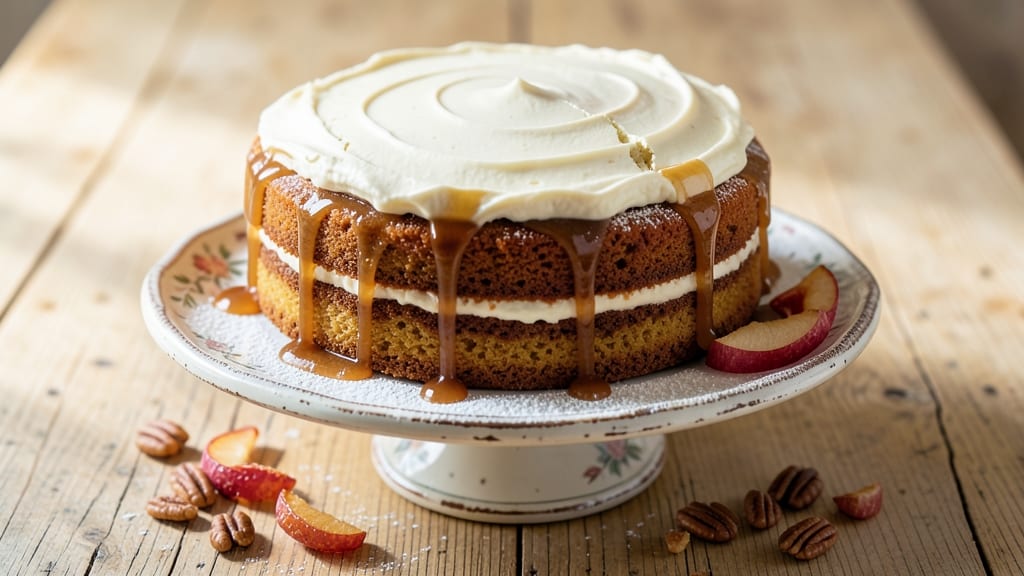
This egg-free applesauce cake delivers the same moist, tender layers you love without a single egg—just buttermilk and applesauce for binding. 💛 The secret lies in proper ingredient ratios and gentle mixing to maintain that signature cake texture, even without eggs.
I’ve perfected this recipe after testing countless variations, ensuring it stays rich, flavorful, and perfectly crumbly without drying out.
The beauty of this recipe is its simplicity: no eggs, no fuss, just pure comfort. Buttermilk replaces eggs for moisture, while applesauce adds natural sweetness and keeps the cake tender. The cake bakes up with a golden top and a crumb that’s just right—not too dense, not too cakey.
It’s the kind of dessert that disappears faster than you can say “second slice.”
Once baked, this cake pairs beautifully with a simple glaze or vanilla frosting, though many prefer it as-is for that classic applesauce flavor. The texture is consistently moist, with no dryness or heaviness—just the perfect balance of spice and fruit.
Whether you’re baking for a crowd or treating yourself, this recipe delivers restaurant-quality results without the egg.
Ready in just 50 minutes (including cooling), this cake is perfect for holidays, potlucks, or a cozy weekend treat. The buttermilk substitution ensures it’s just as tender as traditional recipes, proving that egg-free baking can be just as satisfying. Let’s get baking!
Ingredients for applesauce cake recipe no eggs
Buttermilk and applesauce replace eggs for a tender, moist crumb—no dryness, no fuss, just perfect layers.
| Ingredient | Amount | Notes |
|---|---|---|
| All-Purpose Flour 🌾 | 2 ½ cups | Sifted for light texture |
| Granulated Sugar 🍚 | 1 ½ cups | White or light brown |
| Unsalted Butter 🧈 | 1 cup | Room temperature, full-fat |
| Unsweetened Applesauce 🍎 | 1 cup | Unsweetened, smooth texture |
| Buttermilk 🥛 | 1 cup | Plain, not low-fat |
| Large Egg Whites 🥚 | 3 whole | Room temperature, beaten |
| Vanilla Extract 🌸 | 2 tsp | Pure extract, not imitation |
| Baking Powder 🍞 | 2 tsp | Aluminum-free for best rise |
| Baking Soda 🍞 | ½ tsp | Freshly opened |
| Ground Cinnamon 🌿 | 1 ½ tsp | Freshly ground preferred |
| Salt 🧂 | ½ tsp | Fine sea salt |
| Granny Smith Apples 🍎 | 2 medium | Peeled, finely diced |
The applesauce is your secret weapon here—unsweetened, smooth texture is key. Mott's or Libby's brands work perfectly, but avoid chunky styles. The Granny Smith apples add tangy brightness, but any firm apple works—just peel and dice them uniformly. For the flour, King Arthur or Gold Medal brands are my go-to for consistent results. The buttermilk? Don't substitute powdered buttermilk mix—real buttermilk adds that tangy depth you can't replicate. If you're short on time, mix 1 tbsp lemon juice with 1 cup milk as a quick swap.
No buttermilk? Plain yogurt thinned with milk works in a pinch, but the texture will be slightly denser. Short on applesauce? Pumpkin puree at half the amount gives a similar moisture boost. The egg whites are non-negotiable for that light texture—no substitutions here. For the butter, full-fat is a must—low-fat versions will make the cake dry. The vanilla extract should be pure, not imitation—the difference is noticeable. If you're baking at high altitude, increase the baking powder by 1/4 tsp to ensure proper rise. The cinnamon should be freshly ground if possible—pre-ground loses its punch quickly.
Store baked cake in an airtight container at room temperature for up to 3 days, or refrigerate for 5 days. For longer storage, slice and freeze portions for up to 3 months. The cake reheats beautifully—just wrap a slice in a damp paper towel and microwave for 15 seconds. I like to make two batches: one for immediate serving and one to freeze for lazy weeknights. The applesauce flavor actually deepens slightly after a day or two, making leftovers even more delicious. If you're planning ahead, assemble the cake batter the night before—it rests better and bakes more evenly.
Why You'll Love This Recipe
- No-Fuss Mixing: I swear by this recipe—just stir, pour, bake. The applesauce replaces eggs and adds moisture, so no whisking until your arms ache or measuring tiny egg whites. Honestly, I’ve made it while scrolling through emails.
- Moist Magic: That buttermilk and applesauce combo? It’s the secret to a cake that stays tender for days. No dry crumbs here—just a soft, slightly spiced crumb that begs for another slice. (Yes, even on a Tuesday night.)
- Budget Baking: Flour, sugar, butter—you’ve got those staples. Applesauce? I use whatever’s on hand, and buttermilk’s cheaper than fancy milk substitutes. This cake costs less than half of what I’d spend on a boxed mix, but tastes like I slaved over it.
- Leftovers That Win: Slice it fresh or reheat a piece the next day—it’s just as good. I’ve packed it for lunches, served it at potlucks, and even used it as a base for a trifle. Not the prettiest, but the taste makes up for it every time.
Step-by-step instructions for applesauce cake no eggs
This cake delivers tender, moist layers without eggs—just clever substitutions and precise technique.
👨🍳 Step 1: Whisk Dry Ingredients for Light Texture
In a large bowl, sift together the 2.5 cups All-Purpose Flour, 2 tsp Baking Powder, 0.5 tsp Baking Soda, 1.5 tsp Ground Cinnamon, and 0.5 tsp Salt. Whisk vigorously for 30 seconds until no lumps remain. This ensures even distribution of leavening agents—critical for that perfect rise without eggs.
I like to press down on the flour mixture with a spatula after whisking to break up any stubborn clumps. Set this bowl aside for now—we'll come back to it after preparing the wet ingredients. The key here is creating a smooth base that won't develop gluten when mixed later.
🍳 Step 2: Cream Butter and Sugar for Structure
In a separate large mixing bowl, combine the 1 cup Unsalted Butter (at room temperature) and 1.5 cups Granulated Sugar. Using an electric mixer on medium speed, beat for 3-4 minutes until the mixture becomes light and fluffy, nearly doubling in volume. You'll see ribbons form when you lift the beaters—this incorporates air that helps create that tender crumb.
Here's where it gets tricky: if your butter isn't properly softened, you'll end up with a dense cake. Press the butter between two sheets of parchment and let it sit at room temperature for 15-20 minutes before starting if it's too cold. The mixture should look pale and airy when ready.
🍳 Step 3: Blend Wet Ingredients for Moisture
Add the 1 cup Unsweetened Applesauce, 1 cup Buttermilk, and 2 tsp Vanilla Extract to the butter-sugar mixture. Mix on low speed for 1 minute until fully combined. The applesauce acts as our egg substitute here—it adds moisture without adding density. You'll notice the mixture will look slightly thicker than traditional cake batter.
Next, gently fold in the 3 whole Large Egg Whites using a rubber spatula. Be careful not to overmix—just combine until no streaks remain. The egg whites provide structure that would normally come from whole eggs, while the applesauce and buttermilk keep everything tender. This is the secret to that perfectly moist crumb without eggs.
🥘 Step 4: Combine and Fold in Apples
Gradually add the dry ingredients to the wet mixture, mixing on low speed just until combined—about 20-30 seconds. You should still see some flour streaks. Overmixing develops gluten, which makes cakes tough. Then, fold in the 2 medium Granny Smith Apples (finely diced) using a spatula until evenly distributed.
The apples should be evenly spread throughout the batter. If you're worried about them sinking, gently fold them in from the bottom of the bowl first. This step ensures every bite has that perfect apple flavor and texture. The batter will be thick but pourable—don't be tempted to add more liquid.
🔥 Step 5: Bake in Layers for Perfect Rise
Preheat your oven to 350°F and grease two 8-inch round cake pans (or line with parchment circles). Divide the batter evenly between the pans. Bake for 25-30 minutes, or until a toothpick inserted in the center comes out clean. The edges should be golden brown while the center remains slightly springy.
I always check for doneness at the 25-minute mark—this cake can dry out quickly if overbaked. As soon as it passes the toothpick test, remove from the oven and let cool in the pans for 10 minutes. Then transfer to a wire rack to cool completely before frosting. The cooling process is crucial—it allows the cake to set properly while maintaining that moist texture.
Pro Tips For Making Applesauce Cake Recipe No Eggs
- MIX DRY INGREDIENTS FIRST: I learned this the hard way—adding applesauce to flour creates a gummy mess. Sift the flour, sugar, and spices together before cutting in the butter. This keeps the texture light and prevents a dense, gluey cake. (Yes, even if you're impatient like me.)
- USE ROOM-TEMPERATURE BUTTER: Cold butter makes this cake greasy; soft butter creates flaky layers. Let the butter sit out for 30 minutes before creaming, or microwave it for 10 seconds if you’re in a rush. The goal? A smooth, pale ribbon when you fold in the sugar.
- DON’T OVERMIX THE BATTER: The second you see streaks of flour, stop. Overmixing develops gluten, turning your tender cake into a chewy brick. Fold in the buttermilk and applesauce gently—just until combined. Your future self will thank you.
- BAKE UNTIL THE CENTER HITS 205°F: Applesauce cakes can look done before they are. Insert a thermometer into the center—if it reads below 200°F, it’s still cooking. Pull it out too soon, and you’ll end up with a gummy middle. (I know, I know—it’s tempting to rush.)
Essential equipment for applesauce cake recipe no eggs
Mixing Essentials
Start with a stand mixer or hand mixer for creaming butter and sugar—this incorporates air that gives the cake its light texture. I recommend a KitchenAid Artisan Series for consistent performance, but any quality mixer will work.
For folding egg whites, use a rubber spatula to avoid overmixing, which can make the cake dense. A medium-sized mixing bowl (at least 5-quart capacity) prevents spills when combining wet and dry ingredients. 🍳
Baking Tools
Two 8-inch round cake pans are essential for even baking—opt for non-stick pans or line them with parchment circles to prevent sticking. I prefer Wilton Perfect Results pans for their even heat distribution. A baking sheet helps cool the cake layers after baking.
For checking doneness, keep a toothpick handy to test the center—it should come out clean with just a few moist crumbs. Preheat your oven using an oven thermometer to ensure accurate 350°F temperature, as ovens often run hot or cold.
Prep Gear
A fine-mesh sieve is crucial for sifting dry ingredients to remove lumps and ensure even distribution of leavening agents. For dicing apples, a sharp chef’s knife or mandoline slicer makes quick work of the task—just be careful with the mandoline.
A spatula helps scrape every last bit of batter from the bowl, and a measuring cups and spoons set ensures precise ingredient ratios. I also keep a microplane handy for grating cinnamon fresh, which adds depth of flavor. 🌿
Cooling and Storage
After baking, transfer the cake layers to a wire cooling rack to prevent sogginess. For storage, use an airtight container with parchment paper between layers to keep them moist. A serrated knife makes clean slices when serving.
If freezing, wrap individual slices in plastic wrap and place them in a freezer bag for up to 3 months. For reheating, a microwave-safe plate works best—cover with a damp paper towel and heat for 10-15 seconds.
Nutrition facts
Frequently asked questions
Can I substitute applesauce for eggs in other cake recipes?
Applesauce works best in moist, dense cakes like this one, but it's not a perfect 1:1 egg substitute. For every 1 egg in a recipe, use ¼ cup unsweetened applesauce. However, it lacks protein and fat that eggs provide, so the texture may be slightly less stable. This recipe works because we're using egg whites separately for structure while applesauce adds moisture.
Why does my egg-free cake turn out dense?
Overmixing is the #1 culprit—it develops gluten that makes cakes tough. Also, ensure your butter is properly softened and you're using fresh baking powder. The egg whites must be folded gently, not beaten, to maintain airiness. If your cake still seems dense, try reducing the flour by 1-2 tablespoons or increasing the baking powder by ¼ teaspoon.
Can I make this cake in a single layer instead of two?
Yes! Use a 9-inch round pan and reduce baking time by 5-7 minutes. The center should still be slightly springy when done. For best results, grease the pan thoroughly and consider lining it with parchment. Single-layer cakes often bake faster due to less surface area, so keep a close eye after 20 minutes.
What's the best frosting for this cake?
A simple cream cheese frosting or vanilla glaze complements the applesauce flavor perfectly. For a glaze, mix ½ cup powdered sugar with 2 tbsp milk and 1 tsp vanilla. For extra richness, try a caramel drizzle made with melted butter and brown sugar. Avoid citrus-based frostings—they can compete with the apples' natural acidity.
How do I store leftovers to keep them moist?
Store in an airtight container with parchment paper between layers at room temperature for up to 3 days. For longer storage, refrigerate for 5 days or freeze slices for 3 months. To reheat, microwave for 10-15 seconds covered with a damp paper towel. The cake actually tastes better the next day as flavors meld!