
Desserts
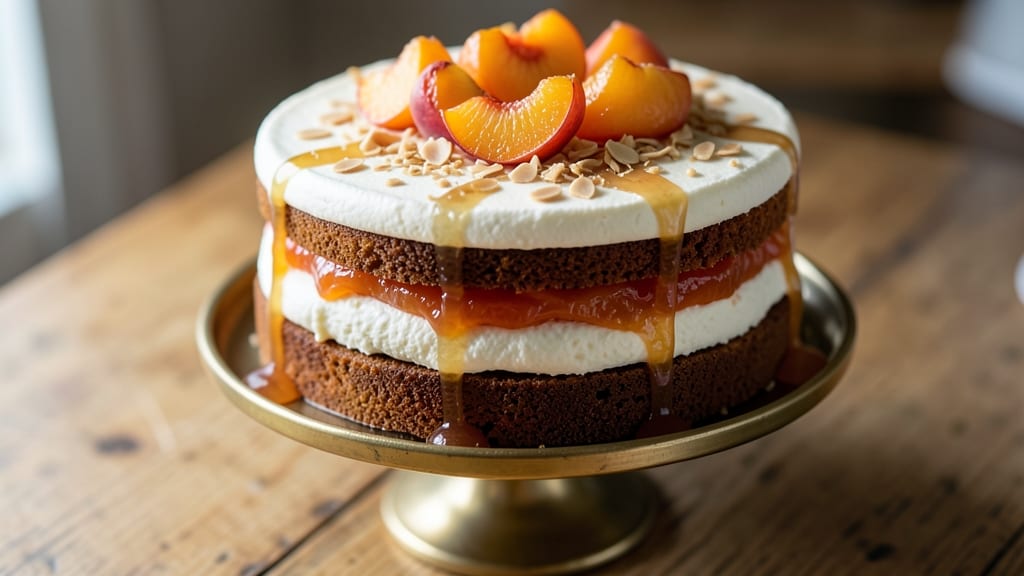
This apricot cake recipe UK delivers the perfect balance of buttery sponge and tangy apricot filling that’s become a British baking classic. 💛 The secret lies in a moist, self-raising flour base that’s light yet sturdy enough to hold the jam, while the caramelized apricots create layers of sweet-tart flavor with every slice.
I’ve adapted this recipe to use UK measurements and ingredients—like good-quality apricot jam—so it’s foolproof for home bakers. What sets this cake apart is the caramelized apricot filling, made by gently heating the jam with a splash of water to create a glossy, sticky layer between the sponge.
The buttery frosting adds a smooth finish, but you can skip it if you prefer a simpler presentation. This recipe is designed to be easy to follow, with clear steps for achieving that signature texture—no fancy techniques required.
The result is a cake that’s rich yet balanced, with a tender crumb and bursts of apricot flavor in every bite. It’s ideal for summer gatherings, afternoon tea, or as a special treat to impress guests.
The cake keeps well for up to three days, making it perfect for meal prep or gifting. For extra flair, dust the top with icing sugar or garnish with fresh apricots. Here’s how to bake it to perfection—simple, reliable, and utterly delicious.
Ingredients for apricot cake recipe uk
Here’s everything you need to create a classic British apricot cake with buttery sponge and caramelized filling.
| Ingredient | Amount | Notes |
|---|---|---|
| Self-Raising Flour 🌾 | 2 ½ cups | UK standard measure (175g) |
| Unsalted Butter 🧈 | 1 cup | Softened, UK 225g block |
| Granulated Sugar 🍚 | 1 ½ cups | UK fine white sugar |
| Large Eggs 🥚 | 2 whole | UK size 6, room temperature |
| Vanilla Extract 🌸 | 1 tbsp | Pure vanilla extract |
| Milk 🥛 | ½ cup | UK whole milk |
| Apricot Jam 🍑 | 1 ½ cups | Good-quality UK apricot jam |
| Water 💧 | 2 tbsp | For caramelizing jam |
| Icing Sugar 🍚 | 1 cup | UK icing sugar (powdered sugar) |
| Fresh Apricots 🍑 | 4 whole | For garnish (optional) |
| Salt 🧂 | ¼ tsp | Fine sea salt |
The self-raising flour is key here—it’s pre-mixed with baking powder, so no need to add extra. UK brands like Andrew Geddes or Dr. Oetker work perfectly. For the butter, grab a 225g block from Tesco or Sainsbury’s—it’s the standard size for British baking. The apricot jam should be good-quality, like Hain or Bonnie—avoid the cheap own-brand stuff. Fresh apricots for garnish? Wait until summer—they’re at their peak then, and you’ll find them at local markets or Waitrose when in season.
No self-raising flour? Mix 2 cups plain flour with 2 tsp baking powder. Running short on butter? Vegetable oil or margarine works in a pinch, though butter gives that classic richness. Swap the apricot jam for plum or damson jam if needed—just adjust the water slightly to get the same caramelized effect. The icing sugar can be skipped entirely if you prefer a simpler finish. For extra depth, add a teaspoon of lemon zest to the sponge batter—it brightens the flavor beautifully.
Store the cake in an airtight container at room temperature for up to 3 days. For longer storage, wrap tightly in cling film and keep in the fridge for 5-6 days. The filling stays fresh for 2 days once cut—just pop it back in the oven for 10 minutes at 180°C (350°F) to revive the texture. Freezing isn’t recommended, as the jam can get too soft. Serve with a cup of Earl Grey tea for the full British experience.
Why You'll Love This Recipe
- No Fuss Mixing: This cake practically mixes itself—just fold the flour into the butter and sugar, crack in the eggs, and stir. No sifting, no overworking the batter, just a few minutes of gentle folding. Honestly, my dough gets made while I’m still waiting for the oven to heat.
- Golden Apricot Magic: That buttery, self-raising base turns into a tender crumb, and when you fold in the apricot jam or compote, it’s like a hug in cake form. The vanilla ties it all together—warm, fruity, and just sweet enough to make you reach for seconds.
- Occasion Flexible: Too good for a Sunday bake but not fussy enough for a dinner party? Perfect. Slice it for breakfast with tea, pack it for a picnic, or serve it with clotted cream and jam—it works everywhere. My in-laws even asked for it at Christmas.
- Budget-Friendly Luxury: Uses pantry staples—no expensive ingredients, just butter, sugar, and eggs—and stretches further than you’d think. A single batch feeds four for dessert or six for breakfast, and leftovers? They vanish in a day. (Yes, even on a Tuesday night.)
Step-by-step instructions for apricot cake
Here's how to create a perfectly layered apricot cake with moist butter sponge and tangy jam filling.
👨🍳 Step 1: Prepare the Apricot Filling
In a small saucepan, combine the 1.5 cups apricot jam with 2 tbsp water. Bring to a gentle simmer over medium heat and cook for 5-7 minutes until the mixture thickens slightly and becomes glossy. You're looking for a consistency that coats the back of a spoon but isn't completely set.
Here's the thing—this caramelized filling is what makes the cake special. The water helps break down the jam's texture, creating a smoother, more spreadable layer between the sponge. Once thickened, remove from heat and let cool completely before using. If it thickens too much while cooling, whisk in a teaspoon of milk to restore spreadability.
🍳 Step 2: Make the Cake Batter
Preheat your oven to 350°F and grease two 8-inch round cake tins, lining the bottoms with parchment paper. In a large mixing bowl, cream together the 1 cup softened unsalted butter and 1.5 cups granulated sugar until light and fluffy, about 3-4 minutes using an electric mixer.
Add the 2 whole large eggs one at a time, mixing well after each addition. Stir in the 1 tbsp vanilla extract and 0.25 tsp salt. Sift in the 2.5 cups self-raising flour and gently fold it in using a spatula until just combined. Be careful not to overmix—the batter should be smooth with no flour streaks remaining.
🥘 Step 3: Assemble and Bake the Cake
Divide the batter evenly between the prepared cake tins. Spread half of the cooled apricot filling over the first layer, then top with the remaining batter. Spread the remaining filling over this second layer. Use a spatula to smooth the top surface.
Bake for 25-30 minutes or until a skewer inserted into the center comes out clean. I know it seems like a long time, but the cake needs to bake through completely to avoid a gummy center. Rotate the pans halfway through baking for even cooking. Let the cakes cool in the tins for 10 minutes before transferring to a wire rack to cool completely.
🍽️ Step 4: Prepare the Apricot Glaze
While the cakes cool, make the apricot glaze by whisking together the 1 cup icing sugar with 2-3 tbsp apricot jam (from the remaining jam) and enough milk to achieve a smooth, drizzling consistency. You want it to be thick enough to coat the back of a spoon but still pourable.
This glaze adds that professional finish and enhances the apricot flavor. If the glaze is too thick, add milk 1 tsp at a time until it reaches the right consistency. The glaze should be smooth and glossy—no lumps or graininess. Transfer to a piping bag or small bowl for easy application.
🍰 Step 5: Assemble and Decorate
Once both cake layers are completely cool, place one layer on a serving plate. Spread a thin layer of apricot filling over the top, then place the second layer on top. Gently press down to create a level top surface.
Pipe or drizzle the apricot glaze over the top and sides of the cake, allowing some to drip down the sides for an elegant finish. Arrange the 4 whole fresh apricots on top for decoration, if using. Serve at room temperature for the best texture and flavor experience. The cake keeps well covered at room temperature for 2-3 days.
Pro Tips For Making Apricot Cake Recipe Uk
- WEIGH THE FLOUR: The UK recipe expects self-raising flour to be measured by weight, not volume—150g is your target. I learned this the hard way when my cake turned dense; scooping from the bag traps air and adds too much. Use digital scales and spoon the flour into the bowl without packing it down.
- SOFTEN THE BUTTER FIRST: Room-temperature butter mixes better and creates a lighter crumb. Take the block out of the fridge 30 minutes before you start, or microwave it for 10-15 seconds if you’re in a rush. Cold butter makes the batter fight you, and nobody wants to fight their cake.
- DON’T OVERMIX THE BATTER: After folding in the apricots, give it just 10 strokes—no more. Overmixing develops gluten, and your cake will turn out tough instead of tender. Stop when the fruit is evenly distributed, even if a few bits look stubborn.
- BAKE UNTIL SPRINGY: The cake’s done when it bounces back slowly when pressed in the middle, not when the top turns golden. Overbaking dries it out, and underbaking leaves it gummy. If the edges pull away from the tin, it’s ready—don’t wait for the timer.
Common mistakes when making this dish
Overmixing the Batter
I’ve seen so many apricot cakes turn out dense and heavy because the batter was overmixed. The moment you incorporate the self-raising flour, stop stirring as soon as it’s just combined—no streaks, no lumps, but definitely no extra mixing.
Overmixing develops the gluten in the flour, which makes the cake tough instead of tender. I recommend using a spatula to gently fold the flour in until it disappears. Trust me, your cake will thank you with a light, airy crumb. 💛
Skipping the Cooling Step
One of the biggest mistakes is rushing the cooling process. If you try to assemble the cake layers while they’re still warm, the apricot filling will melt and create a soggy mess. Always let the first layer cool completely before spreading the filling and adding the second layer.
I know it’s tempting to dig in right away, but patience here makes all the difference. Let both layers cool in their tins for 10 minutes, then transfer to a wire rack to cool fully before assembly.
Using Low-Quality Jam
The apricot filling is the star of this cake, so don’t skimp on the jam. Cheap, thin, or overly sweet jam won’t caramelize properly and will make your cake taste artificial.
Invest in a good-quality UK apricot jam like Hain or Bonnie—they have the right balance of sweetness and tang. If you’re using fresh apricots, make sure they’re ripe but not mushy. The jam should be thick enough to hold its shape but still spreadable when caramelized.
Incorrect Oven Temperature
Baking at the wrong temperature is a quick way to ruin your cake. If your oven runs hot, the cake can dry out before it’s fully cooked. If it’s too cool, the center might stay gummy.
Always preheat your oven to 350°F (180°C) and use an oven thermometer to confirm accuracy. I’ve had cakes fail because the oven wasn’t calibrated—don’t let that happen to you. If your cake browns too quickly, tent it loosely with foil to prevent over-browning while keeping the center moist.
Not Leveling the Layers
Uneven layers can make your cake look messy and affect the texture. After baking, use a serrated knife to level the tops of both cake layers before assembling. This ensures the filling spreads evenly and the cake sits flat on the plate.
I like to place the cake on a cake stand or plate, then use a long, even stroke to trim the domed tops. A level cake not only looks professional but also slices neatly, so every guest gets a perfect portion. 🍰
Ignoring the Glaze Consistency
The apricot glaze is what ties the whole cake together, so getting its consistency right is crucial. If it’s too thick, it won’t drizzle smoothly, and if it’s too thin, it’ll run off the sides.
The glaze should be thick enough to coat the back of a spoon but still pourable. Start with 1 cup icing sugar and 2-3 tbsp jam, then add milk 1 tsp at a time until you reach the perfect consistency.
Test it on a small plate first—if it flows like honey but still clings slightly, you’re golden. A glossy, even glaze elevates the cake from homemade to showstopper.
Nutrition facts
Frequently asked questions
Can I make this apricot cake without self-raising flour?
Yes, you can substitute it by mixing 2 cups plain flour with 2 tsp baking powder. Simply sift them together before adding to your batter. This works perfectly for the same tender crumb, though the texture may be slightly denser. Always measure carefully to maintain the right balance.
How do I store leftover apricot cake?
Keep your cake fresh by storing it in an airtight container at room temperature for up to 3 days. For longer storage, wrap it tightly in cling film and refrigerate for 5-6 days. The filling stays best for 2 days—just warm the cake for 10 minutes at 180°C (350°F) to revive its texture before serving.
What if I don’t have fresh apricots for garnish?
No problem! Skip the fresh apricots or use dried apricot slices instead for decoration. You could also dust the top with icing sugar or add a sprinkle of crushed almonds for extra texture. The cake will still taste delicious without them—it’s all about the filling!
Can I use plum jam instead of apricot jam?
Plum jam works beautifully and gives a slightly deeper flavor. For best results, use the same amount and adjust the water slightly—plum jam may need 1 extra tbsp to achieve the same caramelized consistency. Damson or blackberry jam also make excellent alternatives for a fruity twist.
Why did my cake turn out dense?
Dense cake usually happens from overmixing the batter or skipping the cooling step. Stop mixing as soon as the flour disappears into the batter, and always let layers cool completely before assembling. Another common issue is using too much flour—measure carefully by weight (175g) rather than volume for accuracy.