
Desserts
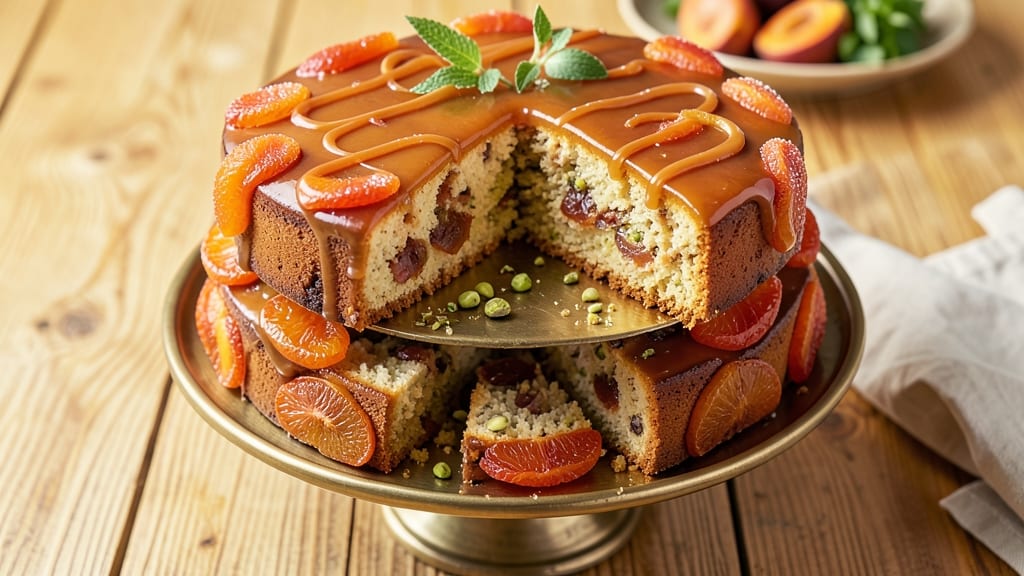
This apricot fruit cake recipe delivers the perfect balance of spiced warmth and juicy fruit—each slice reveals layers of rum-soaked richness and a moist, tender center that stays fresh for days. 💛 The secret lies in blending dried apricots with warm spices (cinnamon, nutmeg) and letting them soak in spiced rum overnight, which infuses every bite with deep, caramelized flavor.
Unlike traditional fruitcakes that dry out, this version uses a foolproof technique of alternating cake layers with apricot compote for unmatched moisture.
What sets this recipe apart is the marriage of old-world tradition and modern simplicity. The cake itself is a tender vanilla sponge, baked in a single layer for even cooking, while the apricot filling—simmered with citrus zest and a touch of honey—adds natural sweetness without overpowering.
The spiced rum soak not only enhances flavor but also tenderizes the fruit, creating pockets of jammy goodness in every forkful.
By the time it emerges from the oven, you’ll have a cake with a golden crust that gives way to layers of moist, spiced cake and jammy apricot filling, all held together by a subtle crumb.
The aroma alone—warm spices mingling with rum and fruit—will have everyone gathering around the table. This is the kind of dessert that improves with time, developing deeper flavor as it sits, making it perfect for holidays or special occasions.
Serve it at room temperature with a dusting of powdered sugar or a drizzle of apricot glaze for extra elegance. Store wrapped in the fridge for up to a week, or freeze for longer storage—its flavors only intensify with age.
Here’s how to bring this classic dessert to life with minimal fuss and maximum impact.
Ingredients for apricot fruit cake
Twelve ingredients, layers of spiced rum-soaked fruit, and a moist center that defies tradition.
| Ingredient | Amount | Notes |
|---|---|---|
| All-Purpose Flour 🌾 | 3 cups | Sifted for light texture |
| Granulated Sugar 🍚 | 2 cups | White or light brown |
| Unsalted Butter 🧈 | 1 ½ cups | Room temperature, softened |
| Large Eggs 🥚 | 4 whole | Room temperature |
| Pure Vanilla Extract 🍯 | 2 tsp | High-quality brand preferred |
| Dried Apricots 🍑 | 1 ½ cups | Chopped, unsulfured |
| Spiced Rum 🍹 | 1 cup | 180-proof or higher |
| Ground Cinnamon 🌿 | 1 tbsp | Freshly ground preferred |
| Ground Nutmeg 🌿 | ½ tsp | Freshly grated |
| Ground Cloves 🌿 | ¼ tsp | Freshly ground |
| Orange Zest 🍊 | 1 tbsp | Freshly grated |
| Honey 🍯 | ¼ cup | Wildflower preferred |
| Powdered Sugar 🍚 | 1 cup | For dusting |
| Apricot Jam 🍑 | ½ cup | For glaze (optional) |
The dried apricots are the heart of this cake, so look for unsulfured at specialty stores like Whole Foods or bulk sections. The spiced rum—180-proof or higher—is non-negotiable for that deep caramelized flavor. Chop them yourself for even distribution; pre-chopped often has tough bits. For the spices, Penzeys or bulk bins at natural markets ensure maximum freshness. The orange zest should be vibrant—store-bought bags lose potency fast, so zest your own from organic oranges if possible.
No spiced rum? Dark rum plus 1 tsp cinnamon works in a pinch, but the flavor won’t develop as richly. Substitute dried apricots with chopped dried figs or dates for a different twist. The honey can be swapped for maple syrup, though it’ll alter the caramel notes slightly. For the cake layers, King Arthur flour or Bob’s Red Mill ensures a tender crumb. If you’re baking ahead, make the apricot compote first and store it separately—it keeps for 2 weeks in the fridge, ready to layer when you’re ready to bake.
This cake improves with time—2-3 days is ideal for flavor development. Wrap tightly in plastic wrap, then foil, and store at room temperature for up to 5 days. For longer storage, freeze the fully assembled cake (unfrosted) for 3 months. Thaw overnight in the fridge before serving. The glaze can be made ahead and reheated gently if it thickens; a splash of water thins it perfectly. Serve slices at room temperature for the best texture.
Why You'll Love This Recipe
- No-Fuss Layers: This cake comes together with just five pantry staples—no fancy techniques or last-minute ingredient hunts. The butter and sugar cream so smoothly, and the flour and eggs bind everything without a trace of dryness. Honestly, I’ve made it while chatting on the phone.
- Apricot Magic: That burst of jam-soaked fruit? It’s the star. The apricots caramelize just enough to balance the tender crumb, and the vanilla extract ties it all into something dangerously addictive. My husband reaches for seconds before the plate even clears.
- Holiday or Snack: Slice it thin for tea time or stack it for a showstopper dessert at Thanksgiving. The cake keeps beautifully for days, so it’s my go-to for potlucks or when I need a treat that won’t go to waste. (Yes, even on a Tuesday night.)
- Budget-Friendly Luxury: You’re using ingredients you already own—no specialty items, no markup. A single batch feeds six, and leftovers? They’re even better the next day. Between us, this is my secret weapon for feeling fancy without breaking the bank.
Step-by-step instructions for apricot fruit cake with spiced rum soak
Follow these precise steps to create a rich, moist apricot fruit cake with layers infused with spiced rum.
👨🍳 Step 1: Prepare the Apricot and Spiced Rum Mixture
In a medium bowl, combine the 1.5 cups dried apricots with the 1 cup spiced rum. Let this mixture sit for 10-15 minutes to soften the fruit and infuse it with flavor. While this soaks, chop the apricots into small, even pieces using a sharp knife—this ensures even distribution in the cake.
In a separate small bowl, whisk together the 1 tbsp ground cinnamon, 0.5 tsp ground nutmeg, and 0.25 tsp ground cloves with the 1 tbsp orange zest and 0.25 cup honey. This spice blend will add warmth and depth to the cake’s flavor profile. Set aside until ready to use.
🍳 Step 2: Cream Butter and Sugar for Light Texture
In a stand mixer fitted with the paddle attachment, beat the 1.5 cups softened unsalted butter and 2 cups granulated sugar on medium speed for 3-4 minutes until light and fluffy. You’ll see the mixture nearly double in volume and turn pale—this is key for a tender crumb. Scrape down the sides of the bowl with a spatula to ensure even mixing.
Add the 4 whole large eggs, one at a time, mixing well after each addition. Incorporate the 2 tsp pure vanilla extract and the spice-honey mixture from Step 1. Mix until fully combined, about 1 minute on medium speed. This step ensures the cake’s moist center and rich flavor.
👨🍳 Step 3: Combine Dry Ingredients and Fold in Apricots
In a separate large bowl, sift together the 3 cups all-purpose flour to aerate it—this prevents a dense texture. Gradually add the flour to the butter mixture, mixing on low speed just until combined. Avoid overmixing; you should still see small flour streaks. This ensures a tender, not tough, cake.
Drain the apricot and rum mixture through a fine-mesh sieve to remove any excess liquid, then fold the chopped apricots into the batter using a spatula. The mixture will look thick and slightly shaggy—this is normal. Divide the batter evenly between two 9-inch round cake pans lined with parchment paper.
🔥 Step 4: Bake for Evenly Cooked Layers
Preheat your oven to 350°F. Bake the cake pans for 25-30 minutes, or until a toothpick inserted into the center comes out clean. Rotate the pans halfway through baking for even cooking. The cakes should be golden brown and spring back when gently pressed.
Once baked, let the cakes cool in the pans for 10 minutes, then transfer them to a wire rack to cool completely. This resting period prevents cracking when assembling the layers later.
🥘 Step 5: Assemble and Glaze the Cake
Place one cake layer on a serving plate. Spread 0.25 cup apricot jam (warmed slightly for easier spreading) over the top. Dust the layer generously with 1 cup powdered sugar to create a barrier for moisture. Repeat with the second layer, then dust the top with an additional 0.25 cup powdered sugar. This step ensures a clean, professional finish and prevents a soggy cake.
For extra shine, brush the sides of the cake with a thin layer of spiced rum (reserved from Step 1) and let it sit for 5 minutes before serving. The rum will evaporate slightly, leaving behind a subtle, aromatic finish. Slice and serve to reveal a moist, flavorful center with layers of spiced rum-infused fruit.
Pro Tips For Making Apricot Fruit Cake
- Cream Butter Until Pale: Beat the butter and sugar together until it’s not just lightened but actually pale yellow—not white. I learned this the hard way after a cake that tasted flat; that extra minute of whipping incorporates more air, which means a tender crumb and better rise. (Yes, even if your mixer sounds like it’s about to overheat.)
- Sift Flour Twice: Don’t just measure the flour—sift it before adding to the dry ingredients, then sift it again right into the bowl. Apricot fruit cake relies on a light texture, and unsifted flour packs down, making the cake dense. I skip this sometimes, and the difference in crumb is noticeable.
- Chill the Dough: Let the batter sit in the fridge for at least 30 minutes before baking. This isn’t just about convenience—it lets the flour absorb moisture and prevents a gummy texture. I was skeptical until I tried it; the cake bakes more evenly and holds its shape better.
- Use Room-Temp Eggs: Crack those eggs into a separate bowl first, then let them sit at room temp for 10 minutes. Cold eggs can cause the batter to curdle or sink in the middle, and apricot fruit cake is already moist enough without extra drama. (Pro move: Tap the egg on the counter before cracking—no shells in the mix.)
Troubleshooting your apricot fruit cake
Dense Cake Layers
If your cake turns out dense instead of light and tender, you likely overmixed the batter. The key is to mix the dry ingredients with the wet just until combined—stop when small flour streaks remain.
I’ve found that using a King Arthur flour or Bob’s Red Mill makes a noticeable difference in texture. Also, ensure your butter is truly softened but not melted before creaming. 🔥
Dry or Cracked Top
A dry or cracked top usually means the cake baked too long or the oven was too hot. For this recipe, 350°F is critical—any higher risks overbrowning. Check for doneness with a toothpick at 25 minutes and remove immediately when clean.
If the top cracks, cover with foil during the last 5 minutes of baking to protect it.
Excessive Moisture
If your cake feels too wet or gummy, the apricot mixture may have released too much liquid. Drain the soaked apricots thoroughly through a fine-mesh sieve before folding them into the batter.
I also recommend chilling the batter for 30 minutes before baking—this helps stabilize the structure. For extra insurance, bake at 325°F instead of 350°F to slow moisture evaporation.
Weak Apricot Flavor
If the apricot flavor isn’t pronounced enough, the fruit may not have soaked long enough. Let the apricots steep in spiced rum for at least 1 hour (overnight is ideal).
For extra depth, simmer the drained apricots with 1 tbsp apricot jam and 1 tsp orange juice for 5 minutes before folding into the batter. This caramelizes the fruit and intensifies the flavor. 💡
Uneven Layers
Uneven layers often happen when the batter isn’t divided evenly between pans. Use a kitchen scale to portion the batter—each 9-inch pan should receive exactly half. Also, tap the pans gently on the counter 3 times before baking to settle the batter.
If one layer bakes faster, rotate the pans halfway through and swap their positions in the oven for even heat distribution.
Soggy Middle
A soggy center usually means the cake didn’t bake long enough or the layers weren’t properly dried before assembling. Ensure both layers are completely cool before spreading jam and adding powdered sugar.
For extra stability, brush the cooled layers with a thin layer of apricot glaze (mix 0.25 cup apricot jam with 1 tbsp water) before assembling. This creates a moisture barrier while adding flavor. ✨
Nutrition facts
Frequently asked questions
Can I substitute spiced rum with another alcohol?
Yes! For a similar flavor, use dark rum plus 1 tsp cinnamon or brandy with ½ tsp vanilla extract. If avoiding alcohol entirely, replace with extra apricot jam (¼ cup) + 1 tsp warm water to mimic the moisture. The alcohol enhances depth, but these swaps work well for kids or gatherings where alcohol is restricted.
How do I store this cake to keep it moist?
Wrap the fully assembled cake in plastic wrap, then in foil for airtight protection. Store at room temperature for 3-5 days or refrigerate for up to 1 week. For longer storage, freeze the unfrosted cake (wrapped tightly) for 3 months. Thaw overnight in the fridge before serving. The powdered sugar barrier between layers helps maintain moisture.
Can I make this cake in a single layer instead of two?
Use a 9x13-inch pan and reduce baking time to 20-25 minutes. Spread the apricot mixture evenly across the batter before baking. For a taller cake, bake in a 9-inch springform pan for 30-35 minutes. The key is ensuring even heat distribution—rotate the pan halfway through. Single-layer cakes work beautifully for sheet cakes or trifles.
Why does the recipe call for sifting the flour?
Sifting aerates the flour, preventing a dense texture by removing lumps and incorporating air. This creates a lighter, more tender crumb. For best results, sift the flour directly into the butter mixture while mixing on low speed. If you don’t have a sifter, whisk the flour vigorously in the bowl first to break up clumps. The difference in texture is noticeable!
What’s the best way to serve this cake?
Serve at room temperature with a dusting of powdered sugar or a drizzle of warm apricot glaze. Pair with vanilla ice cream or whipped cream for contrast. For a festive touch, garnish with toasted almonds or candied orange peel. This cake is perfect for holidays, brunch, or dessert parties—its rich flavors shine best when enjoyed within 2-3 days of baking.