
Desserts
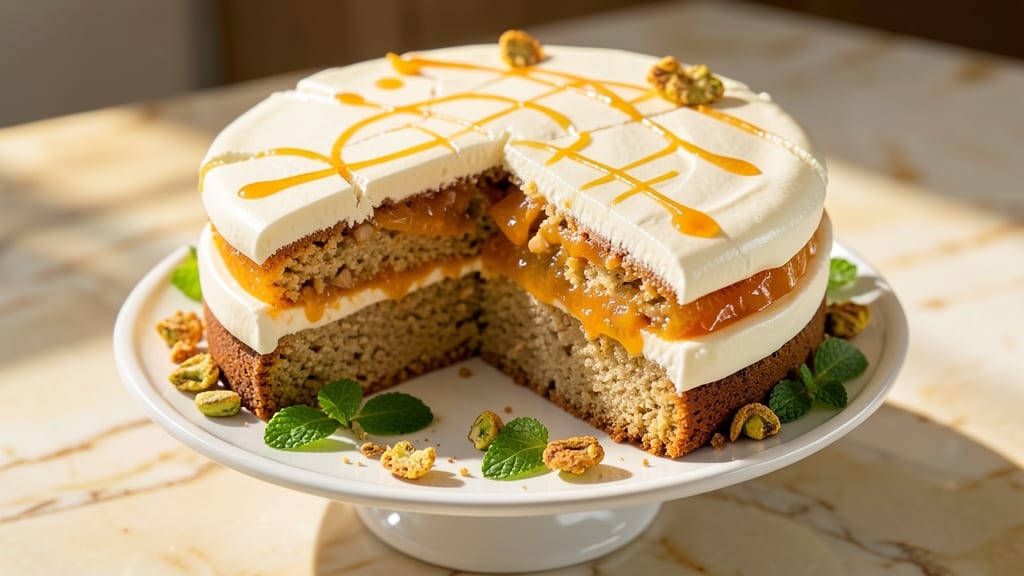
This Arabian cake recipe brings the rich flavors of the Middle East to your kitchen with layers of cardamom-spiced semolina cake and a fragrant orange blossom glaze. 🌟 The combination of warm spices and floral notes creates a dessert that feels both elegant and comforting—perfect for celebrations or special occasions.
What makes this recipe special is the balance of textures: tender, moist layers with a delicate crunch from the semolina, all topped with a glossy, aromatic glaze.
The foundation of this cake lies in its ingredients: ground cardamom for warmth, semolina for texture, and orange blossom water for that signature floral aroma. Unlike many cakes, this one relies on precise measurements and gentle folding to maintain its lightness.
The baking process is straightforward, but the key to success is patience—allowing the cake to cool completely before glazing ensures a smooth, professional finish.
What you’ll end up with is a stunning dessert that’s as beautiful as it is delicious. The cardamom-infused layers provide a subtle spice that pairs perfectly with the sweet, citrusy glaze. Each slice offers a harmonious blend of flavors and textures, making it a showstopper for any table.
This cake is traditionally served at weddings and festivals, but it’s just as welcome in everyday moments when you want to indulge in something special.
Whether you’re celebrating a holiday or simply craving a taste of the Middle East, this recipe delivers. The process is manageable for home bakers, and the result is a cake that feels like a hug—warm, inviting, and full of tradition. Let’s get started on creating this timeless dessert.
Ingredients for arabian cake
Eight slices of spiced semolina cake with a floral orange glaze—this is your Middle Eastern celebration in dessert form.
| Ingredient | Amount | Notes |
|---|---|---|
| All-Purpose Flour 🌾 | 3 cups | Sifted for light texture |
| Semolina Flour 🌾 | 1 cup | Fine grind preferred |
| Granulated Sugar 🍚 | 2 cups | Superfine for smooth batter |
| Unsalted Butter 🧈 | 1 ½ cups | Room temperature, cubed |
| Ground Cardamom 🌿 | 1 ½ tbsp | Freshly ground for aroma |
| Orange Blossom Water 🍊 | 1 tbsp | Pure, not imitation |
| Large Eggs 🥚 | 4 whole | Room temperature |
| Vanilla Extract 🌸 | 1 tbsp | Pure vanilla preferred |
| Baking Powder 🍞 | 1 ½ tsp | Aluminum-free |
| Salt 🧂 | ½ tsp | Fine sea salt |
| Powdered Sugar 🍚 | 2 cups | For glaze |
| Heavy Cream 🥛 | ½ cup | Chilled for glaze |
| Orange Zest 🍊 | 1 tbsp | Freshly grated |
| Orange Juice 🍊 | ¼ cup | Freshly squeezed |
Cardamom is the soul of this cake. Penzeys or Whole Foods carry the best ground variety—avoid the pre-ground stuff that's been sitting on shelves for months. If you can find whole cardamom pods, toast and grind them fresh (trust me, it's worth the extra minute). The semolina gives that signature crunch, so don't skip it—Bob's Red Mill makes a fine grind that works perfectly. Orange blossom water is the tricky one: Middle Eastern markets or specialty spice shops are your best bet. If you can't find it, a mix of orange juice and a pinch of rose water gets you close.
No orange blossom water? Double the orange juice and add 1 tsp rose water—it's not identical, but still delicious. Running low on semolina? Substitute 1/2 cup cornstarch for texture, though it won't be exactly the same. The butter needs to be room temperature—microwave 40 seconds if it's too cold. For the glaze, powdered sugar is non-negotiable—granulated won't dissolve properly. Want extra flavor? Add a pinch of ground cardamom to the glaze. The eggs should be at room temperature for even baking—pop them in warm water for 10 minutes if they're straight from the fridge.
This cake keeps beautifully—3 days at room temperature covered loosely with plastic, or 1 week refrigerated. The glaze sets as it cools, so don't rush serving. I always make a double batch for gatherings—it disappears fast. For storage, wrap tightly with plastic wrap and then foil to keep it fresh. The flavors actually improve slightly after the first day as everything melds together. Freezing? Not recommended—the glaze gets grainy. But if you must, freeze the layers before glazing, then add the glaze fresh when serving.
Why You'll Love This Recipe
- No Mixer Needed: I swear by this—just a bowl, a fork, and elbow grease. The semolina flour gives it that signature crumbly texture without requiring you to sift or cream butter for hours. (Yes, even on a Tuesday night.)
- Cardamom Magic: That tiny pinch of ground cardamom? It’s the secret weapon. Warm, floral, and just sweet enough—like a cozy hug in cake form. The butter keeps it rich without being heavy, and the sugar caramelizes into a subtle crunch.
- Crowd-Pleaser Always: Bring this to a potluck, birthday, or just because, and no one will ask what’s in it. Honestly, my dad’s coworkers still talk about the slice I brought to the office—no one expected it to disappear so fast.
- Budget-Friendly Luxury: You’re using pantry staples here: flour, sugar, butter. The cardamom is the only splurge, and a little goes a long way. Plus, it keeps for days in an airtight container—so you’re basically making dessert for next week’s you.
Step-by-step instructions for Arabian cardamom cake
Here's how to make layers of spiced cake that taste like Middle Eastern heaven.
👨🍳 Step 1: Cream Butter and Sugars to Light Perfection
In a stand mixer fitted with the paddle attachment, beat the 1.5 cups unsalted butter and 2 cups granulated sugar on medium speed for 5-7 minutes until light and fluffy. You'll know it's ready when the mixture nearly doubles in volume and leaves ribbons when the beaters are lifted.
This step is crucial—it incorporates air that makes the cake tender. I like to scrape down the sides every minute or so to ensure everything gets evenly creamed. Don't rush this part; under-creaming leads to dense cake. While mixing, add the 1.5 tablespoons ground cardamom and 1 tablespoon vanilla extract—this infuses the butter with those signature warm spices right from the start.
👨🍳 Step 2: Add Eggs and Orange Blossom Water
Add the 4 whole large eggs, one at a time, mixing well after each addition. Then stir in the 1 tablespoon orange blossom water—this floral note is what makes this cake taste authentically Arabian. Mix just until combined; overmixing here can develop gluten and make the cake tough.
The orange blossom water might smell strong, but trust me—it mellows out beautifully in the finished cake. If you're worried about the flavor being too overpowering, start with just ½ tablespoon and adjust to taste after baking. Here's where it gets fun: add the 1 tablespoon orange zest and mix until fully incorporated. The bright citrus will cut through the richness of the butter beautifully.
👨🍳 Step 3: Combine Dry Ingredients Gently
In a separate bowl, whisk together the 3 cups all-purpose flour, 1 cup semolina flour, 1.5 teaspoons baking powder, and 0.5 teaspoon salt. Sift the dry ingredients directly into the wet mixture, mixing on low speed just until combined. You should still see some flour streaks—this ensures a tender texture.
Real talk: don't overmix. Once the flour is incorporated, stop mixing immediately. The semolina flour adds a nice texture contrast to the cake, giving it that slightly crumbly yet moist quality. Fold in the dry ingredients gently with a spatula if your mixer struggles with the semolina's density.
⏰ Step 4: Bake Layers to Golden Perfection
Preheat your oven to 350°F and grease three 8-inch round cake pans or line them with parchment paper. Divide the batter evenly among the pans. Bake for 25-30 minutes or until a toothpick inserted in the center comes out clean and the tops are golden brown. Rotate the pans halfway through for even baking.
I press down gently on the batter during the first minute—this prevents air bubbles and ensures even contact with the pan. The semolina flour helps create that signature tender yet slightly dense texture. Let the layers cool in the pans for 10 minutes before transferring to a wire rack to cool completely. This prevents them from cracking when you remove them.
🍳 Step 5: Assemble with Orange Blossom Glaze
While the layers cool, make the glaze by whisking together the 2 cups powdered sugar, 0.5 cup heavy cream, 1 tablespoon orange zest, and 0.25 cup orange juice until smooth. The glaze should be thick enough to coat the back of a spoon but still pourable.
Place one cake layer on a serving plate, spread a thin layer of glaze, then add the next layer. Repeat with the final layer, then pour any remaining glaze over the top. Let the glaze set for 15-20 minutes before slicing. This glaze keeps the cake moist and adds that signature floral-citrus flavor that makes this cake special.
Pro Tips For Making Arabian Cake
- Whisk Butter First: DESCRIPTION: Cream your butter and sugar until it’s pale and fluffy—about 3-4 minutes with a hand mixer. I learned this the hard way: skipping this step means the semolina flour will absorb too much liquid and your cake turns dense instead of light. (Yes, even if you’re impatient like me.)
- Sift Semolina Twice: DESCRIPTION: Semolina is heavy and clumps easily. Sift it through a fine-mesh sieve before mixing it into the batter, then sift it again with the all-purpose flour. My grandmother swore by this, and she was right: the cake’s texture is noticeably smoother when the semolina is evenly distributed.
- Don’t Overmix: DESCRIPTION: Once you fold in the dry ingredients, stop mixing the second everything comes together. Overmixing develops gluten, and this cake needs a tender crumb, not a chewy one. Two gentle folds with a spatula is all it takes—trust the process.
- Test Doneness with a Toothpick: DESCRIPTION: The cake pulls away from the edges of the pan but might still look underdone. Insert a toothpick into the center—if it comes out with moist crumbs (not wet batter), it’s done. I was skeptical until I tried it: pulling it too early gives you a gummy center, and no one wants that.
Troubleshooting perfect results
Cake Too Dense
If your layers turn out dense instead of light and tender, you likely overmixed the batter or didn't cream the butter and sugar properly. The key is to mix the dry ingredients just until combined—stop as soon as you see flour streaks disappear.
For extra insurance, fold in the semolina flour last with a spatula to preserve its texture. Also, ensure your butter is truly room temperature (it should dent when pressed but not be greasy). 🌟
Glaze Not Setting
A glaze that pools or doesn't set properly usually means it's too thin or the powdered sugar wasn't dissolved completely. Whisk the glaze until smooth, then let it sit for 5 minutes before using—this helps the sugar absorb the liquid.
If it's still too runny, add 1 more tablespoon powdered sugar and whisk again. For extra stability, chill the cake layers for 10 minutes before glazing to help the glaze adhere better.
Cracked Layers
Cracks often appear when the cake cools too quickly or the layers aren't baked evenly. Prevent this by letting the cake cool in the pans for 10 minutes before transferring to a wire rack.
Also, avoid opening the oven door during the first 20 minutes of baking to maintain steady heat. If cracks do appear, they can be fixed by brushing them with a little extra glaze or dusting with powdered sugar after serving.
Spice Overpowering
The cardamom flavor can be strong, especially if you're new to it. Start with 1 teaspoon ground cardamom instead of 1.5 tablespoons and adjust to taste after baking.
If the flavor is still too intense, balance it by adding ½ teaspoon vanilla extract or a pinch of salt to the batter. The orange blossom water should be used sparingly—½ tablespoon is plenty for a first try.
Batter Too Thin
A thin batter usually means the butter wasn't creamed enough or the eggs weren't incorporated properly. Re-cream the butter and sugar until light and fluffy (it should hold a peak when the beaters are lifted), then add the eggs one at a time, mixing just until combined.
If the batter still seems too thin, fold in 1-2 tablespoons extra semolina flour to thicken it. This helps create the signature texture without making the cake dense.
Oven Temperature Issues
An oven that runs hot or cold can throw off your bake. Always preheat your oven for at least 20 minutes before baking. Test your oven's accuracy with an oven thermometer—many ovens run 25-50°F hotter than the set temperature.
If your cake browns too quickly, reduce the temperature to 325°F and check for doneness 5 minutes early. For even baking, rotate the pans halfway through the cooking time.
Nutrition facts
Frequently asked questions about Arabian cardamom cake
Can I make this cake without orange blossom water?
Yes! If you can't find authentic orange blossom water, substitute with ½ teaspoon rose water plus 1 extra tablespoon orange juice. This combo mimics the floral notes while keeping the citrus brightness. For a simpler approach, just use 2 tablespoons extra orange juice—it won't be identical, but still delicious.
How do I store leftover Arabian cake?
Keep it airtight at room temperature for 3 days or refrigerate for up to 1 week. For longer storage, freeze the layers (without glaze) for 2 months. To serve, thaw at room temperature, then add fresh glaze. The flavors actually improve after 24 hours as the spices meld.
What's the best way to serve this cake?
Slice into 8-10 wedges for sharing. Garnish with fresh mint leaves or toasted pistachios for extra flair. Serve at room temperature with Arabic coffee or mint tea for an authentic experience. For a festive touch, dust with powdered sugar or drizzle with extra glaze before serving.
Can I use this recipe for a gluten-free version?
Yes, but with adjustments. Replace the all-purpose flour with 1:1 gluten-free baking flour and the semolina with gluten-free cornstarch. Add ½ teaspoon xanthan gum to help bind the texture. Note that the crumb will be slightly different, but still delicious. Test with a small batch first.
Why does my cake have a strong cardamom taste?
The cardamom flavor intensifies as the cake cools. Start with 1 teaspoon instead of 1.5 tablespoons if you're sensitive to spices. Balance it by adding ½ teaspoon vanilla extract or a pinch of salt to the batter. The orange blossom water helps mellow the spice—don't skip it!