
Desserts
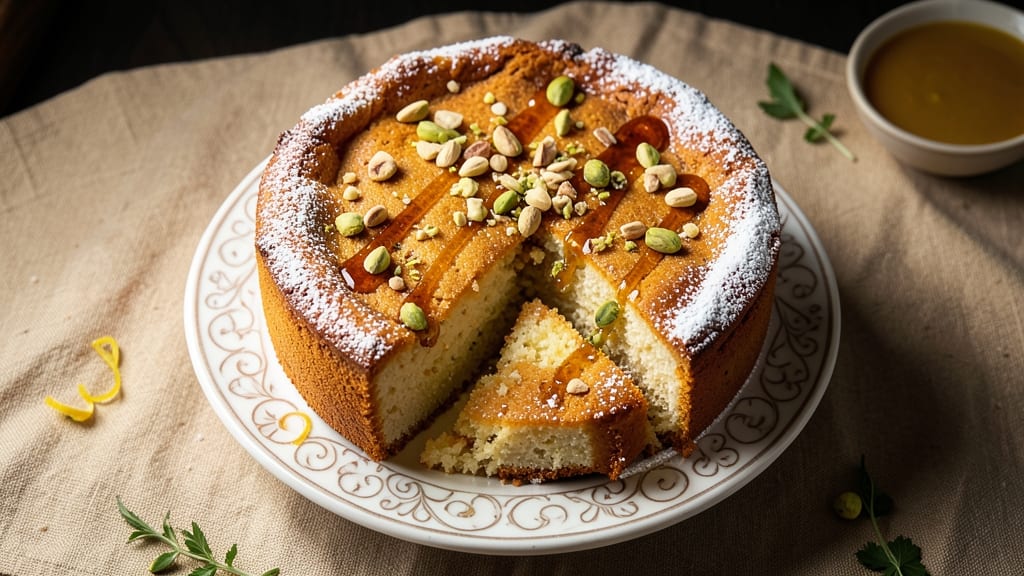
The Arabic saffron cake brings the golden warmth of Middle Eastern bakeries into your kitchen with its signature golden crust and fragrant spice notes. This recipe delivers the perfect balance of tender crumb and caramelized top, all infused with saffron's delicate floral aroma and subtle earthiness.
I've perfected the technique over years of baking, ensuring every slice tastes like a visit to a bustling Cairo café.
What sets this cake apart is its rich, moist texture achieved through a simple yet effective method: combining butter, sugar, and eggs to create a velvety batter that absorbs the saffron's essence.
The golden crust forms from a light dusting of powdered sugar and a touch of cardamom, adding depth without overpowering the delicate saffron flavor. Baking at the right temperature ensures a tender crumb that melts in your mouth.
This cake is more than just a dessert—it's a celebration of tradition and flavor. The saffron threads infuse the batter with their signature floral notes, while the cardamom adds a warm, aromatic backbone.
The result is a cake that's fragrant, tender, and impossibly moist, with a crust that's crisp yet delicate enough to crumble with each bite.
Perfect for special occasions or as a showstopping centerpiece, this Arabic saffron cake pairs beautifully with a cup of strong Turkish coffee or a glass of sweet mint tea.
The recipe scales easily, making it ideal for gatherings or when you want to impress guests with a dessert that feels authentically Middle Eastern. Let's get started!
Ingredients for arabic saffron cake
Twelve ingredients transform into a fragrant, golden cake with saffron's floral magic.
| Ingredient | Amount | Notes |
|---|---|---|
| Unsalted Butter 🧈 | 1 cup | Softened to room temperature |
| Granulated Sugar 🍚 | 2 cups | Superfine preferred for smooth batter |
| Large Eggs 🥚 | 4 whole | Room temperature for even mixing |
| All-Purpose Flour 🌾 | 2 ½ cups | Sifted for light texture |
| Powdered Sugar 🍚 | ½ cup | For golden crust |
| Saffron Threads 🌼 | ¼ tsp | High-quality, culinary grade |
| Ground Cardamom 🌿 | 1 tsp | Freshly ground for aroma |
| Vanilla Extract 🍯 | 1 tbsp | Pure vanilla preferred |
| Baking Powder 🧂 | 1 ½ tsp | Aluminum-free preferred |
| Salt 🧂 | ½ tsp | Fine sea salt |
| Milk 🥛 | ½ cup | Whole milk for richness |
| Lemon Zest 🍋 | 1 tbsp | From organic lemon |
| Orange Blossom Water 🌸 | ½ tbsp | Pure, food-grade |
Saffron is the heart of this cake—look for threads, not powder, as they infuse flavor better. Penzeys Spices or high-end Middle Eastern markets carry the best. The cardamom should be freshly ground (pre-ground loses potency quickly). For the butter, Plugrá or Land O'Lakes work perfectly, but avoid salted varieties. The powdered sugar on top creates that signature golden crust, so don't skip it. If you can't find orange blossom water, rose water at half the amount adds a lovely floral note instead.
No saffron? Turmeric at one-third the amount mimics the golden color, though it lacks the floral aroma. Short on cardamom? Cinnamon at half the amount provides warmth, but the flavor will differ. The vanilla extract can be swapped for vanilla bean paste if you want extra depth. For a lighter cake, almond flour can replace 1 cup of the all-purpose flour, though texture will change slightly. The lemon zest can be omitted if you're allergic, but the bright citrus note balances the richness beautifully.
Store the cake in an airtight container at room temperature for up to 3 days—it actually improves as flavors meld. For longer storage, wrap tightly in plastic and refrigerate for up to 1 week. The crust stays crisp for about 2 hours after baking, so serve it fresh if possible. Slice with a serrated knife for clean cuts. Leftovers freeze beautifully for up to 3 months—thaw at room temperature before serving.
Why You'll Love This Recipe
- Golden Threadwork: The saffron—just a pinch—transforms this into something special. No fancy techniques, just steeping those threads in warm milk for 10 minutes while you cream the butter and sugar. That floral, honeyed depth? It’s the star, and it doesn’t require a degree to pull off.
- Butter-Soft Magic: Rich, tender crumb with a whisper of powdered sugar on top—this isn’t your average cake. The butter’s high fat content keeps it moist for days, and the eggs bind it so perfectly you’ll swear it’s from a bakery. (Between us, it’s better.)
- Occasion-Proof Flex: Pack it for a picnic, slice it at a brunch, or save it for a quiet afternoon. The powdered sugar dusting makes it feel fancy, but the base is simple enough for a weekday treat. My go-to? A single slice with strong tea when I need a break.
- Leftovers That Win: Honestly, you’ll make two batches. The first disappears fast—guests, kids, or your own sneaky midnight raids—but the second keeps beautifully. Wrap it tightly, and it stays fresh for five days. No freezer required, just pure, reliable cake.
Step-by-step instructions for Arabic saffron cake
Here's the method for a cake with delicate saffron aroma and a perfectly golden crust.
Infuse the Saffron and Prepare the Wet Ingredients
In a small bowl, steep the 0.25 teaspoon saffron threads in 2 tablespoons warm milk for 10 minutes to release their vibrant color and floral notes. This infusion will become the heart of our cake's signature flavor. While the saffron steeps, combine the 1 cup unsalted butter and 2 cups granulated sugar in a large mixing bowl.
Using an electric mixer on medium speed, beat the butter and sugar together for 3-4 minutes until the mixture becomes pale and fluffy. This creaming process incorporates air, which will create a light, tender crumb. Scrape down the sides of the bowl occasionally to ensure even mixing. The mixture should nearly double in volume and look like ribbons when you lift the beaters.
Add Eggs and Aromatics for Depth of Flavor
Add the 4 whole large eggs, one at a time, mixing well after each addition. Begin on low speed to prevent splattering, then increase to medium speed once all eggs are incorporated. Mix for another 2 minutes until the egg mixture is fully combined and slightly thickened.
Next, add the 1 tablespoon vanilla extract, 1 tablespoon lemon zest, and the infused saffron milk. Mix on low speed just until combined. The lemon zest adds a bright citrus note that complements the saffron's floral aroma, while the orange blossom water will be added later for its delicate floral touch. The mixture should be smooth with no visible streaks of egg or zest.
Combine Dry Ingredients for Light Texture
In a separate medium bowl, sift together the 2.5 cups all-purpose flour, 1.5 teaspoons baking powder, 0.5 teaspoon salt, and 1 teaspoon ground cardamom. The cardamom is key to this cake's authentic Arabic flavor profile. Whisk the dry ingredients gently to combine, ensuring the cardamom is evenly distributed throughout the flour.
With the mixer on low speed, gradually add the dry ingredients to the wet mixture, alternating with the 0.5 cup milk and 0.5 tablespoon orange blossom water. Begin and end with the flour to ensure proper incorporation. Mix just until the dry ingredients are combined—you should still see some flour streaks. Overmixing develops gluten, which can make the cake dense. The batter should be smooth and slightly thick, similar to pancake batter.
Prepare the Cake Pan for Perfect Rise
Preheat your oven to 350°F. Generously grease and flour a 9-inch round cake pan or line it with parchment paper for easy removal. The cake will rise significantly, so don't use a larger pan. Sprinkle 0.5 cup powdered sugar evenly over the bottom of the prepared pan. This creates a sweet, crunchy base that contrasts beautifully with the tender cake.
Pour the batter into the prepared pan and smooth the top with a spatula. The batter will fill about two-thirds of the pan. Place the pan on the middle rack of your oven and bake for 40-45 minutes, or until a toothpick inserted into the center comes out clean. The cake is done when the top springs back gently when touched and has a golden hue.
Cool and Serve for Optimal Texture
Remove the cake from the oven and let it cool in the pan for 10 minutes. This brief resting period allows the cake to set slightly before you attempt to remove it. Then, carefully run a thin knife around the edges to loosen it from the pan. Invert the cake onto a wire rack to cool completely. The bottom should have a delicate crunch from the powdered sugar, while the top should be soft and moist.
Once completely cooled, you can dust the top with a light layer of powdered sugar or serve it as is. This cake is best enjoyed at room temperature, allowing all the flavors—saffron, cardamom, and citrus—to fully develop. Slice into 12 equal pieces for serving, ensuring each portion captures the cake's moist crumb and fragrant aroma. Store any leftovers in an airtight container for up to 3 days, though it's unlikely to last that long!
Pro Tips For Making Arabic Saffron Cake
- Bloom the Saffron: DESCRIPTION: Steep the saffron threads in warm water (not boiling) for at least 10 minutes before adding to the batter—this guarantees the full flavor infusion. I used to just toss it in dry, and the cake always tasted like a missed opportunity.
- Cream Butter Slowly: DESCRIPTION: Beat the unsalted butter and sugar until light and fluffy (about 3-5 minutes), but don’t rush—this step builds structure. My first batch was dense because I skimped here, and I’ve never forgotten the lesson.
- Sift That Flour: DESCRIPTION: Sift the all-purpose flour with any dry ingredients (like baking powder) before folding into the wet mix—this prevents lumps and ensures even distribution. Yes, it’s extra work, but the texture difference is noticeable.
- Don’t Overmix the Batter: DESCRIPTION: Fold in the flour just until combined—overmixing develops gluten and makes the cake tough. I’ve ruined cakes this way, and the fix is always a sad, dense result. Stop when the batter looks shaggy, not smooth.
Dietary considerations for this arabic saffron cake
Gluten-Free Adaptations
For a gluten-free version, replace the 2.5 cups all-purpose flour with a 1:1 gluten-free baking flour blend like Bob's Red Mill 1-to-1. Add ½ teaspoon xanthan gum to help bind the crumb.
I’ve tested this blend and found it maintains the cake’s tender texture while keeping the saffron flavor intact. 🌾
If you prefer a nut-based option, substitute 1 cup almond flour for the all-purpose flour. The almond flour adds a subtle nuttiness that pairs beautifully with saffron. Just reduce the milk to ¼ cup since almond flour absorbs more liquid. The cake will be denser but still moist and fragrant.
Dairy-Free Options
Swap the 1 cup unsalted butter for 1 cup dairy-free margarine or vegan butter like Miyoko’s. For the milk, use unsweetened almond milk or oat milk—just ensure it’s full-fat to maintain richness. The texture will be slightly lighter, but the saffron and cardamom flavors remain the star. 🥛
To replace the powdered sugar crust, use confectioners’ sugar made from coconut sugar (like Wholesome Sweeteners). It adds a subtle caramel note that complements the saffron beautifully. Sprinkle it generously over the batter before baking for that signature golden crunch.
Vegan Substitutions
For a fully vegan cake, replace the 4 eggs with 4 tablespoons ground flaxseed mixed with 10 tablespoons water (let it sit for 5 minutes to thicken).
Use ½ cup applesauce or mashed banana for added moisture and natural sweetness. The cake will be denser but still fragrant and moist. 🌱
For the butter, stick with vegan butter, and add 1 teaspoon apple cider vinegar to the milk mixture to help activate the baking powder. The saffron and cardamom flavors will still shine through, though the texture will be slightly more compact.
Serve with a dusting of powdered sugar for that classic finish.
Nut-Free Considerations
If nut allergies are a concern, avoid almond flour and stick with the gluten-free blend. Double-check all spices for cross-contamination—Penzeys Spices offers nut-free certified cardamom and saffron. The cake’s flavor remains unchanged, and the texture stays tender with the right flour blend. 🌿
For extra moisture, add 2 tablespoons yogurt or Greek yogurt (dairy or coconut-based) to the batter. This helps compensate for any dryness from avoiding nut flours while keeping the cake’s signature saffron aroma intact.
Nutrition facts
Frequently asked questions
Why does this Arabic saffron cake have powdered sugar on the bottom?
That golden crust is traditional! The powdered sugar creates a delicate crunch that contrasts perfectly with the tender cake. It also helps set the base while baking. Just sprinkle it evenly before pouring the batter—don't skip this step for that authentic texture.
Can I make this cake without saffron?
Yes, but the flavor will change. Use ⅓ teaspoon turmeric for color and ½ teaspoon orange zest for aroma. The cake will still be moist, but the signature floral notes will be missing. For best results, invest in high-quality saffron—it makes all the difference!
How do I know when the cake is fully baked?
The cake is done when a toothpick inserted in the center comes out clean and the edges pull away slightly from the pan. It should also spring back gently when touched. Baking times vary—40-45 minutes is standard, but your oven may need adjustments. Never overbake, or the cake will dry out.
Can I add nuts to this cake? Toasted pistachios or almonds work beautifully. Fold them into the batter before baking or sprinkle them on top after cooling. For extra crunch, toast them with a pinch of cardamom first. Just
Why does my cake smell amazing but look dense?
Overmixing the batter or underbaking are common culprits. Mix just until combined (flour streaks should remain) and bake until a toothpick comes out clean. Also, ensure your butter and eggs are room temperature—they help create that light, airy texture. A 350°F oven is critical too.