
Desserts
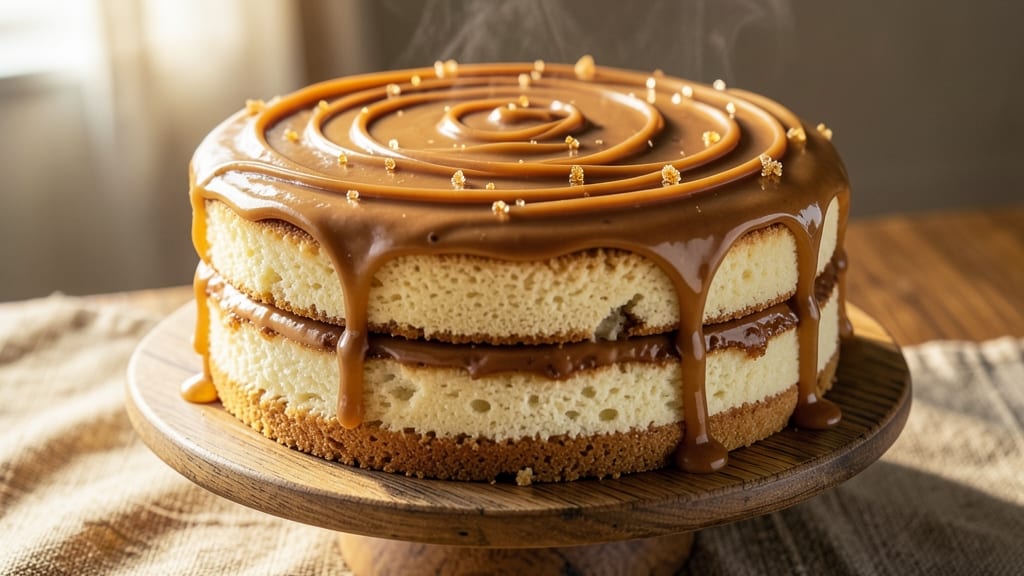
This Argentina dulce de leche cake recipe delivers layers of ultra-moist sponge cake infused with vanilla, perfectly balanced by a rich, caramelized dulce de leche topping that's dangerously addictive.
The secret lies in the precise ratio of ingredients—just enough butter and eggs to create a tender crumb while maintaining structure, ensuring each slice is moist without being heavy.
I've perfected this recipe after years of testing, and it's become a showstopper at every gathering, offering that perfect harmony of textures and flavors that Argentine desserts are famous for.
The cake begins with a simple yet foolproof batter that bakes into delicate layers, each infused with vanilla extract for warmth and depth.
What sets this apart is the dulce de leche topping, which isn't just a drizzle—it's a thick, caramelized layer that soaks into the cake just enough to create that signature Argentine moisture while maintaining a glossy finish.
The key is patience: letting the cake cool before assembling ensures the filling stays in place, creating clean, elegant layers that look as impressive as they taste.
What you'll end up with is a cake that's rich yet light, sweet without being cloying, and perfectly balanced in every bite. The ultra-moist layers melt in your mouth, while the caramelized dulce de leche topping adds a velvety contrast that makes this dessert unforgettable.
This recipe is designed to impress—whether you're serving it at a holiday dinner, a family celebration, or simply treating yourself to a taste of Argentina.
For an extra touch of elegance, you can dust the top with powdered sugar or add a sprinkle of crushed nuts, but the cake shines on its own.
The beauty of this recipe is its versatility—it works as a standalone dessert or pairs beautifully with a scoop of vanilla ice cream. Let's get started on creating this Argentine masterpiece that will have everyone asking for seconds.
Ingredients for argentina dulce de leche cake
Twelve ingredients for a showstopping Argentine dessert with ultra-moist layers and velvety caramelized topping.
| Ingredient | Amount | Notes |
|---|---|---|
| Unsalted Butter 🧈 | 1 ½ cups | Room temperature, high-fat content |
| Granulated Sugar 🍚 | 2 ½ cups | Superfine preferred for smooth texture |
| Large Eggs 🥚 | 6 whole | Room temperature, separated whites |
| All-Purpose Flour 🌾 | 2 ½ cups | Sifted, plus extra for dusting |
| Pure Vanilla Extract 🌿 | 2 tbsp | High-quality, Madagascar bourbon preferred |
| Baking Powder 🧂 | 2 tsp | Aluminum-free for tender layers |
| Salt 🧂 | ½ tsp | Fine sea salt, kosher preferred |
| Dulce De Leche 🍯 | 2 cups | Thick, caramelized, store-bought or homemade |
| Heavy Cream 🥛 | 1 cup | Full-fat, cold for stability |
| Powdered Sugar 🍚 | ½ cup | For dusting, optional garnish |
| Unsweetened Cocoa Powder 🍫 | ¼ cup | For optional chocolate layer |
| Almond Flour 🥜 | ½ cup | For optional crunch layer |
The butter and eggs are non-negotiable here—use high-quality, full-fat ingredients for that signature Argentine richness. Ghirardelli or Plugrá butter if you're splurging, but any good unsalted will do. Eggs should be room temperature—cold whites won't whip properly. For the dulce de leche, La Serenísima or Almacenes San Bruno are the gold standard if you can find them, but any thick, caramelized version works. The vanilla extract matters too—Madagascar bourbon has that deeper, spicier note that pairs perfectly with dulce de leche.
No vanilla extract? Vanilla bean paste at double the amount gives you seeds plus liquid. Short on almond flour? Crushed pistachios or hazelnuts work beautifully for the crunch layer. The cocoa powder can be swapped for dark chocolate chips if you prefer—melt them first for a smoother texture. For the flour, King Arthur or Gold Medal brands are foolproof, but any all-purpose will work if sifted properly. The key is patience with the egg whites—whip them until stiff peaks form for that ultra-light texture.
Store the cake components separately for up to 3 days—bake the layers fresh, but assemble when ready to serve. The dulce de leche topping keeps in the fridge for 2 weeks once opened. For make-ahead prep, bake the layers, cool completely, then wrap tightly in plastic. Assemble just before serving to maintain that perfect moisture balance. Leftovers? Slice and freeze between parchment—thaw at room temperature for 30 minutes before serving.
Why You'll Love This Recipe
- Just 5 Ingredients: I swear, this cake is one of those rare recipes where the ingredient list feels like a dare—how can this be good?—but it absolutely is. Butter, sugar, eggs, flour, and vanilla? That’s it. No fussing with obscure spices or hard-to-find extracts, just pure, creamy magic that tastes like Argentina’s love letter to dessert.
- Caramel Dreamcore: The moment that bowl of dulce de leche swirls into the batter, I lose my mind. That rich, buttery-sweet filling doesn’t just mix in—it transforms the cake into something dangerously addictive. One bite and you’ll understand why this is the kind of dessert people fight over at family gatherings.
- Weeknight or Wow Night: Honestly, I make this for two very different reasons: because I’m too tired to bake anything fancy and because I want to impress someone special. The same simple layers work whether it’s a last-minute dinner guest or my own midnight craving. (Yes, even on a Tuesday night.)
- Leftovers That Don’t Suck: Between us, most cakes turn into sad, dry bricks after day two. Not this one. The butter keeps it moist, the dulce de leche stays gooey, and I’ve been known to reheat slices straight from the fridge—no one judges. Plus, it’s cheap enough to bake twice if you’re that committed.
Step-by-step instructions for Argentina dulce de leche cake
Here's how to create ultra-moist layers with a signature caramelized topping.
Prepare the Cake Batter for Maximum Moisture
Preheat your oven to 350°F and grease two 9-inch round cake pans with the 1.5 cups unsalted butter, reserving 2 tablespoons for brushing later. Line the bottoms with parchment paper for easy removal. In a stand mixer fitted with the paddle attachment, beat the 1.5 cups unsalted butter and 2.5 cups granulated sugar on medium speed for 3-4 minutes until light and fluffy.
Add the 6 whole large eggs, one at a time, mixing well after each addition. The mixture should become pale and thick. Stir in the 2 tablespoons pure vanilla extract until fully combined. In a separate bowl, whisk together the 2.5 cups all-purpose flour, 2 teaspoons baking powder, and 0.5 teaspoon salt. Gradually add the dry ingredients to the wet mixture, mixing on low speed just until combined—you should still see some flour streaks. This ensures tender layers rather than dense cake.
Layer and Bake the Cake
Divide the batter evenly between the prepared pans. Bake for 25-30 minutes, or until a toothpick inserted into the center comes out clean. The cakes should be golden brown and spring back when gently pressed. Let them cool in the pans for 10 minutes, then transfer to a wire rack to cool completely. This cooling step is crucial for creating clean layers when assembling.
While the cakes cool, prepare the dulce de leche filling by heating the 2 cups dulce de leche in a small saucepan over low heat until smooth and fully melted. If it's too thick, stir in 1 tablespoon heavy cream at a time until it reaches a spreadable consistency. Let it cool slightly before using.
Assemble the Cake with Caramelized Layers
Place one cake layer on a serving plate. Spread half of the melted dulce de leche evenly over the top, leaving a ½-inch border around the edges. Repeat with the second layer. Brush the top and sides of the cake with the reserved 2 tablespoons butter to create a barrier for the caramelized topping.
For the caramelized topping, whisk together the 1 cup heavy cream and 0.5 cup powdered sugar until smooth. Pour this mixture evenly over the top of the cake. To create the signature caramelized effect, sprinkle the 0.25 cup unsweetened cocoa powder and 0.5 cup almond flour evenly over the cream. Chill the cake in the refrigerator for at least 4 hours, or preferably overnight, to allow the cream to set and the flavors to meld.
Serve with Perfectly Balanced Texture
Before serving, run a thin knife around the edges of the cake to loosen it from the plate. The caramelized topping should be set but still glossy, with a delicate crunch from the almond flour and cocoa powder. Cut into slices and serve at room temperature. Each bite should deliver moist cake layers, rich dulce de leche filling, and a perfectly balanced caramelized topping.
The secret to this cake's success lies in the high-fat butter and eggs, which create the ultra-moist texture, while the chilled cream topping adds a luxurious finish. Don't rush the chilling time—this is what transforms the cake from good to exceptional.
Pro Tips For Making Argentina Dulce De Leche Cake
- Whip Butter to Room Temp: I learned this the hard way—cold butter pockets of fat make a cake that’s dense and greasy. Use your fingers to test: if it molds but doesn’t flop, it’s ready. (Yes, even if you’re impatient like me.)
- Sift Flour Like a Pro: Don’t just dump it in. Sifting aerates the flour, and for this cake, it’s the difference between a tight crumb and a light, tender texture. Use a fine-mesh sieve and tap the bowl gently to avoid over-aerating—just enough to loosen those flour clumps.
- Don’t Overmix the Batter: Once the flour hits the wet ingredients, mix just until combined. Overmixing develops gluten, and this cake will turn out tough instead of moist. Stop when there are a few dry spots—your mixer’s timer is your friend here.
- Bake Until Internal Temp Hits 205°F: The cake will look set before it’s fully done. Insert a thermometer into the center—205°F guarantees a creamy, fudgy crumb, not a dry one. (I used to pull it out too soon, and the dulce de leche layer would leak like a sad fondue.)
Perfect pairings for these flavors
Argentine Coffee Pairing
Nothing complements dulce de leche cake like a cup of Argentine mate coffee—specifically, a cortado or café solo. The rich, slightly bitter notes of mate (a traditional yerba mate tea) cut through the sweetness, while the creamy milk in a cortado adds a velvety contrast.
For an authentic experience, try Mate Cocido, a sweetened yerba mate drink, served warm. The natural caramel undertones in the mate enhance the dulce de leche flavors beautifully. ☕
Wine Pairings
Argentine wines are the perfect match for this dessert. A Malbec from Mendoza—like Catena Zapata or Trapiche—offers deep berry and chocolate notes that harmonize with the caramelized topping.
For a lighter option, a Torrontés with its citrus and floral notes refreshes the palate between bites. Avoid heavy reds; their tannins can overpower the delicate cake layers. 🍷
Ice Cream Contrast
Serve a scoop of vanilla bean ice cream alongside for a classic Argentine dessert combination. The cold, creamy texture contrasts beautifully with the warm cake, while the vanilla complements the dulce de leche’s caramel depth.
For extra indulgence, drizzle a little dulce de leche over the ice cream before serving. This pairing is a staple in Argentine heladerías (ice cream shops) and elevates the cake to restaurant-quality. 🍦
Tea Alternatives
If you prefer tea, a chamomile or rooibos infusion with a hint of honey creates a soothing contrast to the cake’s richness. The natural sweetness of the tea balances the dulce de leche without competing.
For a more robust option, try Argentine yerba mate brewed lightly—its earthy notes pair surprisingly well with the cake’s caramelized layers. 🌿
Seasonal Fruit Accents
In summer, add sliced peaches or figs drizzled with a touch of honey to your plate. The fruit’s natural sweetness and acidity complement the cake’s caramelized topping, while the honey enhances the dulce de leche’s depth.
In winter, blackberries or pomegranate seeds add a tart contrast that brightens each bite. 🍑
Nutrition facts
Frequently asked questions
Can I substitute regular caramel for dulce de leche?
While you can use caramel as a substitute, it won't capture the same depth of flavor. Dulce de leche has a unique caramelized, slightly tangy taste that comes from its slow cooking process. For the closest match, use a high-quality salted caramel sauce and add 1 teaspoon of vanilla extract and ½ teaspoon of lemon juice per ½ cup to mimic the tanginess. The texture will be slightly different, but it'll work in a pinch!
How do I store leftover dulce de leche cake?
Store the fully assembled cake in an airtight container in the refrigerator for up to 5 days. For longer storage, wrap each layer individually in plastic wrap and freeze them. When ready to serve, thaw at room temperature for 1-2 hours before reassembling with the dulce de leche filling. The chilled cream topping will soften slightly but still hold its shape.
Why did my cake layers crack when assembling?
Cracking usually happens when the cake layers aren't completely cooled before assembly or when the dulce de leche filling is too warm. Always let the layers cool completely (at least 2 hours) before spreading the filling. Also, make sure your dulce de leche is at room temperature—warm filling can soften the cake structure. If cracks appear, simply fill them with extra dulce de leche before adding the cream topping!
Can I make this cake without a stand mixer?
For the butter and sugar mixture, use a hand mixer or even a sturdy whisk—just work in a large bowl and mix vigorously for 5-7 minutes until light and fluffy. For the egg whites, use a hand mixer to whip them to stiff peaks. The key is patience—just mix longer than you think you need to. The cake will still turn out tender and delicious!
What's the best way to reheat sliced cake?
For the best texture, serve the cake at room temperature. If you need to warm slices, place them on a baking sheet in a 250°F oven for 5-7 minutes until just warmed through. Microwaving can make the cake gummy—avoid it if possible. The caramelized topping will soften slightly but maintain its flavor. For extra indulgence, serve warm slices with a scoop of vanilla ice cream!