
Desserts
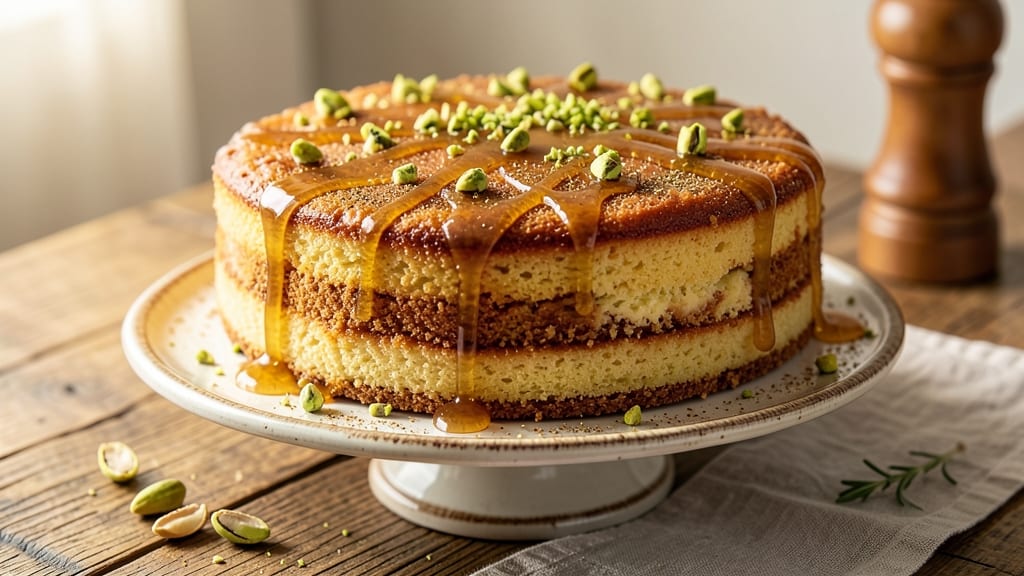
This Armenian honey cake recipe brings warm spices and bright citrus to your table, a tradition that's been gracing Armenian celebrations for generations. The secret lies in its delicate balance of honey sweetness and fragrant cardamom, creating layers of flavor that make every bite unforgettable.
I developed this version after years of perfecting the texture—soft, tender crumb with just the right crispness at the edges.
The recipe follows traditional methods, starting with a simple dough that's rolled thin and baked in a round pan, creating that signature honey cake shape. Cardamom and citrus zest infuse the dough with aromatic warmth, while honey adds natural sweetness that caramelizes beautifully during baking.
The cake's tender crumb and subtle spice notes make it perfect for holidays or special occasions.
What sets this recipe apart is the honey glaze that finishes it—warm, fragrant honey brushed over the top while still warm, creating a glossy finish that seals in all those wonderful flavors.
The result is a cake that's rich yet light, with just enough texture to hold its shape while melting in your mouth. This is the kind of dessert that disappears quickly, leaving everyone asking for seconds.
The beauty of this recipe is its versatility—serve it plain for a delicate treat, or garnish with toasted nuts and extra honey for added texture and richness. Perfect for Armenian Easter celebrations or any special gathering, this honey cake brings a taste of tradition to your kitchen.
Let's get started on creating this timeless dessert.
Ingredients for armenian honey cake
Warm spices, bright citrus, and golden honey—this recipe captures Armenian tradition in every bite.
| Ingredient | Amount | Notes |
|---|---|---|
| All-Purpose Flour 🌾 | 3 ½ cups | Sifted for light texture |
| Honey 🍯 | 1 ½ cups | Raw or Armenian honey preferred |
| Unsalted Butter 🧈 | 1 cup | Cold, cubed for creaming |
| Granulated Sugar 🍚 | 1 ½ cups | White or light brown |
| Large Eggs 🥚 | 4 whole | Room temperature |
| Ground Cardamom 🌿 | 2 tsp | Freshly ground preferred |
| Orange Zest 🍊 | 1 tbsp | From 1 large orange |
| Vanilla Extract 🌸 | 1 tsp | Pure vanilla extract |
| Baking Powder 🧂 | 1 tsp | Diamond Crystal preferred |
| Salt 🧂 | ½ tsp | Fine sea salt |
| Almond Flour 🌰 | ½ cup | For added texture |
| Toasted Walnuts 🥜 | ½ cup | Chopped, optional garnish |
The honey is the soul of this cake, so don’t skimp on quality. Armenian honey has a deeper floral note that pairs perfectly with cardamom, but any raw or local honey works too. The cardamom should be freshly ground—pre-ground loses its punch fast. For the zest, grab a juicy, fragrant orange (like Valencia) and use only the outer layer. The butter needs to be cold when creaming—pull it from the fridge 10 minutes before starting. King Arthur or Gold Medal Flour both yield tender results, but sift it well to avoid dense layers.
No cardamom pods? Ground cardamom from a spice shop (like Penzeys) is your best bet, but in a pinch, 1 tsp cinnamon plus ½ tsp allspice mimics the warmth. Running short on honey? Maple syrup or agave (reduce other liquids by 2 tbsp) works, though the flavor will shift slightly. The orange zest can be swapped for lemon, but orange’s sweetness balances the spices better. For the almond flour, blanched almonds ground in a food processor work if you’re avoiding store-bought. Walnuts should be toasted in a dry pan until golden—just 3-4 minutes—to bring out their nuttiness.
This cake keeps beautifully for 5 days wrapped in the pan at room temperature, but truthfully, it’s best the first 2 days. For longer storage, wrap tightly in plastic and refrigerate—it’ll stay moist for up to 2 weeks. Freeze slices wrapped individually for 3 months (thaw at room temp). The honey glaze is best applied warm, so brush it on right after baking while the cake is still hot. Garnish with toasted walnuts right before serving—they add crunch that contrasts the tender crumb.
Why You'll Love This Recipe
- No-Mix Needed: I swear by this—just cream butter and sugar, fold in eggs, and stir in dry ingredients. The honey does all the work, dissolving right into the batter without extra effort. Honestly, I’ve made it while scrolling through my phone.
- Honey-Sweet Magic: That first bite? Pure caramelized bliss from the honey, balanced by the buttery richness. The sugar crust on top cracks just enough to give you that irresistible crunch—like biting into a golden hug.
- Breakfast or Dessert: Slice it warm with yogurt for a morning treat, or dust with powdered sugar for an after-dinner indulgence. My kids grab it straight from the pan—no judgment, just pure joy.
- Budget-Friendly Staples: Flour, butter, eggs, and honey? Pantry basics that won’t break the bank. I’ve made this for potlucks, holidays, and lazy Sundays—always a hit, never a splurge.
Step-by-step instructions for Armenian honey cake
This cake delivers layers of warm spice and citrus brightness—here's how to bake it perfectly every time.
Cream Butter and Sugars for Maximum Fluffiness
In a stand mixer fitted with the paddle attachment, beat the cold, cubed unsalted butter on medium speed for 2-3 minutes until completely smooth and pale. Add the 1.5 cups granulated sugar and beat for another 3-4 minutes until the mixture is light, fluffy, and nearly doubles in volume.
This creaming process incorporates air into the butter, which creates that signature tender crumb. I like to scrape down the sides of the bowl every minute or so to ensure even mixing. You'll know you're on the right track when the mixture looks like pale whipped cream and leaves ribbons when the beaters are lifted.
Add Honey and Citrus for Depth of Flavor
Reduce the mixer speed to low and add the 1.5 cups honey and 1 tbsp orange zest in a slow stream. Mix for 1 minute until fully combined and smooth. The honey will make the mixture look slightly thicker, but don't worry—it's supposed to be sticky at this stage.
Here's where the magic happens: the honey adds natural sweetness while keeping the cake moist, and the orange zest infuses bright citrus notes that cut through the richness. This is also when I add the 1 tsp vanilla extract and 2 tsp ground cardamom, mixing for another 30 seconds to distribute those warm spices evenly.
Incorporate Eggs and Dry Ingredients
Add the 4 whole large eggs, one at a time, mixing on low speed for 30 seconds after each addition. The mixture will look slightly curdled at first, but that's normal. Next, sift in the 3.5 cups all-purpose flour, 1 tsp baking powder, 0.5 tsp salt, and 0.5 cup almond flour all at once.
Mix on low speed for 45-60 seconds until just combined—you should still see some flour streaks. Overmixing develops gluten, which can make the cake dense. I like to use a silicone spatula to gently fold in the remaining ingredients by hand to avoid overworking the batter.
Bake to Golden Perfection
Preheat your oven to 350°F and grease a 9x13-inch baking pan (or line it with parchment paper). Pour the batter into the prepared pan and smooth the top with a spatula. Sprinkle the 0.5 cup toasted walnuts evenly over the surface for texture and crunch.
Bake for 40-45 minutes, or until a toothpick inserted into the center comes out clean and the edges are golden brown. I like to tent the pan with foil after 25 minutes to prevent overbrowning if your oven runs hot. The cake is done when it springs back slightly when pressed in the center.
Cool and Enjoy
Remove the cake from the oven and let it cool in the pan for 10 minutes. Then transfer it to a wire rack to cool completely. The cake will be moist but firm—perfect for slicing. Serve warm with a dusting of powdered sugar or a dollop of whipped cream for an extra touch of elegance.
This cake keeps well at room temperature for 3-4 days or can be refrigerated for up to 5 days. The flavors actually deepen as it sits, making it even more delicious the next day. Enjoy every spiced, citrus-kissed bite!
Pro Tips For Making Armenian Honey Cake
- WHISK EGGS COLD: Dump those eggs straight from the fridge into the butter-sugar mix—no need to warm them first. I learned this the hard way when my cake turned out dense after using room-temp eggs; the cold yolks emulsify better with the butter, keeping the texture light and fluffy.
- MEASURE HONEY ACCURATELY: Honey’s thickness varies wildly—don’t eyeball it. Weigh it out (about 1 cup = 12-14 oz) or use a liquid measuring cup after stirring it first. My first batch was too dry because I scooped straight from the jar; now I always stir and measure properly.
- BAKE LOW AND SLOW: Skip the high-heat rush—325°F (160°C) is your friend. Armenian honey cake needs time to set evenly without burning; I used to crank it to 350°F and ended up with a cracked top. Tent with foil after 30 minutes to prevent over-browning.
- REST BEFORE SLICING: Give it a solid 5-10 minutes under foil before cutting—yes, even if you’re impatient. I know, I know, but trust the process. This lets the honey distribute properly, or you’ll end up with a gummy, uneven slice. (Your future self will thank you.)
Regional styles of these flavors
Armenian Easter Tradition
This honey cake, known as lavashin or puri, holds deep cultural significance in Armenian Easter celebrations. Families bake it fresh for the holiday table, symbolizing sweetness and abundance.
The cardamom and honey represent warmth and hospitality, while the round shape often mirrors the sun—a common motif in Armenian baking traditions. 🌟
During Easter, Armenians prepare multiple dishes, but this cake stands out for its simplicity and elegance. It’s traditionally served alongside other sweet treats like paklava or khanum to create a balanced dessert spread.
The cake’s tender texture and fragrant spices make it a centerpiece for gatherings, often shared with neighbors and friends as a gesture of goodwill.
Yerevan City Bakers
In Armenia’s capital, Yerevan, bakeries like Khorenatsi and Lusine have perfected this recipe over generations. Their versions often include extra cardamom and a touch of rosewater for floral depth. I’ve visited these bakeries and noticed they use slightly less sugar to let the honey’s natural sweetness shine through.
For an authentic Yerevan touch, try adding 1 tsp rosewater to the batter—it’s subtle but adds a sophisticated floral note. These bakeries also dust the finished cake with powdered sugar right after baking, creating a delicate snow-like effect on top. The technique is simple but makes a big visual impact.
Mount Ararat Variations
In the shadow of Mount Ararat, Armenian villages incorporate local ingredients like wild honey and walnuts from the region’s forests. These variations often include 1 tbsp ground cinnamon alongside the cardamom for a warmer, earthier flavor profile.
The walnuts are toasted until deeply golden, adding a smoky depth that pairs beautifully with the honey.
For a village-style twist, replace half the almond flour with walnut flour—just blend toasted walnuts in a food processor until fine. This swap creates a richer, nuttier texture that’s perfect for colder months when Armenians celebrate holidays like Christmas.
The result is a denser, more rustic cake that’s equally delicious.
Diaspora Adaptations
Armenian communities worldwide have adapted this recipe using local ingredients while keeping its essence. In the U.S., bakers often substitute Armenian honey with clover honey—it’s widely available and still delivers that floral sweetness.
The cardamom is sometimes replaced with a blend of cinnamon and nutmeg for those who can’t find it easily.
For a modern twist, some versions incorporate orange juice (instead of just zest) to boost moisture and brightness. I’ve even seen gluten-free adaptations using almond flour as the base—just reduce the baking powder to ½ tsp to avoid over-rising.
These adaptations keep the cake’s spirit alive while making it accessible to everyone.
Modern Armenian Cafés
Contemporary Armenian cafés in cities like Los Angeles and Boston often serve this cake with creative twists. Some add a layer of whipped mascarpone between the batter and topping for a lighter texture. Others drizzle it with a honey-lemon glaze after baking for a tangy contrast.
For a café-inspired presentation, try brushing the warm cake with ½ cup honey mixed with 1 tsp lemon juice right after baking. Garnish with toasted pistachios for a pop of color and added crunch. This version is perfect for brunch menus or afternoon tea gatherings.
Nutrition facts
Frequently asked questions
Can I make this Armenian honey cake without cardamom?
Yes! If you can't find cardamom, use 1 tsp cinnamon plus ½ tsp allspice for warmth. For a floral note, add 1 tsp rosewater (available in Middle Eastern markets). The cake will still taste delicious—just slightly different in aroma. Never skip the orange zest, though, as it balances the spices beautifully.
Why does my Armenian honey cake taste too sweet?
The honey and sugar combination can be intense, so reduce sugar to 1 cup if needed. For balance, add 1 tbsp lemon juice to the batter or serve with a dollop of whipped cream. The cake's sweetness mellows as it cools, so taste before baking adjustments.
How do I store leftovers to keep them fresh?
Wrap the cake tightly in plastic wrap and store at room temperature for 3-4 days. For longer storage, refrigerate for up to 5 days. To revive stale slices, warm for 10-15 seconds in the microwave with a damp paper towel. Freeze individual slices for 3 months (thaw at room temp).
What's the best way to serve this cake traditionally?
Serve warm with a drizzle of extra honey and a sprinkle of toasted walnuts for authenticity. For special occasions, dust with powdered sugar or pair with Armenian coffee. The cake's tender texture makes it perfect for breakfast or afternoon tea gatherings.
Can I make this cake gluten-free?
Yes! Replace the all-purpose flour with 1:1 gluten-free baking flour (like Bob's Red Mill) and reduce baking powder to ½ tsp. Use almond flour as the base and add ½ tsp xanthan gum to improve texture. Expect a slightly denser but still delicious result.