
Desserts
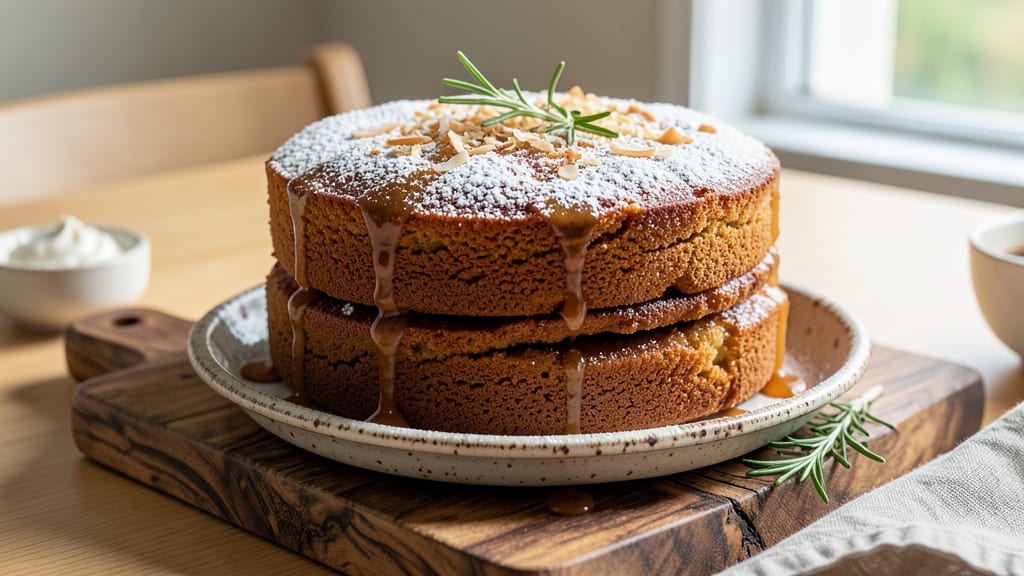
This Asian coffee cake recipe brings the comforting warmth of spiced java swirls and buttery layers inspired by Southeast Asian baking traditions. 🌟 The harmonious blend of aromatic coffee, toasted spices, and tender crumb creates a dessert that's both nostalgic and sophisticated—perfect for brunch or afternoon tea gatherings.
What sets this cake apart is the signature coffee swirl that infuses every bite with deep, aromatic flavor without overpowering sweetness. The recipe balances rich butter layers with a tender crumb, achieving that signature Asian coffee cake texture that's crisp at the edges yet moist inside.
Professional bakers will appreciate the precise baking technique that ensures even rising and golden-brown perfection.
The result is a visually stunning cake with layers of spiced coffee batter swirled into buttery dough, creating a marbled effect that's as beautiful as it is delicious.
Each slice delivers a perfect balance of coffee intensity, warm spice notes, and buttery richness—ideal for those who appreciate desserts with depth and character.
Whether you're serving to guests or treating yourself, this recipe delivers restaurant-quality results with minimal effort. The method is designed for home bakers, ensuring consistent results every time while allowing room for personal touches like coconut glaze or black sesame topping variations.
Ingredients for asian coffee cake
Buttery layers and aromatic coffee swirls create a dessert that balances tradition with sophistication.
| Ingredient | Amount | Notes |
|---|---|---|
| All-Purpose Flour 🌾 | 3 cups | Sifted for even texture |
| Unsalted Butter 🧈 | 1 cup | Cold, cubed for layers |
| Granulated Sugar 🍚 | 1 ½ cups | Superfine preferred for smoothness |
| Instant Espresso Powder ☕ | ¼ cup | High-quality for rich flavor |
| Ground Cinnamon 🌿 | 1 tbsp | Freshly ground for warmth |
| Ground Cardamom 🌿 | ½ tsp | Toasted for aromatic depth |
| Salt 🧂 | ½ tsp | Fine sea salt preferred |
| Large Eggs 🥚 | 2 whole | Room temperature for blending |
| Vanilla Extract 🌸 | 1 tsp | Pure vanilla for authenticity |
| Whole Milk 🥛 | ¾ cup | Room temperature for smooth batter |
| Baking Powder 🍞 | 2 tsp | Aluminum-free for even rise |
| Dark Brown Sugar 🍚 | ½ cup | Packed for moisture |
| Shredded Coconut 🥥 | ½ cup | Toasted for enhanced flavor |
| Black Sesame Seeds 🌰 | ¼ cup | Toasted for nutty crunch |
The instant espresso powder is non-negotiable here—Starbucks or local roaster brands deliver the deepest flavor. Cardamom can be tricky to find, so check the spice aisle at Whole Foods or Penzeys for authentic ground varieties. For the butter, Plugrá or Land O'Lakes work perfectly, but avoid margarine substitutes. The shredded coconut should be unsweetened—Trader Joe's has a great option that toasts beautifully. Black sesame seeds add that signature Asian touch; if unavailable, white sesame seeds are a decent substitute, though less traditional.
No instant espresso? Strong brewed coffee reduced by half works in a pinch, but the texture will differ slightly. Cardamom can be swapped with nutmeg at half the amount, though purists will notice the difference. Brown sugar can be omitted if you prefer a lighter cake, but the moisture it provides is worth keeping. Toasted coconut is ideal, but plain shreds work if you skip the toasting step. For a vegan adaptation, replace butter with coconut oil and use flax eggs—just reduce the milk by 2 tablespoons to balance moisture.
Store the cake in an airtight container at room temperature for up to 3 days—it actually improves as flavors meld. For longer storage, wrap tightly in plastic wrap and refrigerate for up to 5 days. The coconut and sesame toppings stay fresh for 2 weeks if kept sealed. Freeze the cake (without toppings) for up to 3 months—thaw at room temperature before serving. Reheat slices briefly in the oven for that just-baked texture, especially if the cake has dried out slightly.
Why You'll Love This Recipe
- No Mixer Needed: I swear by this—just cream butter and sugar, fold in dry ingredients, and you’re done. The espresso powder does all the work, cutting through the sweetness while keeping the texture light. My hands get floury, but the cake’s worth it.
- Cinnamon-Kissed Edge: That crisp, caramelized crust? Pure magic. The cinnamon sugar mix on top turns golden under the broiler, and the first bite—warm, buttery, with a hint of coffee—makes me close my eyes. (Yes, even on a Tuesday night.)
- Weeknight Magic: Slice it for breakfast, pack it for lunch, or serve it at a brunch with zero stress. It keeps well for days, and the coffee flavor means it’s never just "dessert"—it’s morning fuel or afternoon pick-me-up. My go-to when I forget to plan ahead.
- Pantry Staple Power: You’re already using what’s in your cupboard: flour, butter, sugar—no specialty items. The espresso powder? A tiny bag lasts forever. Budget-friendly, foolproof, and it’s the kind of cake that disappears fast, so I make it often. (Between us, I’ve baked this twice in one week.)
Step-by-step instructions for Asian coffee cake
Here's how to create layers of buttery richness and aromatic coffee flavor.
👨🍳 Step 1: Prepare the Coffee Swirl Filling
In a medium bowl, combine the 1.5 cups granulated sugar, 0.25 cup instant espresso powder, 1 tbsp ground cinnamon, 0.5 tsp ground cardamom, and 0.5 tsp salt. Mix until the spices are evenly distributed and the sugar takes on a warm, earthy hue. This aromatic blend forms the heart of our coffee cake's signature flavor.
Next, cut the 1 cup unsalted butter into small cubes and mix it into the dry ingredients using a fork or your fingers. Work quickly but thoroughly to create a crumbly, sand-like texture. This ensures the butter will distribute evenly when we swirl it later, creating those beautiful pockets of moist, coffee-infused filling throughout the cake.
👨🍳 Step 2: Create the Cake Batter
In a large mixing bowl, whisk together the 3 cups all-purpose flour and 2 tsp baking powder. Sift the mixture to remove any lumps and create a fine, airy base. In a separate bowl, beat the 2 whole eggs until just combined, then whisk in the 1 tsp vanilla extract and 0.75 cup whole milk.
Gradually add the wet ingredients to the dry ingredients, mixing just until combined. Be careful not to overmix—stop as soon as the batter comes together. The goal is to maintain a light, tender crumb. Here's where I always pause to check the consistency: the batter should be thick enough to hold its shape when dropped from a spoon but still flow smoothly.
🥘 Step 3: Assemble the Coffee Cake Layers
Preheat your oven to 350°F and grease a 9x13-inch baking pan with butter or line it with parchment paper. Spread half of the cake batter evenly into the prepared pan, using an offset spatula to create an even layer about ¼-inch thick. Sprinkle half of the 0.5 cup dark brown sugar and 0.5 cup shredded coconut over the batter.
Drop spoonfuls of the coffee swirl mixture evenly over the top layer, leaving about 1-inch spaces between them. Using a butter knife, gently swirl the filling into the batter, creating a marbled effect. Top with the remaining cake batter, then sprinkle the remaining dark brown sugar, coconut, and 0.25 cup black sesame seeds over the surface. The sesame seeds add a beautiful contrast and nutty depth to each bite.
🔥 Step 4: Bake to Golden Perfection
Bake the coffee cake for 45-50 minutes until the edges are golden brown and a toothpick inserted in the center comes out clean. The cake should spring back slightly when pressed gently in the center—this indicates it's fully baked but still moist.
For the best results, I recommend baking the cake on the middle rack of your oven. This ensures even heat distribution and prevents the top from browning too quickly. The aroma of coffee and warm spices will fill your kitchen as it bakes—this is your signal that everything is working perfectly.
Pro Tips For Making Asian Coffee Cake
- MEASURE ESPRESSO PRECISELY: That instant espresso powder is potent—use a kitchen scale for 1-2 teaspoons, not the eyeball method. I learned this after a batch tasted bitter enough to wake the dead, and now I swear by exact measurements.
- CREAM BUTTER FIRST: Whip that unsalted butter and sugar together until it’s pale and fluffy, not just "combined." The extra 2-3 minutes of mixing makes the cake tender instead of dense—trust me, your fork will thank you.
- DON’T OVERMIX THE DRY INGREDIENTS: Fold in the flour, cinnamon, and espresso powder just until no streaks remain. Overmixing develops gluten and turns your cake into a tough brick—this isn’t a muffin, after all.
- BAKE UNTIL THE CENTER HITS 205°F: The instant espresso can make the cake set faster, so pull it out when the edges are golden but the center still jiggles slightly. A toothpick test? Sure, but I rely on the thermometer—no more underbaked, gummy centers.
Storing and reheating this recipe
Room-Temp Storage
Keep your Asian coffee cake at room temperature in an airtight container for up to 3 days—this is my preferred method since the flavors actually deepen as the spices meld. I use a glass Pyrex container with a tight-sealing lid to maintain moisture and prevent drying.
The cake's buttery layers stay tender when stored this way, avoiding that sad, dry texture that can happen with refrigeration. 🌟
Refrigerator Refresh
If you need to store longer than 3 days, refrigerate the cake wrapped in plastic wrap for up to 5 days. The cold slows down staling, but the texture may become slightly denser. To revive it, let the cake sit at room temperature for 15-20 minutes before serving.
For extra moisture, brush the top with a light syrup (mix 2 tbsp water and 1 tbsp sugar, heat until dissolved).
Freezer Preservation
For maximum shelf life, freeze the cake (without toppings) in an airtight freezer bag for up to 3 months. Wrap it tightly in plastic wrap first to prevent freezer burn. Thaw overnight in the refrigerator, then bring to room temperature before serving.
The coconut and sesame toppings can be stored separately in a sealed container for up to 2 weeks—just sprinkle them fresh after thawing. ✨
Reheating Secrets
For that freshly baked experience, reheat slices in a 350°F oven for 5-7 minutes—this restores the buttery layers without drying them out. If you're short on time, microwave individual slices on medium power (50%) for 10-15 seconds, then cover with a damp paper towel to retain moisture.
Avoid reheating the whole cake at once, as uneven heating can ruin the texture.
Topping Tips
If your cake's toppings lose their crunch after storage, toast them fresh before serving. Spread shredded coconut and sesame seeds on a baking sheet and toast at 325°F for 3-4 minutes until fragrant.
For extra indulgence, drizzle with a warm coconut glaze (mix ½ cup powdered sugar with 2 tbsp coconut milk and 1 tsp vanilla). This turns stale cake into a gourmet treat again! 💫
Nutrition facts
Frequently asked questions
What makes this Asian coffee cake different from regular coffee cake?
This recipe blends traditional coffee cake with Asian flavors through key ingredients like toasted black sesame seeds, cardamom, and shredded coconut. The signature coffee swirl filling uses instant espresso powder for deep flavor without bitterness, while the buttery layers create a tender crumb that's crisp at the edges. The combination delivers a sophisticated balance of warmth and richness that's distinct from classic American coffee cakes.
Can I substitute instant espresso powder with regular coffee?
Yes, but the texture and flavor will differ slightly. Use ½ cup strong brewed coffee reduced by half (simmered until thickened) as a substitute. However, instant espresso powder dissolves evenly and provides a more concentrated coffee flavor without altering the cake's moisture level. For best results, stick with the original recipe if possible.
How do I prevent the cake from becoming too dry?
To maintain moisture, don't overbake—remove the cake when a toothpick comes out with just a few moist crumbs (45-50 minutes at 350°F). Store it in an airtight container at room temperature for up to 3 days, and avoid refrigerating unless necessary. For extra richness, brush the top with a simple syrup (equal parts sugar and water, heated until dissolved) before serving.
What's the best way to serve this cake?
This cake shines at brunch or afternoon tea gatherings. Pair it with a cup of hot Asian-style milk tea or cold brew coffee to complement the coffee flavors. For presentation, dust with powdered sugar or drizzle with a coconut glaze (mix ½ cup powdered sugar with 2 tbsp coconut milk). Serve warm slices for maximum flavor impact!
Can I make this cake gluten-free?
Yes, but with adjustments. Replace the 3 cups all-purpose flour with a 1:1 gluten-free baking flour blend (like Bob's Red Mill) and add ½ tsp xanthan gum to improve texture. You may also need to reduce the milk by 1-2 tablespoons since gluten-free flours absorb differently. Test the recipe first with a small batch to perfect the consistency.