
Desserts
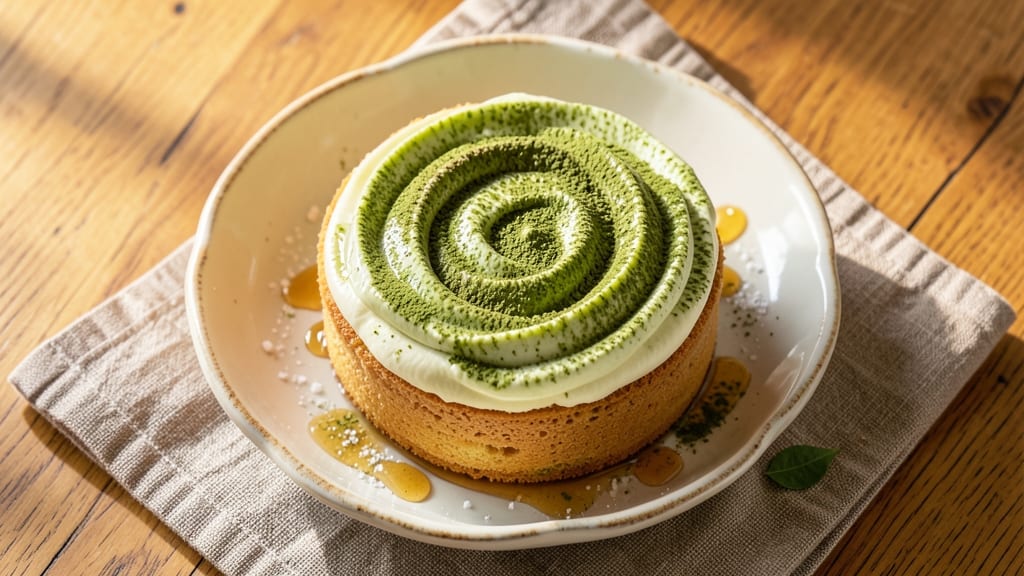
This Asian cream cake recipe delivers the perfect balance of silky matcha swirl and crunchy almond top—a showstopper that tastes like a bakery masterpiece. The secret lies in a light, airy sponge cake infused with earthy matcha, layered with velvety cream cheese frosting, and crowned with toasted almonds for texture. I developed this recipe after years of experimenting with traditional Asian desserts, and it’s now a staple at celebrations.
The cake’s magic comes from precise technique: whipping egg whites to stiff peaks for a tender crumb, folding in matcha powder for subtle bitterness, and baking at a controlled temperature to prevent cracking.
The cream cheese frosting is piped between layers and swirled into the top for that signature marbled effect, while the almond topping adds a satisfying crunch that contrasts beautifully with the soft cake.
What you’ll end up with is a dessert that’s elegant yet approachable—rich enough for special occasions but simple enough for a weeknight treat. The matcha’s vibrant green hue makes it visually stunning, while the almond crunch adds a luxurious finish.
This recipe serves 8-10, making it ideal for gatherings or sharing with loved ones.
For variations, swap the matcha for pandan or coffee, or add a red bean paste filling for a classic Asian twist. The method is foolproof, and the result is always impressive. Let’s get baking!
Ingredients for asian cream cake
Light, airy sponge meets velvety matcha swirl and toasted almond crunch—this cake balances tradition with bakery perfection.
| Ingredient | Amount | Notes |
|---|---|---|
| All-Purpose Flour 🌾 | 2 cups | Sifted for light texture |
| Granulated Sugar 🍚 | 1 ½ cups | Superfine preferred for smoothness |
| Large Eggs 🥚 | 6 whole | Room temperature for best volume |
| Unsalted Butter 🧈 | 1 cup | Softened to room temperature |
| Matcha Powder 🍵 | 2 tbsp | Ceremonial grade for vibrant color |
| Baking Powder 🧂 | 1 ½ tsp | Ensures proper rise |
| Salt 🧂 | ½ tsp | Fine sea salt preferred |
| Vanilla Extract 🌸 | 1 tsp | Pure vanilla for authentic flavor |
| Cream Cheese 🧀 | 16 oz | Full-fat for rich frosting |
| Powdered Sugar 🍚 | 3 cups | Sifted for smooth frosting |
| Heavy Cream 🥛 | ½ cup | Chilled for stable whipping |
| Sliced Almonds 🥜 | 1 cup | Toasted for nutty crunch |
| Cornstarch 🌾 | 1 tbsp | For almond topping adhesion |
| Melted Butter 🧈 | 2 tbsp | For almond topping binding |
The matcha makes this cake special. Ceremonial grade powder from Ippodo Tea or Jade Leaf delivers vibrant color and earthy flavor without bitterness. For the flour, King Arthur or Gold Medal brands work best—they hold structure while keeping the crumb tender. Eggs should be separated: whites whipped to stiff peaks for that signature lightness, yolks gently folded in. The cream cheese? Philadelphia or Neapolitan brands are ideal—they're rich enough to stand up to the matcha's intensity.
No matcha? Pandan powder or instant coffee adds depth, though the color won't be as striking. For the almond topping, any sliced almonds work, but toast them yourself—store-bought often loses crunch. The cornstarch in the topping is key: it helps the melted butter bind while keeping the almonds from sticking. Short on powdered sugar? Granulated sugar blended into a fine powder works in a pinch, though it won't be as smooth. The frosting can be made a day ahead—it actually tastes better after the flavors meld.
Store the cake layers wrapped in plastic at room temperature for up to 2 days—the matcha flavor intensifies overnight. The frosting keeps 5 days in the fridge, covered tightly. For the almond topping, toast it fresh before serving (just 5 minutes in a dry pan), but you can make the dry mixture ahead and toast it when needed. This cake freezes beautifully: wrap each layer individually in plastic and freeze for up to 3 months. Thaw overnight in the fridge before assembling.
Why You'll Love This Recipe
- Foolproof Layers: I swear by this recipe—no fancy techniques, just whisking eggs and butter until they’re light as air. The matcha folds in like a whisper, giving you that earthy, vibrant hue without overpowering the tender crumb.
- Buttercream Bliss: That creamy filling? It’s the star. Rich, velvety, and just sweet enough to balance the matcha’s bitterness—like a hug in dessert form. Honestly, I’ve tried store-bought frosting, but this homemade version wins every time.
- Party or Pajamas: Slice it for a fancy brunch spread or pack it for a picnic—it holds up beautifully. (Yes, even on a Tuesday night.) The matcha gives it a sophisticated edge, but the simplicity keeps it effortless for any occasion.
- Budget-Friendly Luxury: You’re using pantry staples—flour, sugar, butter—plus a tiny bit of matcha for that wow factor. No specialty ingredients, no breaking the bank, and leftovers? They disappear faster than I can say “second slice.”
Step-by-step instructions for Asian cream cake
Master this delicate balance of silky matcha cake and rich cream filling with these precise techniques.
Prepare Matcha Cake Batter for Even Texture
In a medium bowl, whisk together the 2 cups all-purpose flour, 1.5 cups granulated sugar, 1.5 tsp baking powder, and 0.5 tsp salt. Sift the mixture through a fine-mesh sieve directly into a large mixing bowl to eliminate any lumps and ensure a light texture.
In a separate bowl, beat the 6 whole large eggs and 1 cup unsalted butter on medium speed until the mixture becomes pale and thick, about 3-4 minutes. This step incorporates air, which is crucial for that signature fluffy cake texture. Gradually add the dry ingredients to the egg mixture while mixing on low speed until just combined.
In a small bowl, whisk together the 2 tbsp matcha powder and 1 tsp vanilla extract with 1 tablespoon of the egg mixture to create a smooth paste. This prevents clumping and ensures an even distribution of matcha throughout the batter. Gently fold this matcha mixture into the main batter until fully incorporated. The batter should be smooth and slightly thick, with a vibrant green hue.
Bake Matcha Layers to Perfect Doneness
Preheat your oven to 350°F and grease two 8-inch round cake pans with nonstick spray or line them with parchment paper. Divide the matcha batter evenly between the two pans. Bake for 25-30 minutes, or until a toothpick inserted into the center comes out clean. Rotate the pans halfway through baking for even browning.
I've found that removing the cakes from the oven 2-3 minutes early prevents overbaking, which can make them dry. Let the cakes cool in their pans for 10 minutes, then transfer them to a wire rack to cool completely. This cooling step is critical—it allows the cakes to set properly before assembling, preventing any potential crumbling when slicing.
Prepare Cream Cheese Filling for Smooth Swirls
In a large mixing bowl, beat the 16 oz cream cheese and 3 cups powdered sugar together on medium speed until smooth and creamy. This should take about 3-4 minutes. Scrape down the sides of the bowl as needed to ensure even mixing.
In a separate chilled bowl, whip the 0.5 cup heavy cream to soft peaks using a hand mixer. Gently fold the whipped cream into the cream cheese mixture until fully combined. The filling should be light and airy, with a smooth, spreadable consistency. If it's too thick, add 1-2 teaspoons of milk to reach the desired texture.
Assemble Layers with Precision
Place one of the cooled matcha layers on a serving plate. Spread an even layer of the cream cheese filling, leaving a ½-inch border around the edges. This prevents the filling from oozing out during slicing. Place the second cake layer on top and gently press down to create a seamless sandwich.
For the almond topping, mix the 1 cup sliced almonds, 1 tbsp cornstarch, and 2 tbsp melted butter in a bowl. Spread this mixture evenly over the top of the cake, pressing gently to ensure adhesion. The cornstarch helps bind the almonds, creating a cohesive crunchy layer that contrasts beautifully with the soft cake and filling.
Chill and Serve for Optimal Texture
Refrigerate the assembled cake for at least 4 hours, or preferably overnight. This chilling time is essential—it allows the flavors to meld and the textures to set properly. The cream cheese filling will firm up slightly, making each slice hold its shape beautifully.
When ready to serve, slice the cake into 8 equal wedges using a sharp serrated knife. Each slice should reveal the vibrant green matcha layers separated by the creamy white filling, topped with a crunchy almond crust. Serve at room temperature for the best texture contrast between the soft cake and the crisp almond topping.
Pro Tips For Making Asian Cream Cake
- Sift the Matcha: Mix the matcha powder with the sugar first—this prevents clumping and ensures an even green hue. I learned this the hard way after scraping dried lumps out of my creamer later.
- Cream Butter Slowly: Use room-temperature butter (not melted) and beat it with sugar for 3-5 minutes until pale yellow—this incorporates air for a lighter texture. Rushing this step means dense, heavy cake.
- Don’t Overmix the Batter: Stop folding in the flour once it’s just combined—a few streaks are fine. Overmixing develops gluten, and this cake should be tender, not chewy.
- Weigh Your Flour: Spoon it into the measuring cup, then level it off—packing it down makes the cake dense. I know, it’s tedious, but the difference in crumb is noticeable.
Regional styles of asian cream cake
Japanese Matcha Layer Cake
The Japanese version of this cake replaces the cream cheese frosting with a lighter matcha whipped cream filling made from heavy cream, powdered sugar, and ceremonial matcha. I use Maeiwa brand matcha for its smooth, vibrant flavor.
The cake layers are often infused with yuzu zest for a bright citrus note that balances the earthiness of matcha. Serve with a dusting of kinako (roasted soybean flour) for an authentic touch. 🍵
Taiwanese Pandan Cream Cake
In Taiwan, this cake often features pandan leaf extract instead of matcha, giving it a fragrant, slightly floral taste. The frosting is typically a pandan-infused cream cheese or a coconut cream variation. I’ve seen versions with red bean paste filling between layers for a classic Asian touch.
The almond topping is sometimes replaced with crushed peanut clusters for a nutty twist. The pandan flavor pairs beautifully with lychee jelly on the side. 🌿
Korean Black Sesame Swirl
For a Korean-inspired twist, swap the matcha for black sesame paste (about 2 tbsp) mixed into the batter. The cake layers take on a deep, nutty flavor, and the frosting is often a black sesame cream cheese or honey buttercream.
Top with toasted sesame seeds instead of almonds. This version is especially popular during Chuseok (Korean harvest festival) and pairs well with green tea or soju. 🥜
Singaporean Coconut Cream Cake
Singapore’s version often incorporates coconut milk into the batter and frosting, giving it a rich, tropical flavor. The cake layers are sometimes lightly spiced with cinnamon or cardamom, and the almond topping is replaced with toasted coconut flakes.
I’ve also seen a durian swirl variation—trust me, it’s a bold but delicious choice! Serve with a side of coconut ice cream for the full Singaporean experience. 🥥
Thai Mango Sticky Rice Fusion
For a fusion take, infuse the cake batter with mango puree (about ½ cup) and top with a sticky rice crust instead of almonds. The frosting becomes a mango cream cheese swirl, and the cake is often served with a drizzle of coconut syrup.
This version is a crowd-pleaser at Thai street food festivals and balances sweet, creamy, and tropical flavors perfectly. 🍈
Philippine Ube Twist
The Philippines puts its own spin with ube (purple yam) puree replacing matcha, giving the cake a vibrant purple hue and a naturally sweet, vanilla-like flavor. The frosting is a ube cream cheese or halaya (ube jam) swirl, and the topping is often crushed macadamia nuts or toasted coconut.
This version is a staple at Filipino celebrations and pairs wonderfully with latik (coconut caramel) drizzle. 💜
Nutrition facts
Frequently asked questions
Can I substitute matcha powder with another flavor?
For a floral twist, try pandan extract (½ tsp) or instant coffee (1 tbsp) instead of matcha. The texture remains the same, but the flavor profile changes completely. For a tropical vibe, add ½ cup mango puree—just reduce the sugar slightly since fruit adds natural sweetness.
Why did my cake layers crack?
Cracking usually happens when cakes cool too quickly or aren't baked long enough. Let layers cool in pans for 10 minutes before transferring to racks, and bake until a toothpick comes out clean (not crumbly). For extra insurance, chill the assembled cake for 4+ hours before slicing—this helps the layers set properly.
How do I make this cake gluten-free?
Replace the all-purpose flour with a 1:1 gluten-free baking flour blend (like Bob's Red Mill) and add ½ tsp xanthan gum to improve structure. For the almond topping, ensure your almonds are certified gluten-free. The cream cheese frosting is naturally gluten-free, but always check labels for cross-contamination warnings.
Can I bake this cake in a different pan size?
Yes! For a 9-inch pan, reduce the batter by 20% (about 1 cup less total). For a 6-inch pan, use ⅓ of the batter per layer. Always adjust baking time: smaller pans bake 5-10 minutes longer, while larger pans may need 5-10 minutes less. Use the toothpick test to confirm doneness.
What’s the best way to store leftovers?
Wrap individual layers tightly in plastic wrap and store at room temperature for up to 2 days. The frosting keeps for 5 days in the fridge, covered. For longer storage, freeze layers (without frosting) for up to 3 months. Thaw overnight in the fridge—never at room temperature—to preserve texture.