
Desserts
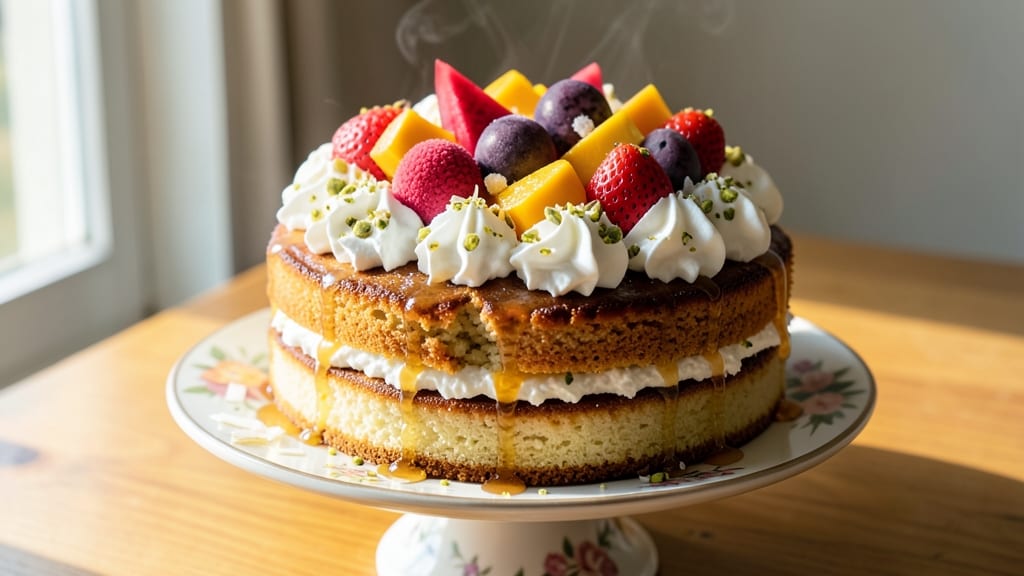
This Asian fresh fruit cake brings tropical brightness to your table with a moist, citrus-kissed texture that stays fresh for days. ✨ The secret lies in layering tender cake with vibrant mango, lychee, and jackfruit—fruits that burst with natural sweetness while keeping the texture impossibly soft.
Unlike dense fruitcakes, this version uses a light sponge base infused with pandan extract, creating a delicate balance of floral and citrus notes that elevate every bite.
What sets this recipe apart is the citrus-zest moisture technique, where lemon and lime zest are folded into the batter alongside a touch of coconut milk. This not only enhances the tropical flavors but also ensures the cake remains tender for up to a week when stored properly.
The fruits are lightly glazed before baking, preserving their juiciness while adding a glossy finish that makes the cake look as stunning as it tastes.
By the time it emerges from the oven, you’ll have a golden, fragrant cake with layers of vibrant fruit peeking through the tender crumb. The pandan-infused batter adds a subtle floral aroma, while the citrus zest keeps the flavors bright and refreshing—perfect for celebrations or a special treat.
This isn’t just dessert; it’s a showstopper that tastes like a vacation in every slice.
Whether you’re serving it at a gathering or savoring a slice with tea, this cake delivers restaurant-quality moisture without the heaviness. The recipe includes tips for decorating with toasted coconut flakes or a drizzle of honey-glaze, ensuring it’s as beautiful as it is delicious. Let’s bake something extraordinary.
Ingredients for asian fresh fruit cake
Tropical fruits meet delicate sponge—just 15 ingredients for a showstopping cake.
| Ingredient | Amount | Notes |
|---|---|---|
| All-Purpose Flour 🌾 | 3 cups | Sifted for light texture |
| Granulated Sugar 🍚 | 1 ½ cups | White or light brown |
| Unsalted Butter 🧈 | 1 cup | Room temperature, full-fat |
| Large Eggs 🥚 | 4 whole | Room temperature for even mixing |
| Pandan Extract 🌿 | 1 tbsp | Pure, not paste (available at Asian markets) |
| Lemon Zest 🍋 | 1 tbsp | Freshly grated, vibrant yellow |
| Lime Zest 🍋 | 1 tbsp | Freshly grated, bright green |
| Light Coconut Milk 🥥 | ½ cup | Canned, full-fat preferred |
| Baking Powder 🧂 | 1 ½ tsp | Diamond Crystal brand recommended |
| Salt 🧂 | ½ tsp | Fine sea salt, not iodized |
| Ripe Mangoes 🥭 | 2 cups | Diced, seedless variety |
| Canned Lychees 🍈 | 1 ½ cups | Syrup-packed, drained |
| Canned Jackfruit 🍠 | 1 ½ cups | Young, in water, drained |
| Pineapple Juice 🍍 | ¼ cup | Fresh, for fruit glaze |
| Powdered Sugar 🍚 | ¼ cup | For fruit glaze |
The fruits are the stars here. Ripe mangoes should give slightly when pressed, and lychees and jackfruit work best when drained thoroughly to avoid soggy cake. Asian markets carry canned jackfruit in the international aisle, but most grocery stores stock lychees in the canned fruit section. For the pandan extract, Thai Kitchen or local Asian grocers are reliable sources—never confuse it with pandan paste, which is thicker and less potent. The zest needs to be freshly grated; pre-grated zest loses its bright flavor quickly.
No pandan extract? Vanilla extract at half the amount adds floral notes, though it won't replicate the exact aroma. Substituting canned fruit? Papaya or guava work beautifully, but adjust the glaze to match their natural juiciness. For the coconut milk, full-fat is non-negotiable—light versions won't provide the same moisture. If you can't find young jackfruit, substitute extra mango or pineapple for texture. The baking powder should be fresh; if your stash is older than 6 months, test it with vinegar—it should fizz vigorously.
This cake keeps beautifully. Wrap tightly in plastic and store at room temperature for 5 days or refrigerate for 2 weeks—the flavors deepen over time. For longer storage, freeze individual slices wrapped in parchment for up to 3 months. The glaze sets quickly, so assemble the cake just before serving. Toasted coconut flakes or a drizzle of honey-glaze make stunning garnishes, but they're optional if you're short on time.
Why You'll Love This Recipe
- No-Fuss Mixing: This cake comes together faster than a coffee break. Just cream butter and sugar, toss in eggs and pandan—no folding, no stress. The pandan extract does all the work, giving that signature aroma with zero effort.
- Creamy, Not Dense: The butter-to-flour ratio keeps it light, while the eggs add a tender crumb. That pandan? It’s like a whisper of tropical vanilla—subtle but unforgettable. Honestly, it’s the kind of cake that disappears too fast at gatherings.
- Gift-Worthy Any Day: Slice it for potlucks, pack it for birthdays, or keep it in the fridge for "emergency dessert" moments. The natural sweetness from sugar and fruit (if you add any) means it’s always the crowd-pleaser.
- Budget-Friendly Luxury: Butter and eggs make it feel special, but the ingredient list is shockingly simple. Leftovers? Even better—it stays moist for days, so you’re not scrambling to bake again. (Yes, even on a Tuesday night.)
Step-by-step instructions for tropical fruit cake with citrus moisture
This cake delivers vibrant tropical flavors while maintaining perfect moisture through citrus zest and coconut milk.
👨🍳 Step 1: Prepare the Fruit Filling
In a medium bowl, combine the 2 cups ripe mangoes, 1.5 cups canned lychees, and 1.5 cups canned jackfruit. Drain any excess liquid from the lychees and jackfruit, but preserve about 2 tablespoons of their syrup for moisture balance. Gently fold in 1 tablespoon lemon zest and 1 tablespoon lime zest—this brightens the tropical flavors while preventing browning. Set aside until ready to use.
I like to use a fork to break up any large mango chunks slightly, but keep the texture chunky for that fresh fruit experience. The zest adds subtle citrus notes that complement the sweetness perfectly without overpowering the fruit's natural taste.
👨🍳 Step 2: Cream Butter and Sugars
In a stand mixer fitted with the paddle attachment, beat the 1 cup unsalted butter and 1.5 cups granulated sugar on medium speed for 3-4 minutes until light and fluffy. You'll see the mixture nearly double in volume and become pale—this incorporates air that creates a tender crumb. Scrape down the sides of the bowl once if needed to ensure even mixing.
Here's the thing—room temperature butter is critical. If it's too cold, you'll end up with dense cake. Press the butter between paper towels if needed to soften it slightly. The sugar should dissolve completely into the butter by the end of this step.
👨🍳 Step 3: Add Eggs and Flavor Extracts
Add the 4 whole large eggs, one at a time, mixing on low speed after each addition until fully incorporated. Then add the 1 tablespoon pandan extract, 1 tablespoon lemon zest, and 1 tablespoon lime zest. Mix on medium speed for 1 minute until the batter is smooth and vibrant yellow-green in color.
The pandan extract gives that signature Asian floral note, while the citrus zest enhances moisture retention. Don't overmix here—just until combined. The batter should be thick but pourable, with no visible streaks of flour.
🥘 Step 4: Combine Dry Ingredients and Fold in Fruit
In a separate bowl, whisk together the 3 cups all-purpose flour, 1.5 teaspoons baking powder, and 0.5 teaspoon salt. Gradually add this dry mixture to the wet ingredients, mixing on low speed just until combined. Be careful not to overmix—stop as soon as the flour disappears.
With the mixer on low speed, gently fold in the prepared fruit mixture using a spatula. Add the 0.5 cup light coconut milk last, mixing just until evenly distributed. The coconut milk adds richness and helps maintain moisture throughout baking. The batter will be thick and vibrant with fruit pieces visible.
🔥 Step 5: Bake and Glaze for Shine
Preheat your oven to 350°F. Pour the batter into two 9-inch round cake pans lined with parchment paper. Bake for 35-40 minutes or until a toothpick inserted in the center comes out clean. The cake should be golden on top but still slightly springy to the touch.
While the cakes cool, prepare the glaze by whisking together 0.25 cup pineapple juice and 0.25 cup powdered sugar until smooth. Once the cakes are completely cool, spread this glaze evenly over the top of each cake. This glaze adds moisture and gives that beautiful tropical sheen while keeping the cake tender.
Pro Tips For Making Asian Fresh Fruit Cake
- CREAM THE BUTTER SLOW: The butter in this cake needs to be just soft—not melted, not lumpy. I used to eyeball it and ended up with a dense, greasy mess. Take the butter out of the fridge 30 minutes before mixing, then press your finger into it—if it springs back but leaves a faint indent, you’re golden.
- WHISK EGGS ROOM TEMP: Cold eggs sink like stones in batter and won’t incorporate properly. Crack them into a bowl and let them sit for 10 minutes while you measure the sugar. Warm eggs whip up lighter, and this cake’s texture relies on that airiness—no one wants a brick with fruit in it.
- DON’T OVERMIX THE BATTER: Once you fold in the fruit, stop mixing the second everything’s just combined. I learned this after a cake that looked like it had been put through a blender. Overworking the batter develops gluten, and this recipe isn’t about chewiness—it’s about tender layers holding those juicy bits.
- USE PANDA EXTRACT SPARINGLY: A little goes a long way—start with half the recipe’s suggested amount. I’ve ruined batches by going overboard, and the flavor turns bitter. If you’re unsure, taste the batter before baking. It should smell like a tropical breeze, not a cleaning product.
Dietary considerations for this dish
Gluten-Free Adaptation
Swap the all-purpose flour for a 1:1 gluten-free baking flour blend like Bob’s Red Mill or King Arthur. These blends contain xanthan gum, which mimics gluten’s structure for a tender crumb. Use the same quantity—3 cups—but sift it well to avoid lumps.
For extra moisture, add 1 extra tablespoon of coconut milk to compensate for the blend’s slightly drier texture. 🌾
Dairy-Free Options
Replace the unsalted butter with vegan butter (like Miyoko’s or Earth Balance) or coconut oil, both at room temperature. For the light coconut milk, use full-fat canned coconut milk (unsweetened) as-is.
The recipe’s moisture comes from citrus zest and coconut, so no other adjustments are needed. The cake will still be rich and tender.
Refined Sugar Substitutes
For a lower-glycemic version, replace granulated sugar with coconut sugar (1:1 ratio) or maple syrup (reduce by 2 tablespoons per cup). If using maple syrup, warm it slightly to blend smoothly with the butter.
The cake’s moisture will remain intact, but the flavor profile shifts subtly toward caramel notes. Test with ½ cup first to taste.
Nut-Free Considerations
This recipe is naturally nut-free, but if you’re avoiding coconut (a common allergen), omit the light coconut milk and pandan extract. Substitute the coconut milk with 1 extra tablespoon of pineapple juice and replace pandan with ½ teaspoon vanilla extract for floral notes.
The cake’s tropical character stays vibrant without coconut.
Low-Sugar Version
Reduce the granulated sugar to 1 cup and add ½ cup unsweetened applesauce to the batter for moisture. Replace powdered sugar in the glaze with ½ cup coconut sugar (whisked with 2 tablespoons pineapple juice).
The cake will be slightly less sweet but still moist, with a natural caramel undertone from the applesauce. 💛
Nutrition facts
Frequently asked questions
Can I use fresh instead of canned lychees and jackfruit?
Fresh lychees and jackfruit work beautifully, but they require extra prep! Peel and deseed the lychees, then toss them in 1 tablespoon lemon juice to prevent browning. For jackfruit, remove the seeds and core, then dice into ½-inch cubes. Drain any excess liquid from both fruits before folding them into the batter. Fresh fruit adds vibrant color and texture, but canned versions are more convenient and ensure consistent moisture.
Why does my cake turn out dense instead of light and moist?
Dense cake usually means overmixing the batter or using cold butter. Always cream the butter and sugar until light and fluffy (3-4 minutes), and fold in the fruit gently—don’t overmix after adding flour. Also, ensure your eggs and butter are at room temperature. If the cake still feels dense, check your baking powder (it should be fresh) and reduce the flour by 1 tablespoon next time.
How do I store this cake to keep it fresh for longer?
Wrap the cake tightly in plastic wrap and store it at room temperature for up to 5 days—the tropical flavors actually deepen over time! For longer storage, refrigerate for 2 weeks or freeze individual slices wrapped in parchment for 3 months. To serve from the fridge, let slices sit at room temperature for 10 minutes before eating to restore moisture. The glaze helps preserve freshness!
Can I make this cake in a single layer instead of two?
Yes! Use a 9x13-inch baking pan instead of two round pans, and bake for 40-45 minutes at 350°F. The baking time may increase slightly due to the larger surface area. For presentation, slice the cake into squares and arrange them on a platter with fresh fruit on top. The single-layer version works great for casual gatherings or as a sheet cake!
What’s the best way to decorate this cake for special occasions?
For a showstopping finish, dust the top with toasted coconut flakes or drizzle with a honey-glaze (mix ½ cup honey with 2 tablespoons pineapple juice and warm until smooth). Garnish with fresh mango slices, edible flowers, or a sprinkle of crushed macadamia nuts for crunch. For a minimalist look, simply add a few lychees on top—their vibrant color makes the cake look extra festive!