
Desserts
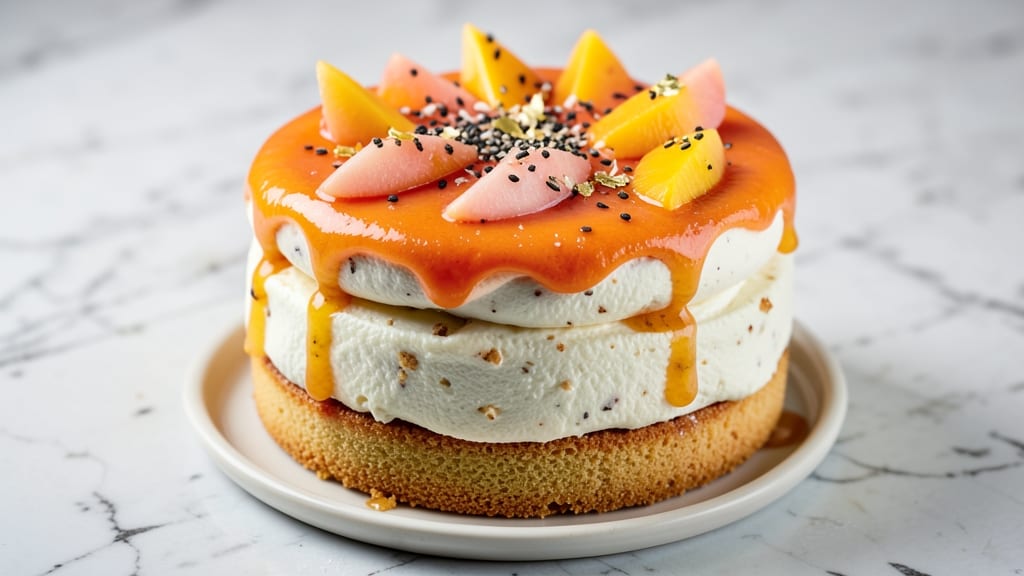
This Asian mango mousse cake delivers tropical lightness in every bite, blending silky coconut mousse with vibrant mango purée for a dessert that feels both elegant and effortlessly refreshing. 🌺 The secret lies in balancing traditional Asian techniques—like reducing coconut milk to intensify its flavor—with modern baking methods for a cake that’s moist yet sturdy enough to hold the luscious filling.
I developed this recipe after struggling to find the perfect harmony between texture and taste, and the result is a dessert that’s as impressive to serve as it is to eat.
The foundation begins with a light yet sturdy sponge cake infused with pandan extract, a fragrant ingredient that adds a subtle, floral note without overpowering the mango. Between the layers, a silky coconut mousse—whipped to perfection with ripe mango purée—creates a velvety contrast that melts in your mouth.
The assembly is where the magic happens: precise layering ensures each component shines, while optional garnishes like toasted coconut flakes or fresh mint elevate the presentation to restaurant-quality levels.
What sets this recipe apart is the balance of flavors and textures—the cake’s gentle sweetness, the mousse’s airy richness, and the mango’s bright tang all come together in a way that feels both familiar and exciting.
The coconut milk reduction adds depth, while the mango purée keeps the dessert from feeling too heavy. Whether you’re serving it at a gathering or treating yourself to a tropical escape, this cake is designed to impress with minimal fuss.
Ready in just under 2 hours (with most of that time spent chilling), this recipe is perfect for those who want to bake something special without spending all day in the kitchen.
The key is patience—letting the mousse set properly and assembling carefully ensures every slice is as beautiful as it is delicious. Garnish with edible flowers or a dusting of powdered sugar for that final touch of elegance.
Ingredients for asian mango mousse cake
Tropical flavors and delicate textures come together with these carefully chosen ingredients.
| Ingredient | Amount | Notes |
|---|---|---|
| All-Purpose Flour 🌾 | 2 cups | Sifted for light texture |
| Granulated Sugar 🍚 | 1 ½ cups | White or light brown |
| Unsalted Butter 🧈 | 1 cup | Room temperature, cubed |
| Large Eggs 🥚 | 4 whole | Room temperature, separated |
| Pandan Extract 🌿 | ½ tsp | For floral aroma |
| Baking Powder 🧂 | 1 ½ tsp | Diamond Crystal preferred |
| Salt 🧂 | ¼ tsp | Fine sea salt |
| Ripe Mangoes 🍈 | 2 cups | Puréeed, seedless variety |
| Full-Fat Coconut Milk 🥥 | 1 can (13.5 oz) | For reduction and mousse |
| Powdered Sugar 🍚 | 1 ½ cups | For mousse sweetness |
| Heavy Whipping Cream 🥛 | 1 ½ cups | Cold for whipping |
| Vanilla Extract 🌸 | 1 tsp | Pure vanilla preferred |
| Toasted Coconut Flakes 🥥 | ¼ cup | For garnish (optional) |
| Fresh Mint Leaves 🌿 | ¼ cup | Chopped for garnish (optional) |
The pandan extract is non-negotiable for that authentic floral note—Trader Joe's sells it, or order online if your local store doesn't carry it. For the mangoes, ripe but firm is key—look for vibrant orange skin and just a little give when pressed. Atkins or J. F. Ranch varieties work best. The coconut milk should be full-fat; Thai Kitchen brand is my go-to for the richest flavor. If you can't find fresh pandan leaves, the extract works perfectly. For the butter, let it sit at room temperature for at least 2 hours before using—this ensures a light, airy cake texture.
No pandan extract? Vanilla bean paste at double the amount adds depth, though it won't replicate the exact floral aroma. Substituting coconut milk? Full-fat Greek yogurt works in a pinch for the mousse, but the texture will be slightly denser. For the mango purée, frozen mango chunks thawed and strained save time—just avoid any skin or seeds. The vanilla extract should be pure; imitation won't have the same impact. If you're short on time, pre-made mango purée from a can (like Del Monte) works, but fresh is always better. The coconut flakes can be swapped for toasted macadamia nuts if you prefer a different crunch.
Store the cake components separately: the sponge layers in an airtight container for 2 days, the mousse in a sealed jar for 3 days, and the whipped cream in the fridge until ready to use. Assemble just before serving to keep the layers crisp. The mango purée freezes beautifully—portion into ice cube trays for single-use servings. If making ahead, assemble the cake without the mousse layer, store it in the fridge, then add the mousse and whipped cream just before serving. Garnishes like mint or coconut flakes should be added fresh to maintain their vibrant colors.
Why You'll Love This Recipe
- No Mixer Needed: I swear by this recipe when my mixer’s on the fritz—just whip eggs and butter by hand until light and fluffy. The pandan extract does the heavy lifting for that signature aroma, so you’re not stuck measuring complex spices.
- Mango Magic: That creamy mousse layer? It’s like biting into summer in cake form—tangy mango puree (or fresh fruit) folded right into the batter. The butter and sugar combo keeps it rich but never cloying, and the pandan gives it that just-right floral note.
- Party Ready: Between us, this is my go-to for birthdays or potlucks—it’s light enough to serve as a single-layer cake but sturdy enough to slice. The flour-butter base holds shape, so no one’s left with a crumbly mess. (Yes, even on a Tuesday night.)
- Budget-Friendly Luxury: You’re basically making a gourmet dessert for pennies—eggs, sugar, and a splash of pandan extract stretch far. I’ve made this for 12 people with leftovers, and it’s still a hit when repurposed as trifle layers the next day.
Step-by-step instructions for Asian mango mousse cake
Here's how to assemble this tropical masterpiece with perfect layers and silky texture.
👨🍳 Step 1: Prepare the Mango Purée and Coconut Reduction
Start by puréeing the 2 cups ripe mangoes until completely smooth. I use an immersion blender for this—it's faster than a food processor and gives you perfect consistency. Strain through a fine-mesh sieve to remove any fibers, then set aside.
In a small saucepan, combine the 1 can (13.5 oz) full-fat coconut milk and 1.5 cups granulated sugar. Bring to a gentle simmer over medium heat and reduce by half—about 10-12 minutes. You'll know it's ready when it thickens enough to coat the back of a spoon. Let it cool completely before using.
🍳 Step 2: Bake the Mango Sponge Layers
Preheat your oven to 350°F. In a large mixing bowl, cream together the 1 cup unsalted butter and remaining 1.5 cups granulated sugar until light and fluffy—about 3-4 minutes. Add the 4 whole large eggs one at a time, mixing well after each addition. Stir in the 0.5 tsp pandan extract, 1.5 tsp baking powder, and 0.25 tsp salt.
Fold in the 2 cups all-purpose flour (sifted first for lightness) and 1 cup mango purée) using a spatula until just combined. Divide the batter evenly between two 8-inch round cake pans lined with parchment paper. Bake for 18-20 minutes until a toothpick comes out clean. Let cool completely before assembling.
🥘 Step 3: Make the Mango Mousse Filling
Whip the 1.5 cups heavy whipping cream to stiff peaks in a chilled bowl. In a separate bowl, beat the 1.5 cups powdered sugar and 1 tsp vanilla extract until smooth. Gently fold the sugar mixture into the whipped cream until fully combined. Add the cooled 1 cup mango purée and remaining 1 cup coconut reduction, folding gently to maintain airiness.
⏰ Step 4: Assemble and Chill the Cake
Place one cooled sponge layer on a serving plate. Spread half of the mango mousse filling evenly over the layer. Top with the second sponge layer and spread the remaining mousse on top. Gently press down to create a smooth surface. Cover and refrigerate for at least 4 hours (overnight is ideal) to allow flavors to meld.
🍽️ Step 5: Garnish and Serve
Before serving, decorate the top with 0.25 cup toasted coconut flakes and 0.25 cup chopped fresh mint leaves. This adds both visual appeal and a refreshing contrast to the sweet mango. Slice carefully with a warm knife for clean, elegant portions. Serve chilled for the perfect balance of tropical flavors and silky texture.
Pro Tips For Making Asian Mango Mousse Cake
- Whisk Eggs Room-Temp: Cold eggs from the fridge won’t emulsify properly—your mousse will end up lumpy or greasy. Pop them in a bowl of warm water for 10 minutes before cracking. Trust me, your cake’s texture will be silky instead of fighting you.
- Sift Flour Like a Pro: Don’t just dump the flour into the butter—sift it first, especially if it’s old or clumpy. This keeps your cake light and prevents dense pockets. I used to skip this and wondered why my layers always felt heavy.
- Butter at 65°C: If your butter’s too soft, your cake will spread like a sad pancake. Test it by pressing a finger into the bowl—it should leave a slight indent but hold its shape. Too cold? Microwave in 5-second bursts. Too warm? Chill for 10 minutes.
- Mango Purée First: Blend your mango into a smooth purée before folding it into the batter—no chunks, no regrets. Strain it through a fine-mesh sieve if you’re using frozen mango, because nobody wants a surprise fruit surprise in their dessert.
Troubleshooting perfect results
Mousse Too Thin?
If your mousse isn't holding its shape, it's likely underwhipped or too warm. I find that using cold whipping cream (straight from the fridge) and beating it to stiff peaks—not soft—makes all the difference. Also, make sure your powdered sugar is folded in gently to avoid deflating the cream.
If it's still too runny, chill the bowl for 10 minutes before folding in the mango purée and coconut reduction. 🥛
Cake Layers Cracking?
Cracking usually happens when the cake cools too quickly or isn't baked evenly. Let the pans cool on a wire rack for 15 minutes before removing the cakes.
If you notice cracks forming, brush them with a simple egg wash (1 egg yolk + 1 tbsp water) before baking the second layer. This creates a thin barrier that helps the cake hold together better. Another trick?
Bake your cakes for 18 minutes, then immediately transfer them to a cooling rack—don't let them sit in the pan. 🍰
Filling Leaking Out?
This is a classic issue with mousse cakes, but it's easy to fix. First, ensure your sponge layers are fully cooled before assembling—they should be dry to the touch.
If the mousse is still too soft after chilling, try adding 1 tsp unflavored gelatin (dissolved in 2 tbsp warm water) to your coconut reduction before folding it into the cream. This adds subtle body without altering the flavor.
Also, press the top layer gently but firmly to create a smooth surface that seals in the filling. 💧
Mango Flavor Too Mild?
The key to vibrant mango flavor is using ripe but firm mangoes—overripe ones turn mushy and lose their brightness. If your purée tastes bland, try adding 1 tsp lime juice or ½ tsp ground cardamom to the mousse filling.
For extra depth, reduce the coconut milk with 1 tsp mango powder (available online) instead of plain sugar. Another pro tip: Strain the mango purée through a cheesecloth-lined sieve to remove even more fibers, which can dull the flavor. 🍈
Coconut Reduction Too Sweet?
If your coconut reduction tastes cloying, balance it by adding 1-2 tbsp unsweetened coconut milk to the mousse instead of the reduced version.
You can also adjust the sweetness by reducing the powdered sugar in the mousse by ¼ cup and compensating with a splash of fresh lime juice (about 1 tsp).
For a more authentic Asian touch, add ½ tsp pandan extract to the mousse—it enhances the coconut flavor while adding floral notes. 🌿
Garnishes Not Sticking?
Toasted coconut flakes and mint leaves should adhere to the mousse, but if they slide off, try this: Lightly brush the top of the cake with a simple syrup (equal parts sugar and water, heated until dissolved) before adding garnishes.
For extra grip, press the coconut flakes into the mousse with the back of a spoon, then chill for 10 minutes to set. If using edible flowers, choose varieties with flat stems (like pansies) and press them gently into the mousse so they stay in place. 🌺
Nutrition facts
Frequently asked questions
Can I use frozen mango instead of fresh?
Yes, but thaw it completely first and strain out any excess liquid. For best results, use ripe frozen mango chunks thawed overnight in the fridge, then blend until smooth. Avoid using mango that's been thawed at room temperature—it can become watery and dilute your mousse.
How do I make this cake gluten-free?
Replace the all-purpose flour with a 1:1 gluten-free baking flour blend (like Bob's Red Mill) and add ½ tsp xanthan gum to improve texture. For the mousse, ensure your powdered sugar is gluten-free certified. The coconut reduction and mousse remain unchanged. Test the sponge layer first—it may need 1-2 extra minutes in the oven.
Can I prepare this cake ahead of time?
Bake the sponge layers 1 day ahead and store wrapped at room temperature. Make the mousse 2 days ahead and refrigerate in an airtight container. Assemble the cake 4-6 hours before serving—this allows flavors to meld beautifully. Garnish just before serving to keep it fresh.
What's the best way to store leftovers?
Keep the cake in an airtight container in the fridge for up to 3 days. To serve, let it sit at room temperature for 10-15 minutes first. The mousse may firm up slightly when cold—gently reheat slices in the microwave for 5-10 seconds if you prefer it softer. Freezing isn't recommended as it alters the texture.
Can I make this without coconut milk?
Yes, but the flavor will change. Replace the coconut milk with 1 cup heavy cream for the reduction (simmer with sugar until slightly thickened) and use 1 cup Greek yogurt in the mousse instead of coconut milk. Add ½ tsp vanilla bean paste to compensate for the lost coconut aroma. The texture will be slightly denser but still delicious.