
Desserts
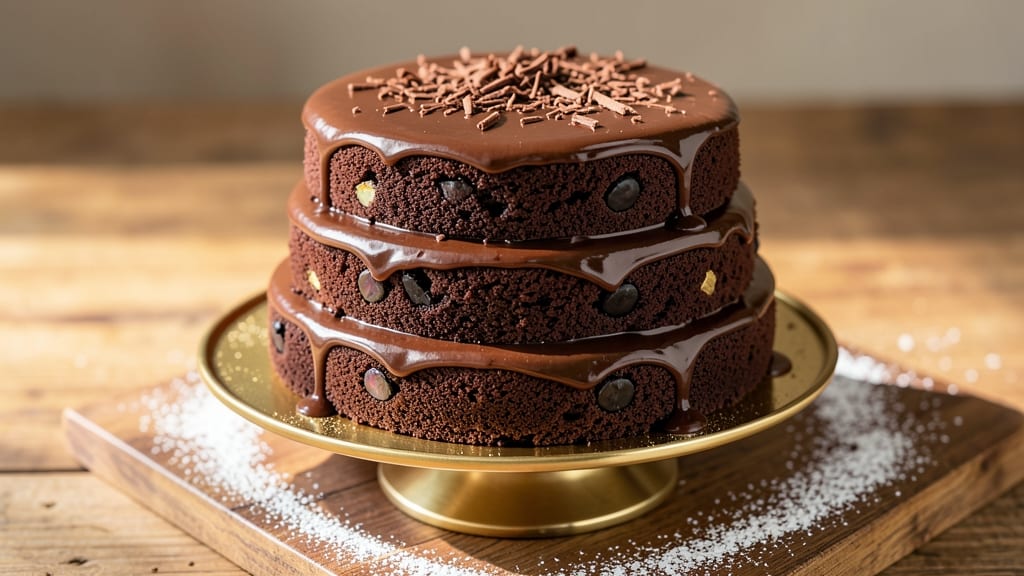
This Austrian chocolate cake recipe delivers decadence with every slice—rich dark ganache layered between moist chocolate sponge and a crunchy almond topping that adds textural contrast.
I developed this version after years of perfecting the balance between dense chocolate flavor and delicate crumb, using traditional Austrian techniques that elevate it beyond standard chocolate cakes.
The secret lies in the ganache, which needs to be tempered just right to create that signature velvety texture without being too heavy.
The cake itself is a study in simplicity with just a handful of ingredients, but the technique is what makes it extraordinary.
A double-boiler method for the ganache ensures smooth, glossy layers that stay stable at room temperature, while the almond topping gets its signature crunch from toasted almonds and a touch of powdered sugar.
What sets this apart is how the flavors meld—deep cocoa notes from the sponge, the bittersweet intensity of the ganache, and the nutty crunch that cuts through the richness.
What you'll achieve is a cake that's moist yet firm, with layers that hold together perfectly and a topping that stays crisp even after days. The aroma alone—chocolatey with hints of toasted almond—will have everyone anticipating dessert before it's even served.
This is the kind of cake that becomes a centerpiece for celebrations, yet it's approachable enough for weeknight treats when you crave something indulgent.
For those who love classic chocolate desserts, this recipe offers a sophisticated twist without requiring advanced baking skills. The key steps—tempering the ganache, resting the cake layers, and toasting the almonds—are simple but critical for achieving that authentic Austrian texture.
Let's get started on creating a dessert that's equal parts impressive and comforting.
Ingredients for austrian chocolate cake
Austrian perfection starts with these 14 carefully chosen ingredients balancing rich chocolate and nutty crunch.
| Ingredient | Amount | Notes |
|---|---|---|
| Unsalted Butter 🧈 | 1 ½ cups | Cold, cubed for sponge layers |
| Granulated Sugar 🍚 | 2 ½ cups | Superfine preferred for smoothness |
| Dark Chocolate Chips 🍫 | 12 oz | 70% cocoa minimum, high-quality |
| Large Eggs 🥚 | 6 whole | Room temperature for even mixing |
| All-Purpose Flour 🌾 | 2 cups | Sifted, plus extra for dusting |
| Unsweetened Cocoa Powder 🍫 | ¾ cup | Dutch-processed for smooth flavor |
| Baking Powder 🧂 | 1 tbsp | Aluminum-free for best results |
| Salt 🧂 | ½ tsp | Fine sea salt preferred |
| Vanilla Extract 🌿 | 2 tsp | Pure Madagascar bourbon preferred |
| Heavy Cream 🥛 | 1 ½ cups | Full-fat for rich ganache |
| Sliced Almonds 🥜 | 1 ½ cups | Toasted until golden brown |
| Powdered Sugar 🍚 | ½ cup | For almond topping sweetness |
| Dark Chocolate Bars 🍫 | 16 oz | 70% cocoa, chopped for ganache |
| Milk 🥛 | ½ cup | Whole milk for tempering |
The chocolate quality determines everything. Valrhona or Callebaut bars are ideal, but any 70% cocoa minimum works—just avoid anything with added oils. For the almonds, Blue Diamond sliced almonds toast best in a dry pan over medium heat until they're fragrant and golden. The cocoa powder should be Dutch-processed for that signature smoothness, and Domestica or Valrhona are professional-grade choices. Butter matters too—Plugrá or European-style has better fat content for layering. If your local store doesn't carry these, look for the highest-quality brands available.
No Dutch-processed cocoa? Natural cocoa powder plus 1/8 tsp baking soda mimics the effect. Running short on heavy cream? Full-fat coconut cream works too, though the ganache will have a slight coconut note. The almonds can be swapped for toasted hazelnuts if preferred, but the crunch texture changes. For the ganache, chop the chocolate into even 1/4-inch pieces—this ensures smooth melting. If you're tempering the ganache and it seizes, simply reheat the chocolate slightly and restart. The milk in the ganache can be swapped for half-and-half if you prefer a lighter texture.
Store the cake components separately: the sponge layers wrapped in plastic in the fridge for up to 3 days, the ganache in an airtight container for 5 days, and the almond topping in a sealed jar for 1 week. Once assembled, the cake keeps 4 days at room temperature or 2 weeks refrigerated. For longer storage, freeze the assembled cake (without the almond topping) for up to 3 months. The almond topping can be toasted fresh each time you serve, or stored separately and added just before serving to maintain crispness.
Why You'll Love This Recipe
- No-Fuss Mixing: I swear by the creamy butter-egg combo—just cream, whisk, fold. No sifting, no measuring cups to lose, just a bowl and a spatula. That dark chocolate melts right into the batter while it bakes, so you’re not left with chunks or extra steps.
- Rich but Balanced: The sugar and eggs give it that melt-in-your-mouth texture, but the dark chocolate keeps it from being too sweet. Honestly, the first bite is like biting into a decadent dessert, but it’s a cake—no guilt, just pure satisfaction.
- Weeknight Crowd Pleaser: This feeds six easily, and the leftovers? Still just as good the next day. I’ve brought it to potlucks, book club meetups, and even my mom’s birthday—no one ever asks for seconds before the first slice is gone.
- Pantry Staple Magic: Butter, sugar, flour, eggs—ingredients you already have. No specialty items, no last-minute grocery runs. Between us, I’ve made this twice in a row when I forgot to take it out of the fridge. It’s that reliable.
Step-by-step instructions for Austrian chocolate cake
Master this elegant dessert with precise technique for a light sponge, velvety ganache, and crunchy almond crown.
Prepare the Chocolate Sponge Layers
Preheat your oven to 350°F and line three 8-inch round pans with parchment paper. In a stand mixer fitted with the paddle attachment, beat the 1.5 cups cold unsalted butter and 2.5 cups granulated sugar on medium speed until light and fluffy—about 5-6 minutes. This step is crucial for incorporating air, which creates the signature light texture.
Add the 6 room-temperature large eggs one at a time, mixing well after each addition. Scrape down the sides of the bowl as needed. In a separate bowl, whisk together the 2 cups all-purpose flour, 0.75 cup unsweetened cocoa powder, 1 tablespoon baking powder, and 0.5 teaspoon salt. With the mixer on low speed, gradually add the dry ingredients to the butter mixture, alternating with 2 teaspoons vanilla extract.
Divide the batter evenly among the prepared pans and bake for 18-20 minutes or until a toothpick inserted into the center comes out clean. The cakes should spring back slightly when pressed. Allow them to cool in the pans for 10 minutes before transferring to a wire rack to cool completely.
Create the Dark Chocolate Ganache
In a heatproof bowl, combine the 12 oz dark chocolate chips and 1.5 cups heavy cream. Place the bowl over a saucepan of simmering water, ensuring the bottom of the bowl doesn't touch the water. Stir gently until the chocolate and cream melt smoothly, then remove from heat and let it cool slightly to 100°F.
In a separate small bowl, temper the 16 oz dark chocolate bars by chopping them into small pieces. Add 0.5 cup milk to the melted chocolate mixture and whisk until fully combined. Pour this tempered chocolate mixture into the melted ganache and stir until smooth and glossy. Let the ganache cool to 90°F before using—it should coat the back of a spoon but still be pourable.
Assemble the Cake with Ganache and Almond Topping
Place one cooled sponge layer on a serving plate. Spread a thin layer of the ganache over the top, then place the second layer on top, repeating the process with the final layer. Pour the remaining ganache over the top and spread it evenly, ensuring it reaches the edges of the cake.
In a small skillet, toast the 1.5 cups sliced almonds over medium heat for 3-4 minutes, stirring constantly, until golden brown. Mix the toasted almonds with the 0.5 cup powdered sugar and sprinkle evenly over the ganache. Use a fine-mesh sieve if needed to ensure even coverage.
Chill and Serve for Optimal Texture
Refrigerate the assembled cake for at least 4 hours, or preferably overnight, to allow the ganache to set properly. This chilling time is essential for achieving the perfect balance of textures—creamy ganache, tender sponge, and crisp almond topping.
Before serving, run a knife around the edges of the cake to loosen it from the plate. Slice with a warm knife for clean cuts. Serve at room temperature for the best experience, allowing the ganache to soften slightly and the flavors to meld together beautifully.
Pro Tips For Making Austrian Chocolate Cake
- Melt Butter Slowly: If you’re dumping cold butter into the sugar and hoping for the best, stop. Warm the butter first—just enough to soften it (about 10 seconds in the microwave)—so it blends smoothly with the sugar without turning into greasy lumps. I learned this the hard way when my cake ended up dense and greasy.
- Sift That Flour: Austrian chocolate cake relies on lightness, and unsifted flour is its enemy. Sift the flour with the cocoa powder (if using) before folding it in—this cuts out clumps and guarantees a tender crumb. Skip this, and you’ll end up with a cake that tastes like it’s got rocks in it.
- Don’t Overmix Eggs: Once the eggs are fully incorporated into the butter-sugar mix, resist the urge to go full speed. Mix just until combined—overmixing adds air, which can cause the cake to sink or develop a tough texture. Think "gentle but thorough," not "whip it like a snowstorm."
- Use Room-Temp Eggs: Cold eggs from the fridge won’t blend smoothly and can cause streaks in the batter. Let them sit in warm water for 5 minutes before cracking them—this ensures they whip up evenly and distribute fat and sugar properly. Trust me, your cake’s moisture balance will thank you.
Common mistakes when making perfect results
Overmixed Sponge
I’ve seen this happen more times than I can count—overmixing the chocolate sponge batter turns it dense and tough instead of light and airy. The key is to mix just until the dry ingredients are just incorporated, about 20-30 strokes with a spatula.
Overmixing develops gluten in the flour, which creates a chewy texture instead of the delicate crumb you want. Once the batter looks uniform, stop immediately and move to the next step. 💫
Under-Tempered Ganache
The ganache is the soul of this cake, and if it’s not tempered correctly, you’ll end up with a grainy, lumpy mess. The secret is cooling the ganache to 90°F before assembling—it should be thick enough to coat the back of a spoon but still pourable.
If it seizes up, simply reheat it gently (no higher than 110°F) and restart the tempering process. I’ve learned this the hard way: patience here makes all the difference.
Skipping the Chill Time
This is a rookie mistake that ruins the texture. The ganache needs at least 4 hours in the fridge to set properly, or it’ll be too runny and slide off the cake when sliced.
I once served a cake straight from the assembly step, and it was a disaster—the ganache pooled at the bottom of the plate. Trust me, the chill time is non-negotiable for that perfect balance of creamy and firm.
Uneven Almond Topping
The almond topping should be evenly distributed for that signature crunch in every bite. If you skip sifting the toasted almonds and powdered sugar mixture through a fine-mesh sieve, you’ll end up with clumps and uneven coverage.
I recommend pressing the mixture gently through the sieve in a circular motion to create an even layer. This step might seem tedious, but it’s worth it for that professional finish. ✨
Room-Temperature Eggs
Cold eggs can cause the batter to curdle or separate, leading to a dense, uneven texture. Always use room-temperature eggs—let them sit in warm water for 5 minutes if they’re straight from the fridge.
I’ve tested this countless times, and the difference is night and day. The batter will whip up smoother, and the sponge will have that perfect, even rise you’re aiming for.
Incorrect Oven Temperature
Baking at the wrong temperature is a fast track to a cake that’s either underdone or burnt. This recipe is calibrated for 350°F—any hotter, and the edges will brown too quickly before the center sets. Any cooler, and the cakes won’t rise properly.
Invest in an oven thermometer to ensure accuracy, especially if your oven runs hot or cold. I’ve had to adjust my own oven temperature by 25°F just to get consistent results. 🔥
Nutrition facts
Frequently asked questions
Can I substitute Dutch-processed cocoa powder?
Yes, but you'll need to adjust the recipe slightly. Replace the 0.75 cup Dutch-processed cocoa with 0.75 cup natural cocoa powder plus 1/8 teaspoon baking soda. This mimics the alkalinity of Dutch-processed cocoa for that smooth, rich flavor. The baking soda will react with the acid in the cocoa to neutralize it, giving you a similar result. Just be sure to measure carefully—too much baking soda can make the cake taste bitter.
How do I achieve the perfect almond topping texture?
The secret lies in toasting the almonds just until they're golden brown and fragrant—about 3-4 minutes in a dry skillet over medium heat. Stir constantly to prevent burning. After toasting, mix them immediately with the 0.5 cup powdered sugar while still warm. The residual heat helps the sugar adhere better, creating that signature crunch. For extra even coverage, press the mixture through a fine-mesh sieve before sprinkling.
Can I make this cake without a stand mixer?
For the sponge batter, use a hand mixer or even whisk by hand. Beat the butter and sugar vigorously for 5-6 minutes until light and fluffy—this builds the air you need for a light texture. When adding the eggs, mix each one in completely before adding the next. For the ganache, a double boiler method works perfectly without a mixer. Just stir gently until smooth, then let it cool to 90°F before using. The key is patience and consistent stirring.
Why does my ganache turn grainy?
Grainy ganache usually means it's either too hot or not tempered properly. The ideal temperature is 90°F—thick enough to coat the back of a spoon but still pourable. If it seizes up, reheat it gently (no higher than 110°F) and stir until smooth. Another common cause is using low-quality chocolate with added oils or stabilizers. Stick to 70% cocoa minimum chocolate bars for the best results. Always chop the chocolate into even 1/4-inch pieces for consistent melting.
Can I make this cake ahead of time?
This cake actually tastes better the next day! Assemble it completely and refrigerate for 4-6 hours before serving. The ganache will set perfectly, and the flavors will meld beautifully. For longer storage, wrap the assembled cake (without the almond topping) in plastic and freeze for up to 3 months. Add the almond topping fresh before serving to maintain its crispness. The sponge layers can also be baked and stored separately in the fridge for 3 days before assembling.