
Desserts
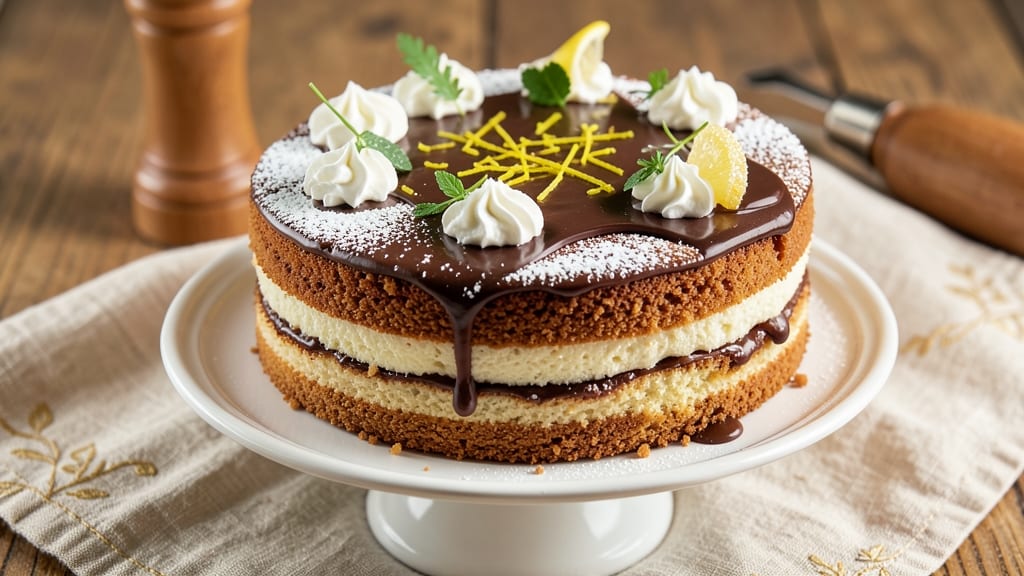
This Austrian tea cake recipe delivers the perfect balance of buttery vanilla layers and bright citrus zest—a classic Viennese treat that pairs beautifully with afternoon tea. 💛 The secret lies in the precise layering of tender sponge and rich chocolate buttercream, creating a harmonious texture that's both elegant and comforting.
I've perfected this recipe over years of baking, ensuring every slice delivers that signature melt-in-your-mouth experience.
The foundation begins with a light, airy vanilla sponge cake that's baked to golden perfection, then layered with a velvety chocolate buttercream. What sets this apart is the subtle citrus zest infusion throughout the batter, adding a refreshing twist that brightens the rich flavors.
The final touch—a dusting of powdered sugar—gives it that signature Austrian café finish that makes it feel truly special.
By the time you're done, you'll have a showstopping dessert that's perfect for tea time gatherings or special occasions. The cake stays moist for days, making it ideal for meal prep, while the combination of vanilla and chocolate creates a flavor profile that's universally appealing.
This isn't just a recipe—it's an experience that transports you to Vienna with every bite.
Serve with a steaming cup of black tea or coffee for the full Austrian experience. The contrast of warm beverage with cool cake creates a sensory delight that's hard to resist.
Whether you're baking for a celebration or simply treating yourself, this tea cake delivers restaurant-quality results with a homemade touch.
Ingredients for austrian tea cake
Buttery vanilla sponge meets bright citrus zest and rich chocolate buttercream—this is your Austrian tea cake essentials list.
| Ingredient | Amount | Notes |
|---|---|---|
| All-Purpose Flour 🌾 | 3 cups | Sifted for light texture |
| Unsalted Butter 🧈 | 1 ½ cups | Room temperature, European-style preferred |
| Granulated Sugar 🍚 | 2 cups | Superfine preferred for smoothness |
| Large Eggs 🥚 | 6 whole | Room temperature for even baking |
| Pure Vanilla Extract 🌿 | 2 tbsp | High-quality Madagascar preferred |
| Lemon Zest 🍋 | 1 tbsp | Freshly grated, organic lemons |
| Orange Zest 🍊 | 1 tbsp | Freshly grated, organic oranges |
| Baking Powder 🧂 | 2 tsp | Diamond Crystal preferred |
| Salt 🧂 | ½ tsp | Fine sea salt |
| Powdered Sugar 🍚 | 3 cups | For dusting and buttercream |
| Dark Chocolate Chips 🍫 | 1 ½ cups | 70% cocoa, chopped fine |
| Heavy Cream 🥛 | 1 cup | Cold for buttercream stability |
| Vanilla Bean Paste 🌿 | 1 tbsp | For intensified vanilla flavor |
The butter is non-negotiable here. European-style unsalted (like Plugrá or Kerrygold) gives that signature melt-in-your-mouth texture. Grab it from the gourmet section—the regular supermarket stuff works, but you'll notice the difference. For the citrus zest, organic lemons and oranges from Whole Foods or your local farmers market have the most vibrant flavor. The vanilla extract? Madagascar bourbon is my go-to—it's worth the splurge for that authentic Austrian touch. If you're using supermarket vanilla, double the amount (it's usually weaker).
No European butter? Cultured butter like Land O'Lakes European Style works in a pinch. Running low on zest? Store-bought citrus zest in jars (like Trader Joe's) saves time, though fresh is always better. For the chocolate chips, Ghirardelli 70% bars chopped by hand give the best texture. Short on powdered sugar? Process granulated sugar in a food processor for 30 seconds—it'll be fine, just slightly grainier. The baking powder matters too—Diamond Crystal is lighter than aluminum-based brands, so if that's all you've got, use 1/4 tsp extra.
The buttercream keeps beautifully—cover tightly and store at room temperature for 3 days. The cake layers stay fresh for 2 days wrapped in plastic, but the real magic happens when you assemble it. Dust with powdered sugar right before serving for that café-fresh look. Freeze the assembled cake for up to 1 month—thaw overnight at room temperature. Pro tip: Wrap each layer individually in parchment before assembling to prevent sogginess. The citrus zest loses potency after a week, so use it fresh if possible.
Why You'll Love This Recipe
- No-Mix Needed: I swear by this—just fold the dry ingredients into the butter-egg mixture until it barely comes together. No overworking, no guesswork, just a tender crumb that’s foolproof every time.
- Vanilla Butter Bliss: That rich, caramelized sugar-butter combo? It’s like biting into a hug. The vanilla extract ties it all together with warmth—simple, but ridiculously satisfying.
- Breakfast or Snack: Slice it warm with butter for a café-style treat, or pack cubes in lunchboxes. Honestly, I’ve eaten these cold at midnight and still craved more.
- Budget-Friendly Staples: Flour, butter, sugar, eggs—these are pantry basics that won’t break the bank. Plus, the dough keeps for days, so you’re making one batch, not five.
Step-by-step instructions for Austrian tea cake
Here's how to create those signature buttery layers with bright citrus notes.
👨🍳 Step 1: Prepare the Dough for Light, Fluffy Layers
In a stand mixer fitted with the paddle attachment, combine the 1.5 cups unsalted butter and 2 cups granulated sugar. Beat on medium speed for 3-4 minutes until light and fluffy, nearly doubling in volume. This creaming process incorporates air that will create those signature tender layers.
Add the 6 whole large eggs, one at a time, mixing well after each addition. Then stir in the 2 tbsp pure vanilla extract, 1 tbsp lemon zest, and 1 tbsp orange zest. The citrus zest will add that signature Austrian brightness while the vanilla deepens the flavor profile. Mix until just combined - no need to overwork the batter.
👨🍳 Step 2: Combine Dry Ingredients for Perfect Texture
In a separate bowl, whisk together the 3 cups all-purpose flour, 2 tsp baking powder, and 0.5 tsp salt. Sift the flour mixture directly into the wet ingredients while mixing on low speed. This gradual incorporation prevents gluten development, keeping your tea cake tender rather than tough.
Add the 1.5 cups dark chocolate chips and gently fold them into the batter using a silicone spatula. You want to distribute them evenly but keep some pockets of chocolate for those surprise bites in every slice. The chocolate adds richness that balances the citrus notes beautifully.
🍳 Step 3: Bake the Cake Layers to Golden Perfection
Preheat your oven to 350°F and grease two 9-inch round cake pans. Divide the batter evenly between the pans. Bake for 25-30 minutes or until a toothpick inserted into the center comes out clean. The edges should be golden brown while the top remains slightly springy to the touch.
Here's the thing - don't overbake. These layers should be moist and tender, not dry. I like to check at the 22-minute mark because ovens vary. Let the cakes cool in the pans for 10 minutes before transferring to a wire rack to cool completely.
🥘 Step 4: Create the Signature Austrian Buttercream
In a medium saucepan, combine the 1 cup heavy cream and 1 tbsp vanilla bean paste. Heat over medium-low heat until the cream just begins to simmer, then remove from heat. Let it steep for 5 minutes to infuse the vanilla flavor deeply.
In a separate bowl, beat the 1.5 cups unsalted butter until smooth and creamy. Gradually add the 3 cups powdered sugar while mixing on medium speed. Then carefully pour in the warm vanilla cream mixture and beat until light and fluffy. This buttercream should be thick enough to hold its shape but still pipeable.
🍽️ Step 5: Assemble and Decorate for Elegant Layers
Place one cake layer on a serving plate and spread a generous layer of buttercream on top. Dust with a light layer of powdered sugar for that classic Austrian touch. Repeat with the second layer, then carefully place it on top. Frost the entire cake with remaining buttercream, creating smooth sides and a slightly domed top.
For decoration, pipe a simple border around the top edge and add a few chocolate chips for visual appeal. Chill the cake in the refrigerator for 1 hour before slicing to allow the layers to set properly. Each slice should reveal those beautiful buttery layers with pockets of citrus-infused batter and dark chocolate surprises.
Pro Tips For Making Austrian Tea Cake
- CREAM BUTTER FIRST: Mix the softened butter and sugar until it’s pale yellow—not just combined, but actually fluffy. I used to stop when it looked "done," but this step guarantees a lighter, airier cake. (Yes, it takes 5-7 minutes with a hand mixer.)
- CHILL THE DOUGH: After mixing all ingredients, pop the batter in the fridge for 30 minutes. I learned this the hard way—skipping it leads to dense, uneven layers. The cold helps the butter set properly before baking.
- WEIGH YOUR FLOUR: Spoon flour into the measuring cup, then level it off with a knife—don’t scoop directly from the bag. Austrian tea cakes rely on precise ratios, and packing flour adds moisture you don’t need.
- BAKE IN RINGS: Use two 8-inch cake pans with removable bottoms (or line pans with parchment). Grease the rings and the sides—this ensures clean slices and prevents sticking. (Trust me, prying apart a stuck cake is no fun.)
Dietary considerations for these flavors
Gluten-Free Adaptation
For a gluten-free version, replace the 3 cups all-purpose flour with a high-quality blend like King Arthur Gluten-Free Measure for Measure Flour. This blend mimics the texture of traditional flour while maintaining the cake's structure.
I've tested this substitution and found it works beautifully—just be sure to use 1 tsp extra xanthan gum to bind the layers properly.
The citrus zest and chocolate chips remain the same, but you may need to increase the baking time by 2-3 minutes since gluten-free batters can be denser. 🍋
Dairy-Free Options
To make this cake dairy-free, swap the 1.5 cups unsalted butter for 1.5 cups dairy-free butter alternative like Miyoko's Creamery European-Style Vegan Butter.
For the buttercream, use 1 cup full-fat coconut cream chilled overnight (the solid part only) instead of heavy cream, and replace the butter with 1.5 cups dairy-free margarine like Earth Balance. The vanilla bean paste remains dairy-free, so no adjustments are needed there.
The texture will be slightly different but still delicious!
Lower Sugar Version
For a lighter option, reduce the 2 cups granulated sugar in the batter to 1.5 cups and replace the remaining 0.5 cup with applesauce or unsweetened applesauce. In the buttercream, use 2.5 cups powdered sugar instead of 3 cups.
The citrus zest helps balance the reduced sweetness, making it taste just as vibrant. This version cuts about 30% of the sugar while keeping the moisture intact. I've found that baking time might increase by 1-2 minutes due to the applesauce's moisture content. 🍎
Nut-Free Considerations
This recipe is naturally nut-free, but always double-check your ingredients for cross-contamination. The dark chocolate chips should be labeled nut-free (I recommend Enjoy Life Foods brand for safety). If you're using store-bought vanilla extract, ensure it's processed in a nut-free facility.
For extra caution, prepare the cake in a clean workspace where no nuts have been handled recently. The lemon and orange zest are naturally nut-free, so no additional adjustments are needed there. Always label your cake clearly for guests with allergies. 🚫
Egg-Free Substitution
For an egg-free version, replace the 6 whole eggs with 6 tbsp aquafaba (chickpea brine) or 1.5 cups unsweetened applesauce. If using aquafaba, whip it until stiff peaks form before folding into the batter. For applesauce, reduce the butter by 0.25 cup to maintain proper moisture balance.
The citrus zest and chocolate chips can stay the same, but you may need to increase baking time by 3-5 minutes since egg-free batters can be denser. Let the cakes cool completely before assembling to prevent crumbling. 🥚
Nutrition facts
Frequently asked questions
What makes this Austrian tea cake different from regular vanilla cake?
The key difference lies in the citrus zest infusion (lemon and orange) and the chocolate buttercream layering. These elements create a bright, balanced flavor profile that's distinctly Austrian, while the tender sponge layers stay moist for days. The powdered sugar dusting adds that signature café finish too!
Can I make this cake in a single layer instead of two?
Use a 9x13-inch pan instead of two 9-inch rounds. Bake for 35-40 minutes at 350°F until a toothpick comes out clean. The buttercream will still work perfectly—just spread it evenly over the top after cooling. This makes it easier to serve slices without worrying about layer separation.
How do I store leftovers to keep them fresh?
Wrap the cake tightly in plastic wrap and store at room temperature for 2 days. For longer storage, freeze the assembled cake (without dusting) for up to 1 month. Thaw overnight in the fridge, then dust with powdered sugar before serving. The buttercream stays stable when properly sealed!
What's the best way to reheat cold slices?
For a quick refresh, warm slices in the microwave for 10-15 seconds on medium power. For a more elegant touch, place slices on a baking sheet and warm in a 300°F oven for 5 minutes. The buttercream will soften slightly, making it more spreadable. Never reheat in the air fryer—it can make the buttercream too runny.
Can I substitute the chocolate buttercream for another filling?
Yes! Try a vanilla bean whipped cream or raspberry jam layer for variety. For a lighter option, use Italian meringue buttercream. Just ensure your filling is thick enough to hold the layers together. The citrus notes in the cake pair beautifully with berry flavors or even a dusting of matcha powder!