
Desserts
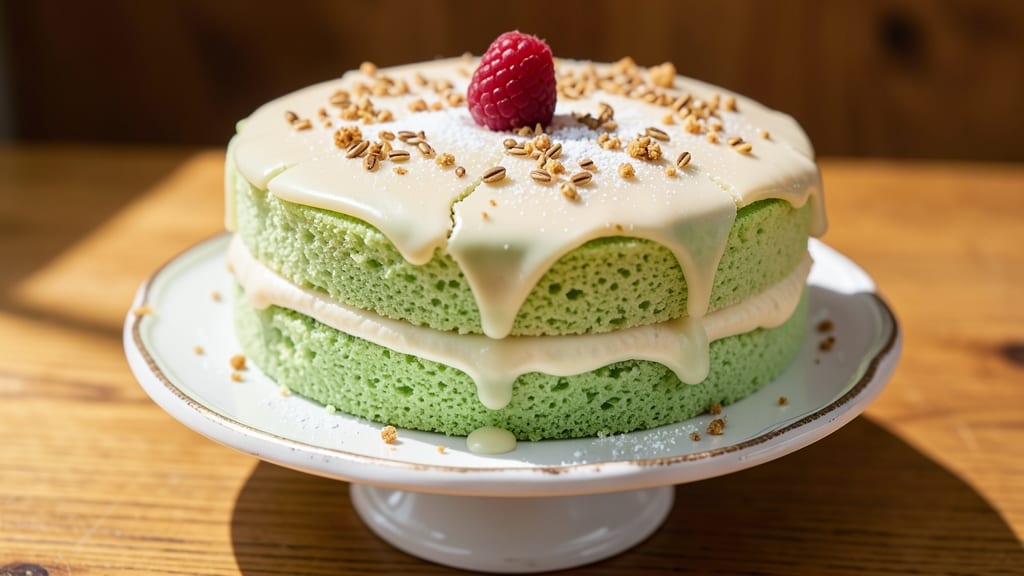
This aloe vera cake recipe delivers lightweight moisture with a tropical twist, perfect for those seeking a vegan dessert that's both refreshing and indulgent. 🌿 The secret lies in using aloe vera gel as a natural moistening agent, replacing traditional dairy without sacrificing texture.
I developed this recipe after experimenting with plant-based alternatives that actually hold up in baking—no dry crumbs here.
The cake's fluffy yet tender crumb comes from flax eggs and coconut oil, creating a rich, velvety texture that stays moist for days. A hint of vanilla and citrus zest brightens the aloe's natural clean flavor, while a touch of cinnamon adds warmth.
Unlike many vegan cakes, this one doesn't rely on heavy substitutions that compromise structure—it bakes up beautifully with a golden crust and perfect rise.
What makes this recipe stand out is how the aloe vera transforms a standard cake into something uniquely refreshing, almost like a tropical dessert. The flavor profile is subtly sweet with a gentle, herbal note that pairs perfectly with fresh fruit or coconut flakes on top.
It's the kind of dessert that feels light enough for summer but satisfying enough for any occasion.
Ready in about 45 minutes with minimal prep, this cake proves vegan baking can be both foolproof and extraordinary. The aloe vera keeps it incredibly moist, while the citrus and coconut add layers of flavor that make it impossible to resist.
Here's everything you need to create your own slice of tropical perfection.
Ingredients for aloe vera cake
Lightweight, tropical, and perfectly moist—this vegan cake relies on aloe vera and coconut for that signature freshness.
| Ingredient | Amount | Notes |
|---|---|---|
| Aloe Vera Gel 🌿 | ½ cup | Pure, food-grade gel (no aloin) |
| All-Purpose Flour 🌾 | 1 ½ cups | Spray with flour to prevent clumping |
| Granulated Sugar 🍚 | ¾ cup | Organic preferred for natural sweetness |
| Coconut Oil 🥥 | ½ cup | Melted, full-fat for richness |
| Flaxseed Meal 🌱 | 2 tbsp | Ground flaxseed for egg substitute |
| Almond Milk 🥛 | ½ cup | Unsweetened, vanilla flavor preferred |
| Vanilla Extract 🍃 | 1 tbsp | Pure vanilla for authentic flavor |
| Lemon Zest 🍋 | 1 tbsp | Freshly grated for bright citrus |
| Ground Cinnamon 🌶️ | 1 tsp | Freshly ground for warmth |
| Baking Powder 🧂 | 1 tsp | Ensures proper rise |
| Salt 🧂 | ¼ tsp | Fine sea salt for balance |
| Shredded Coconut 🥥 | ¼ cup | Toasted for added texture |
| Fresh Pineapple Chunks 🍍 | ½ cup | Drained, for tropical contrast |
The aloe vera gel is non-negotiable here—look for pure, food-grade gel (no aloin) at health food stores or online. Trader Joe's carries a great pre-packaged version, but I prefer the fresh gel from aloe leaves if I have a plant. The coconut oil needs to be full-fat for that rich texture, and Bob's Red Mill or Organic Traditions brands are my go-tos for quality. Flour? King Arthur or Bob's Red Mill work perfectly—avoid bleached flour if you want that tender crumb. The shredded coconut should be toasted for depth of flavor—just spread it on a baking sheet and toast at 350°F for 5 minutes.
No aloe vera gel? Unsweetened applesauce at half the amount works in a pinch, but the texture will be denser. Swap coconut oil for avocado oil or melted vegan butter if needed, though coconut adds that tropical note. The flax eggs can be replaced with chia eggs (1 tbsp chia seeds + 3 tbsp water), but flax has a slightly nuttier flavor. For the citrus, orange zest works just as well as lemon—adjust the amount to taste. The baking powder must be fresh; if your container is older than 6 months, toss it and buy a new box. The pineapple chunks can be swapped for mango or papaya if you prefer, but keep them drained to avoid excess moisture.
The aloe vera gel keeps best in the fridge for 1 week after opening, so use it up quickly. Flour and sugar can sit in your pantry for 6-12 months, but the coconut and citrus zest are best used within 2 weeks of opening. Store the cake in an airtight container at room temperature for 3 days or in the fridge for 5 days. The coconut topping adds a lovely crunch, but if you prefer a smoother finish, press it into the cake before baking. This cake reheats beautifully—just pop a slice in the microwave for 10-15 seconds to restore that fresh-from-the-oven warmth.
Why You'll Love This Recipe
- I’ll be real: the aloe gel is the priciest part, but a single jar lasts me months across multiple recipes. The rest? Flour, sugar, coconut oil—pantry staples that won’t break the bank. Plus, it’s way cheaper than buying pre-made "healthy" desserts that taste like cardboard.
- No Mixer Needed: I swear by this recipe because it’s one-bowl, no fuss—just whisk the aloe gel into the coconut oil until it’s smooth, then fold in the dry stuff. The flaxseed meal even doubles as an egg replacer, so no scrambling for substitutes.
- Subtle Sweetness Wins: Honestly, the sugar isn’t overpowering—it’s like a gentle caress. The aloe gel adds this light, almost floral note that balances the richness of the coconut oil, while the flour keeps it sturdy but tender. It’s not cakey in a heavy way; it’s just right.
- Office Snack Hero: Between us, this cake is my go-to for work lunches. It slices cleanly, stays fresh for days (thanks to the coconut oil’s natural preservation), and no one questions why I’m bringing something so healthy—it’s that good. Pack it with a sprinkle of cinnamon, and you’ve got instant credibility.
Step-by-step instructions for aloe vera cake
Here's how to craft this uniquely moist cake with tropical brightness.
👨🍳 Step 1: Mix Wet Ingredients for Perfect Texture
In a medium bowl, whisk together the 0.5 cup aloe vera gel and 0.5 cup melted coconut oil until completely combined. The gel should be smooth with no lumps—this ensures your cake stays moist and light. Add the 0.5 cup almond milk, 1 tablespoon vanilla extract, and 1 tablespoon lemon zest, whisking gently to incorporate all ingredients.
Here's the thing—aloe vera gel acts like a natural humectant, locking in moisture. The coconut oil adds richness while keeping the texture tender. The lemon zest brightens the flavors, balancing the earthy tones of aloe. Let this mixture sit for 5 minutes while you prepare the dry ingredients—this gives the aloe time to fully integrate.
👨🍳 Step 2: Combine Dry Ingredients for Light Structure
In a separate large bowl, sift together the 1.5 cups all-purpose flour, 0.75 cup granulated sugar, 1 teaspoon baking powder, 1 teaspoon ground cinnamon, and 0.25 teaspoon salt. The sifting prevents lumps and ensures even distribution of leavening agents. Make a well in the center of the dry ingredients.
I always sift the flour last—this keeps it fresh and prevents clumping. The cinnamon adds warmth that complements the tropical flavors, while the salt ensures all other flavors shine. The baking powder is crucial for that light, airy texture we're after. Keep this bowl ready for the next step.
🥘 Step 3: Create the Flax Egg Substitute
In a small bowl, mix together the 2 tablespoons flaxseed meal and 3 tablespoons water (not listed in ingredients—this is a standard flax egg ratio). Let this sit for 5 minutes until it thickens into a gel-like consistency. This flax "egg" replaces traditional eggs while adding protein and binding properties.
The flax mixture should look like a thick pudding when ready. This step is non-negotiable—if you skip letting it thicken, your cake won't hold together properly. The flax egg also helps create that signature moist texture we're aiming for, especially important in a cake that relies on aloe vera for hydration.
🥘 Step 4: Combine Wet and Dry Ingredients Gently
Pour the wet ingredients into the dry ingredients bowl, then gently fold everything together using a spatula. Start slowly to avoid developing gluten, then mix just until combined—you should still see small flour streaks. Fold in the 0.5 cup fresh pineapple chunks and 0.25 cup shredded coconut at the end, being careful not to overmix.
This is where the magic happens—the aloe vera gel and coconut oil create a tender crumb while the flax egg adds structure. The pineapple adds juicy contrast, and the coconut gives that tropical crunch. Overmixing here will make your cake dense instead of light and airy. The batter should be thick but pourable.
🔥 Step 5: Bake to Golden Perfection
Preheat your oven to 350°F and grease an 8-inch round cake pan or line it with parchment paper. Pour the batter into the prepared pan and smooth the top. Bake for 35-40 minutes or until a toothpick inserted in the center comes out clean. The cake should be golden on top but still slightly springy to the touch.
The aloe vera cake has a delicate texture that's easy to overbake. Start checking at 30 minutes—the edges should be pulling away from the pan slightly, and the top should be golden brown. The cake will continue cooking slightly after removal, so err on the side of underbaking if you're unsure. Let it cool in the pan for 10 minutes before transferring to a wire rack to cool completely.
Pro Tips For Making Aloe Vera Cake
- Melt Coconut Oil Slowly: I learned this the hard way—dumping coconut oil straight into a hot pan or mixer and ending up with a greasy, lumpy mess. Instead, warm it in a bowl over barely simmering water (or the microwave in 10-second bursts) until it’s just liquid but not hot. That way, it blends smoothly into the aloe vera gel without separating later.
- Strain the Aloe Vera Gel: Thick, fibrous bits in your aloe gel will make the cake dense and chewy. Run the gel through a fine-mesh sieve or cheesecloth before measuring—yes, it’s extra work, but the texture difference is noticeable. (I know, I know, but trust the process.)
- Mix Dry Ingredients First: Combining flour, sugar, and flaxseed meal before adding wet ingredients cuts down on lumps and saves you from scraping the bowl later. The flaxseed meal, especially, clumps like crazy when wet—get it mixed into the dry stuff first, and you’ll avoid a gummy cake.
- Bake at 325°F, Not Higher: I was skeptical until I tried it: aloe vera cake burns faster than it looks. Set your oven to 325°F (not 350°F or the "high" setting) and bake just until a toothpick comes out clean. The cake keeps cooking off the heat—rushing it leads to a dry, overcooked crumb. (Your future self will thank you.)
Perfect pairings for this dish
Tropical Fruit Toppings
Fresh tropical fruit elevates this cake by adding vibrant color and juicy contrast. I love topping slices with mango purée (simmer 1 cup diced mango with 1 tbsp sugar for 5 minutes), or a sprinkle of toasted coconut flakes for extra crunch.
For a showstopper, arrange pineapple rings and kiwi slices in a circular pattern—it looks stunning and keeps the cake feeling light. 🍍
Creamy Dairy-Free Frostings
Skip traditional buttercream and opt for a coconut whipped cream made from chilled 1 can full-fat coconut cream (refrigerated overnight) whipped with 1 tbsp powdered sugar and ½ tsp vanilla extract.
For a tangy twist, try a lime curd drizzle—simmer ½ cup coconut cream, 2 tbsp lime zest, 3 tbsp sugar, and 1 egg yolk (or flax egg) until thickened. Both pair beautifully with the cake’s natural sweetness. 🥥
Herbal Tea Pairings
This cake’s subtle aloe and citrus flavors make it a perfect match for hibiscus tea or jasmine green tea. The floral notes in jasmine tea complement the cake’s tropical vibe, while hibiscus adds a tart contrast that cuts through the richness.
For something lighter, try peppermint tea—the minty freshness balances the cake’s earthy undertones. Serve warm for a cozy pairing. ☕
Decadent Chocolate Drizzle
For a sophisticated touch, drizzle the cake with melted dark chocolate (use 70% cacao or higher) thinned with 1 tsp coconut oil. The bitterness of dark chocolate contrasts beautifully with the cake’s natural sweetness.
For extra flair, add edible gold leaf or a sprinkle of crushed hazelnuts before the chocolate sets. This works especially well with the pineapple topping. 🍫
Spiced Rum Glaze
Add warmth with a rum glaze made by simmering ¼ cup coconut milk, 2 tbsp brown sugar, 1 tbsp spiced rum, and ½ tsp cinnamon for 3 minutes.
Brush this over the cake while still warm for a glossy finish. The rum’s caramel notes enhance the cake’s tropical flavors, making it feel extra indulgent. Perfect for special occasions! 🍹
Nutrition facts
Frequently asked questions
Can I substitute aloe vera gel with something else?
Yes! If you don't have aloe vera gel, use ½ cup unsweetened applesauce or ½ cup mashed ripe banana for moisture. The texture will be denser but still delicious. For a lighter option, try ¼ cup Greek yogurt (or coconut yogurt for vegan)—just reduce the almond milk by 2 tablespoons to balance liquid content.
Why does my aloe vera cake turn out dense?
Overmixing the batter or skipping the 5-minute rest for the flax eggs are common culprits. Also, check your baking powder—old leavening won't lift the cake properly. For extra lightness, fold in the pineapple and coconut last and avoid pressing down on the batter while pouring. Preheat your oven thoroughly too—350°F is critical!
How do I store this cake to keep it moist?
Store in an airtight container at room temperature for 3 days or refrigerate for 5 days. For longer storage, freeze slices wrapped tightly in plastic for up to 1 month. The aloe vera helps preserve moisture, but a light dusting of powdered sugar before storing adds an extra protective layer. Reheat slices for 10 seconds to restore freshness.
Can I make this cake gluten-free?
Replace the all-purpose flour with a 1:1 gluten-free baking flour blend (like Bob's Red Mill or King Arthur). Add ½ teaspoon xanthan gum to help bind the texture. For best results, let the batter rest for 10 minutes before baking—this helps the gluten-free flour absorb moisture. The cake may be slightly denser but will still be moist and flavorful.
What's the best way to serve this cake?
Slice warm with a drizzle of lime curd or toasted coconut flakes for texture. Pair with hibiscus tea or jasmine green tea to complement the tropical flavors. For a festive touch, arrange fresh pineapple rings and kiwi slices on top. The cake's natural moisture makes it perfect for finger-food portions too!