
Main Courses
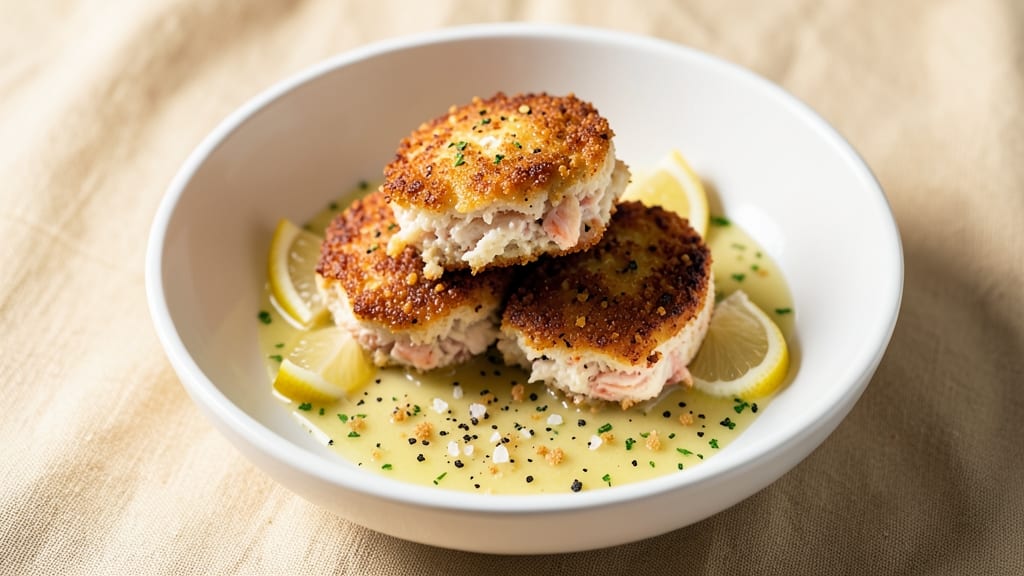
Alton Brown's crab cakes deliver that perfect balance of crispy golden crust and juicy centers—just like the ones you'd order at a high-end seafood restaurant. This recipe captures his signature approach: fresh lump crab meat bound with just enough egg and breadcrumbs to create structure without overpowering the delicate flavor.
The secret lies in chilling the mixture for at least 30 minutes, which prevents the cakes from falling apart during frying.
What sets these apart is the careful seasoning—Old Bay seasoning provides that classic Chesapeake Bay profile, while a touch of Dijon mustard adds depth without overpowering. The pan-frying technique ensures even cooking: medium heat for 3 minutes per side until golden brown, then finishing in the oven to maintain moisture.
This method guarantees you won't end up with soggy crab cakes or burnt exteriors.
Once you've achieved that perfect crispy exterior and juicy interior, plating becomes an art. Serve with a dollop of lemon remoulade or a squeeze of fresh lemon to cut through the richness, and garnish with microgreens or a sprinkle of paprika for color.
The contrast between the golden crust and tender crab meat makes every bite satisfying.
This recipe works equally well for weeknight dinners or special occasions, and the technique scales easily—whether you're making four for a small gathering or twelve for a party.
The key is patience: proper chilling, careful frying, and attention to temperature. Once mastered, you'll have restaurant-quality crab cakes that impress every time.
Ingredients for alton brown crab cake
Fresh crab meat, carefully balanced with Old Bay and Dijon, creates restaurant-quality crab cakes.
| Ingredient | Amount | Notes |
|---|---|---|
| Fresh Lump Crab Meat 🦀 | 1 ½ lb | Backfin or jumbo lump preferred |
| Large Eggs 🥚 | 2 whole | Cold, beaten thoroughly |
| Panko Breadcrumbs 🍞 | ¾ cup | Japanese-style preferred |
| Mayonnaise 🥫 | 2 tbsp | Dijon-infused for depth |
| Old Bay Seasoning 🌶️ | 1 ½ tbsp | Classic Chesapeake blend |
| Fresh Lemon Juice 🍋 | 1 tbsp | Brightens the mixture |
| Unsalted Butter 🧈 | 2 tbsp | For frying, melted |
| Extra-Virgin Olive Oil 🫒 | ¼ cup | For pan-frying |
| Diamond Crystal Kosher Salt 🧂 | ½ tsp | Fine grain preferred |
| Freshly Ground Black Pepper 🌶️ | ¼ tsp | Cracked peppercorns |
| Fresh Chives 🌿 | 2 tbsp | Finely chopped, for garnish |
| Lemon Zest 🍋 | 1 tsp | Bright citrus aroma |
The crab meat makes or breaks these crab cakes—backfin or jumbo lump is ideal for texture and flavor. Seafood markets or high-quality grocers like Whole Foods carry the best, though frozen lump works in a pinch (thaw overnight). Look for bright white meat with minimal shell fragments. Old Bay seasoning should be the classic blend—avoid the 'seafood' versions with added garlic or onion. The Dijon mayonnaise is non-negotiable; Hellmann's or Best Foods work best for this application, but homemade with Dijon mustard is superior. Panko breadcrumbs provide the perfect crispy texture—Japanese-style stays crunchy better than regular breadcrumbs.
No fresh lump crab? Imitation crab (surimi) works in a pinch, though texture will differ. Substitute fresh blue crab meat if available, but increase the breadcrumbs by 2 tbsp for better binding. Running out of Old Bay? Mix 1 tbsp paprika, 1 tsp celery salt, 1 tsp dried thyme, and 1/2 tsp black pepper. For the Dijon mayonnaise, add 1 tsp Dijon mustard to 2 tbsp regular mayo. The lemon juice can be substituted with white wine vinegar at half the amount, though fresh lemon adds brightness. If you're making these ahead, the mixture can be shaped and refrigerated for up to 24 hours before frying—just let them sit at room temperature for 10 minutes before cooking.
The crab cake mixture should be chilled for at least 30 minutes before frying to prevent crumbling. Store shaped cakes on a tray lined with parchment paper, covered, in the fridge for up to 4 hours before cooking. Leftover cooked crab cakes reheat beautifully—350°F oven for 10 minutes restores crispiness. For longer storage, freeze cooked cakes between parchment paper for up to 1 month. The lemon zest and chives can be stored separately in airtight containers for 1 week in the fridge. Always bring crab cakes to room temperature before reheating for even cooking.
Why You'll Love This Recipe
- No Fuss Binding: The Old Bay and mayo combo does all the work—just mix, shape, and pan-fry. No fancy prep, no hidden steps. I’ve made these while chatting on the phone; they’re that unfussy.
- Crispy-Creamy Magic: That panko crust gets golden and shatteringly crisp, while the inside stays tender from the egg and mayo. Honestly, the first time I bit in, I nearly dropped the fork.
- Weeknight to Dinner Party: Same recipe for Tuesday takeout or Sunday guests—just adjust the size. I’ve served these as sliders for my book club and as the main for date night. The crab meat’s luxury feels make it special without trying too hard.
- Leftovers That Don’t Suck: Unlike most crab cakes, these reheat like a dream—pan-fry again for 2 minutes or microwave with a damp paper towel. My son’s school lunches now include them, and they’re still his favorite. (Yes, even on a Tuesday.)
Step-by-step instructions for alton brown's crab cakes
Master the perfect balance of texture and flavor with these precise crab cake instructions.
Prepare the Crab Mixture
In a large mixing bowl, combine the 1.5 lb fresh lump crab meat with the 2 whole large eggs, 0.75 cup panko breadcrumbs, 2 tbsp mayonnaise, 1.5 tbsp Old Bay seasoning, 1 tbsp fresh lemon juice, 0.5 tsp diamond crystal kosher salt, and 0.25 tsp freshly ground black pepper. Using your hands, gently fold everything together until just combined—avoid overmixing to prevent a dense texture.
Real talk: The crab meat should look moist but not soupy. If it appears too dry, add an extra 1 tsp fresh lemon juice to help bind the mixture. Fold in the 1 tsp lemon zest and 2 tbsp finely chopped fresh chives at the end for brightness and freshness. Let the mixture rest in the refrigerator for 15 minutes—this chilling step is crucial for easier handling and better binding when forming the cakes.
Form and Chill the Crab Cakes
Using a ¼-cup measuring scoop, portion the crab mixture into 4 equal balls (about 3.5 ounces each) and gently flatten them into ½-inch thick patties. Place the formed crab cakes on a parchment-lined baking sheet and refrigerate for another 15 minutes. This second chilling ensures they hold their shape when you're ready to cook.
I press down gently on each patty during this time—this prevents them from curling and ensures even contact with the pan. The cakes should feel firm but still cool to the touch when you're ready to cook. If you notice any cracks or uneven edges, gently press them down again with your fingers.
Create the Crispy Crust
In a large skillet, heat 2 tbsp unsalted butter and 0.25 cup extra-virgin olive oil over medium heat until the butter foams and the oil shimmers—this should take about 2 minutes. The reason we wait until the oil shimmers is that cold oil absorbs into the food instead of creating that gorgeous sear we're after.
Carefully place the chilled crab cakes in the skillet, spacing them about 1 inch apart. Cook undisturbed for 3-4 minutes until the bottoms are golden brown and crispy. You'll know they're ready to flip when the edges release easily from the pan and the bottom has developed a deep golden crust. Flip each cake and cook for another 3-4 minutes until the second side is equally crispy and golden.
Maintain Internal Juiciness
Transfer the cooked crab cakes to a wire rack set over a paper towel-lined plate. Let them rest for 2-3 minutes before serving—this brief resting period allows any excess moisture to evaporate slightly, preventing a soggy texture while maintaining their juicy centers.
Here's the thing—crab cakes continue cooking off the heat, so don't overcook them in the pan. If you notice the centers looking slightly underdone when you flip, that's actually ideal. They'll finish cooking during the resting period. Serve immediately with lemon wedges on the side for squeezing over the top.
Pro Tips For Making Alton Brown Crab Cake
- CHILL THE CRAB: Alton’s recipe calls for cold crab meat, but I’ve learned to take it a step further—pop it in the fridge for 15 minutes before mixing. Cold meat binds better with mayo and eggs, and you’ll avoid that sad, soupy texture when forming the cakes. (Yes, even if you’re impatient like me.)
- PRESS THE PANKO: Don’t just toss the panko in—press it firmly into the edges of your patties before frying. This creates a structural barrier that keeps the crab from oozing out during cooking. I used to skip this, and my cakes always looked like they’d been through a food processor.
- WATCH THE HEAT: Start hot for that golden crust, but back it off to medium-low once the edges set. Too much heat too long = rubbery cakes. I learned this the hard way after burning three batches—now I keep a thermometer handy and aim for 340°F once the first side is browned.
- SWAP FOR STARCH: If your panko gets soggy (thanks, eggs), swap half for cornstarch or arrowroot powder. Toss the dry mix with the panko before adding it to the wet ingredients—this absorbs moisture and guarantees a crispy exterior. (Your future self will thank you.)
Best sauces and condiments for these flavors
Classic Remoulade
This creamy, tangy sauce is a must for crab cakes—it cuts through the richness while complementing the Old Bay seasoning.
Whisk together ½ cup mayonnaise, 2 tbsp Dijon mustard, 1 tbsp ketchup, 1 tbsp fresh lemon juice, 1 tsp Worcestershire sauce, ½ tsp smoked paprika, and ¼ tsp cayenne pepper. Thin with 1-2 tsp water if needed for dipping consistency.
I like to add 1 tbsp finely chopped cornichons for a briny crunch. 🍋
Lemon Aioli
For a lighter option, blend ½ cup mayonnaise, 1 tbsp fresh lemon juice, 1 tsp lemon zest, 1 small garlic clove, and 1 tbsp finely chopped parsley until smooth.
This bright, zesty sauce pairs perfectly with the crispy crab cakes and adds a refreshing contrast. Serve warm or at room temperature—it reheats beautifully in the microwave for 20 seconds if needed. 💛
Spicy Tartar Sauce
Mix ½ cup mayonnaise with 1 tbsp capers, 1 tbsp finely chopped cornichons, 1 tbsp fresh dill, 1 tsp Dijon mustard, and ½ tsp Old Bay seasoning for a bold, briny kick.
The capers and cornichons add a salty tang that enhances the crab flavor. I often serve this with a sprinkle of toasted sesame seeds for extra texture. 🌶️
Creamy Dill Sauce
Blend ½ cup sour cream with 2 tbsp fresh dill, 1 tbsp fresh lemon juice, 1 tsp lemon zest, and ½ tsp garlic powder until smooth. This lighter, herby sauce balances the richness of the crab cakes beautifully.
For extra flair, add 1 tbsp finely chopped chives at the end. It’s perfect for those who prefer a less heavy sauce. ✨
Hot Honey Glaze
For a sweet-spicy contrast, simmer ½ cup honey with 1 tbsp apple cider vinegar and ½ tsp cayenne pepper in a small saucepan over low heat for 5 minutes. Drizzle this glaze over the finished crab cakes just before serving—it caramelizes slightly and adds a beautiful sheen.
The heat from the cayenne cuts through the richness while the honey adds a touch of sweetness. 🔥
Nutrition facts
Frequently asked questions
Can I use imitation crab instead of fresh lump crab?
While imitation crab (surimi) works in a pinch, it won't deliver the same luxurious texture. Fresh lump crab has that delicate, sweet flavor and firm bite that makes these crab cakes special. If you must substitute, use high-quality imitation crab and add an extra 2 tbsp breadcrumbs to help bind the mixture. The texture will be more uniform but less premium.
Why do my crab cakes fall apart when frying?
This usually happens when the mixture isn't chilled long enough or the crab cakes are too wet. Always refrigerate the formed cakes for 15 minutes before cooking—this firms up the proteins. For extra insurance, pat them dry with paper towels before frying. If the mixture seems too loose, add 1 extra tbsp breadcrumbs to help bind it.
How do I keep the crab cakes from getting soggy?
Never skip the 2-3 minute rest after frying—they continue cooking off the heat! Also, drain them on a wire rack (not paper towels) to prevent steam from reabsorbing. For extra crispiness, finish them under the broiler for 1-2 minutes at the end. The key is high heat for quick cooking to seal in moisture while creating that golden crust.
Can I make these ahead of time?
Form the cakes and refrigerate them on a tray for up to 24 hours before cooking. For longer storage, freeze shaped cakes (uncooked) between parchment paper for 1 month. Thaw in the fridge overnight, then let them sit at room temperature for 10 minutes before frying. Cooking from frozen isn't recommended—they won't crisp properly.
What's the best way to reheat leftover crab cakes?
For crispy results, reheat in a 350°F oven for 10-12 minutes on a wire rack. Avoid the microwave—it makes them rubbery. If you need quick heat, pan-fry in butter or oil over medium heat for 2-3 minutes per side until golden. The secret is high heat and minimal time to restore that perfect texture.