
Desserts
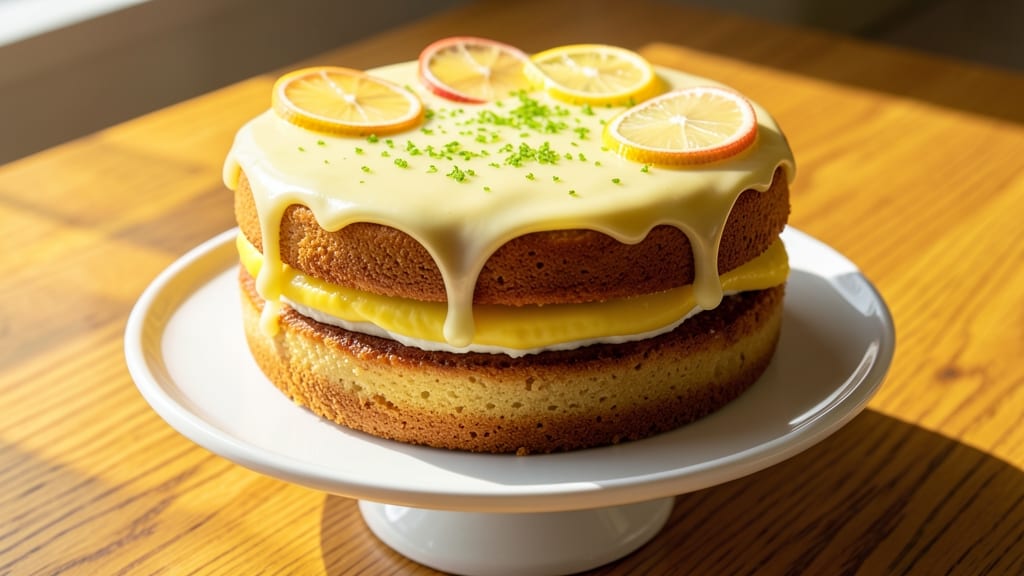
This amazing lemon cake recipe delivers sunshine in every bite—bright, buttery layers that practically scream "treat yourself." 🌞 The secret? A tangy lemon curd filling that stays gooey and a frosting so rich you'll want to eat it with a spoon.
I've perfected this version after years of baking (and eating) too many lemon cakes—this one actually stays moist for days.
What makes this recipe special is the balance—zesty enough to wake up your taste buds but sweet enough to satisfy. You'll start with a tender cake base infused with fresh lemon juice and zest, then layer it with that dreamy lemon curd filling.
The buttercream? Creamy, not too sweet, and just sweet enough to complement the tang.
By the time you're done, you'll have a cake that looks as good as it tastes—golden layers, glossy frosting, and a crumb that's light yet substantial. The lemon flavor shines through without being overpowering, making it perfect for birthdays, brunch, or just because.
Trust me, this is the kind of dessert that disappears fast.
Pro tip: Let the cake cool completely before frosting (I know, it's hard to wait), and make the lemon curd a day ahead—it tastes even better after resting. Here's how to bring this sunshine to your kitchen!
Ingredients for amazing lemon cake
Bright citrus and buttery richness—these 11 ingredients create lemon cake magic.
| Ingredient | Amount | Notes |
|---|---|---|
| All-Purpose Flour 🌾 | 2 ½ cups | Sifted for light texture |
| Granulated Sugar 🍚 | 2 cups | White or light brown |
| Unsalted Butter 🧈 | 1 cup | Cold, cubed for best mixing |
| Fresh Lemon Juice 🍋 | ¾ cup | From 4-5 lemons, freshly squeezed |
| Lemon Zest 🍋 | ¼ cup | Finely grated, vibrant yellow |
| Large Eggs 🥚 | 3 whole | Room temperature preferred |
| Baking Powder 🍞 | 2 tsp | Diamond Crystal preferred |
| Salt 🧂 | ½ tsp | Fine sea salt preferred |
| Heavy Whipping Cream 🥛 | 1 cup | Cold for best whipping |
| Powdered Sugar 🍚 | 3 cups | Sifted for smooth frosting |
| Vanilla Extract 🌺 | 1 tsp | Pure vanilla preferred |
The lemons make or break this cake. Farmers market lemons are ideal—they're juicier and zestier than grocery store ones. I usually grab a bag of Eureka lemons from the market, but any fresh lemons work. For zest, use only the yellow part—no white pith, that's bitter. The butter? European-style brands like Plugrá melt beautifully, but any good-quality unsalted butter works. Pro tip: Let your butter sit out for 30 minutes before mixing—it should be soft but not melted. If you're in a rush, microwave it for 20 seconds to just soften.
No fresh lemons? Bottled lemon juice works in a pinch, but it won't have the same depth of flavor. Short on zest? Lemon extract at half the amount gets you close, though it's not the same. For the frosting, heavy cream is non-negotiable—it gives that perfect fluffy texture. Whipped cream from a can won't cut it here. The powdered sugar should be sifted to avoid lumps, and Trader Joe's brand is my go-to because it's cheaper than name brands and just as smooth. If you don't have vanilla extract, vanilla bean paste adds beautiful speckles to the frosting.
Store cake layers wrapped tightly in plastic at room temperature for up to 2 days. The lemon curd filling can be made 3 days ahead—it actually tastes better after resting. For the frosting, whip it up to stiff peaks and store in the fridge for up to 2 days. To assemble, let layers sit at room temperature for 10 minutes before frosting—this prevents melting. The whole cake keeps beautifully for 4 days in the fridge, covered. Freeze unfrosted layers for up to 2 months—just thaw overnight before assembling.
Why You'll Love This Recipe
- Here’s what sold me: the balance. Too much lemon juice and it’s sour, too little and it’s bland—but this recipe nails it. The zest gives that sunny, citrusy punch, while the butter keeps it rich and tender. It’s the kind of cake that makes you reach for a second slice without guilt.
- No Mixer Needed: I swear by this recipe when my mixer’s on the fritz—just cream the butter and sugar with a wooden spoon until it’s light and fluffy. The lemon zest clings to that butter like it’s been waiting for it, and honestly? That’s half the magic right there.
- Bright Without Bitterness: Here’s what sold me: the balance. Too much lemon juice and it’s sour, too little and it’s bland—but this recipe nails it. The zest gives that sunny, citrusy punch, while the butter keeps it rich and tender. It’s the kind of cake that makes you reach for a second slice without guilt.
- Weekday or Celebration: I’ve served this to a room full of people who thought they didn’t like lemon desserts, and they’ve all come back for more. (Yes, even on a Tuesday night.) It’s simple enough for a quick breakfast cake but fancy enough to bring to a brunch—just add a dusting of powdered sugar and you’re golden.
Step-by-step instructions for zesty lemon cake layers
Here's how to bake layers bursting with lemon flavor and top them with velvety frosting.
👨🍳 Step 1: Mix Dry Ingredients for Light Texture
In a medium bowl, whisk together the 2.5 cups all-purpose flour, 2 tsp baking powder, and 0.5 tsp salt. I always sift the flour first for that perfect light texture—it makes all the difference in tender layers. Set this mixture aside while you prepare the wet ingredients.
This dry mix is your foundation. The baking powder will create air pockets for that signature cake lift, while the salt balances the sweetness. Don't skip sifting—those little lumps can make your cake dense instead of airy.
🍳 Step 2: Cream Butter and Sugars to Fluffy Perfection
In a large mixing bowl, combine the 1 cup cold cubed butter and 2 cups granulated sugar. Using an electric mixer on medium speed, beat for 3-4 minutes until the mixture is light and fluffy, nearly doubling in volume. You'll know it's ready when it's pale and ribbons form when the beaters are lifted.
Cold butter creates tiny air pockets that make the cake tender. If your butter gets too warm, chill the bowl in the freezer for 10 minutes before continuing. This step is crucial—under-creaming leads to dense cake, while over-creaming can make it gummy.
🍳 Step 3: Add Eggs and Lemon Infusion
Add the 3 whole large eggs one at a time, mixing well after each addition. Then stir in the 0.75 cup fresh lemon juice and 0.25 cup lemon zest. The mixture should be bright yellow and smell intensely citrusy—this is where the magic happens for that authentic lemon flavor.
For best results, use room-temperature eggs that incorporate smoothly. The lemon zest adds that gorgeous color and complex citrus notes that go beyond just juice. Here's the thing—don't strain the zest, but do remove any white pith that's bitter.
🥘 Step 4: Combine Wet and Dry for Batter
Gradually add the dry ingredients to the wet mixture, mixing on low speed just until combined. Be careful not to overmix—stop as soon as you see no more flour streaks. The batter should be thick but pourable. Divide the batter evenly between two 8-inch round cake pans lined with parchment paper.
I like to tap the pans gently on the counter to release any air bubbles. This prevents domed tops and ensures even baking. Bake at 350°F for 25-30 minutes or until a toothpick inserted in the center comes out clean. Don't overbake—you want tender layers, not dry ones.
🍰 Step 5: Whip Cream and Prepare Frosting
While the cakes cool, whip the 1 cup cold heavy whipping cream to stiff peaks. In a separate bowl, sift the 3 cups powdered sugar and mix in the 1 tsp vanilla extract. Gently fold the powdered sugar mixture into the whipped cream until smooth and fluffy.
For the perfect frosting, make sure your bowl and beaters are chilled. If the frosting looks too thick, add 1-2 tablespoons lemon juice to lighten it. This lemon-infused cream cheese frosting is what makes this cake truly amazing—it's light, tangy, and perfectly balanced with the zesty cake layers.
🥘 Step 6: Assemble and Chill for Maximum Flavor
Level the cooled cake layers and place one on a serving plate. Spread a generous layer of frosting, then top with the second layer. Frost the entire cake, creating a smooth finish. For extra flair, pipe decorative swirls around the edges using the leftover frosting.
Chill the cake in the refrigerator for at least 1 hour before serving. This lets the flavors meld and the frosting set properly. The wait is worth it—each bite will deliver that perfect balance of tender cake, bright citrus, and rich frosting that makes this lemon cake truly amazing.
Pro Tips For Making Amazing Lemon Cake
- Whisk Butter & Sugar First: Cream your butter and sugar until it’s pale yellow and fluffy—not just combined. I used to rush this, and the cake ended up dense. Take the extra 2 minutes; the air bubbles make all the difference.
- Use Room-Temp Butter: Let your butter sit out for 1–2 hours before mixing—it blends smoother and emulsifies better with the eggs. Cold butter? You’ll end up with a crumbly mess. (Yes, even if you’re impatient like me.)
- Strain the Lemon Juice: Run your fresh lemon juice through a fine-mesh sieve to remove pulp—it keeps the cake tender instead of gummy. Skip this, and you’ll regret it when the texture turns sad halfway through baking.
- Check Doneness by Touch: The cake’s done when the center springs back slowly when pressed—not instantly. A toothpick test is fine, but I learned the hard way that overbaking turns lemon cake dry. Pull it out a minute early and let it rest.
Essential equipment for this dish
Must-Have Mixing Tools
Start with a stand mixer like the KitchenAid Artisan Series—its powerful motor handles heavy butter and sugar creaming effortlessly. For smaller batches, a hand mixer (like Cuisinart Power Advantage) works well.
I use my mixer's paddle attachment for creaming and the whisk attachment for frosting—it keeps things clean and efficient. 💡
A medium mixing bowl (at least 5-quart capacity) prevents spills when combining wet and dry ingredients. I prefer stainless steel bowls because they're durable and easy to clean. For the frosting, a chilled metal bowl helps stabilize the whipped cream better than plastic.
Pro tip: Place your bowl in the freezer for 10 minutes before whipping to get stiffer peaks.
Baking Essentials
Two 8-inch round cake pans with removable bottoms are ideal—I use Wilton Perfect Results pans for even baking. Line them with parchment paper to prevent sticking and make leveling easier later.
A baking sheet for cooling helps prevent soggy bottoms. Preheat your oven to 350°F and use the middle rack for consistent results. 🌡️
Invest in a digital thermometer (like Thermoworks Thermapen) to check internal temps—your cake is done when it reads 210°F at the center. A toothpick works too, but the thermometer gives precise readings.
For leveling cooled cakes, a serrated knife or cake leveler ensures clean layers. I also keep a cooling rack handy to prevent steam buildup.
Precision Measuring Tools
Accurate measurements are key for this recipe. Use a stainless steel measuring cups set (like OXO Good Grips) for dry ingredients and a liquid measuring cup with spout for lemon juice.
For zest, a microplane gives the finest texture—avoid box graters that include bitter pith. I measure butter by volume (using a measuring cup) rather than weight for simplicity. 🍋
A fine-mesh sieve is essential for sifting flour and powdered sugar to eliminate lumps. For the frosting, a piping bag with star tip adds professional touches. If you don't have one, a ziplock bag with corner snipped off works in a pinch.
Keep a small offset spatula handy for spreading frosting smoothly between layers.
Optional Upgrades
For lemon curd (if you make it from scratch), a double boiler or heatproof bowl over simmering water ensures even cooking. A candy thermometer helps track the 235-240°F temperature for perfect curd consistency.
I also recommend a food processor for grinding nuts (if adding to frosting) or zesting large quantities quickly. 💛
Storage solutions matter too. Use airtight containers (like Rubbermaid Brilliance) for leftovers and plastic wrap pressed directly against the frosting to prevent drying. For serving, a cake stand elevates the presentation beautifully. A damp towel over the cake while chilling prevents frosting from drying out prematurely.
Nutrition facts
Frequently asked questions
Can I substitute bottled lemon juice for fresh?
You can, but fresh lemon juice makes all the difference! Bottled juice lacks the vibrant flavor and natural oils that give this cake its bright, authentic taste. If you must use bottled, add 1 extra tablespoon of lemon zest to compensate for the lost depth. For best results, use freshly squeezed juice from 4-5 lemons—it's worth the effort!
Why did my cake turn out dense instead of light?
Overmixing the batter is the #1 culprit! Once you combine the wet and dry ingredients, stop mixing as soon as the flour disappears. Also check your butter—it should be soft but not melted when creaming. Another common mistake is underbaking: pull the cake out when a toothpick comes out clean (around 210°F internal temp), not when the top looks golden.
How do I make this cake gluten-free?
Replace the 2.5 cups all-purpose flour with a 1:1 gluten-free baking flour blend (like Bob's Red Mill). Add 1 extra teaspoon of xanthan gum if your blend doesn't contain it. For the frosting, use a gluten-free powdered sugar. Note that gluten-free cakes often have a slightly denser crumb—this recipe works best with a 350°F oven and 5-10 extra minutes of baking time.
Can I make this cake in a different pan size?
Yes! For a 9-inch round pan, reduce baking time to 20-25 minutes (check at 210°F internal temp). For a loaf pan, bake at 350°F for 50-60 minutes. The key is adjusting for volume: a 9-inch pan needs about 2/3 of the batter, while a loaf pan uses the full amount. Always use parchment paper to prevent sticking and ensure even baking.
What's the best way to store leftover cake?
Wrap individual layers tightly in plastic wrap, then store at room temperature for up to 2 days. For longer storage, freeze unfrosted layers for up to 2 months. When ready to serve, thaw overnight in the fridge and frost with fresh whipped cream. To refresh dried-out frosting, pipe a thin layer of fresh frosting over the top and spread it with a warm spatula.