
Desserts
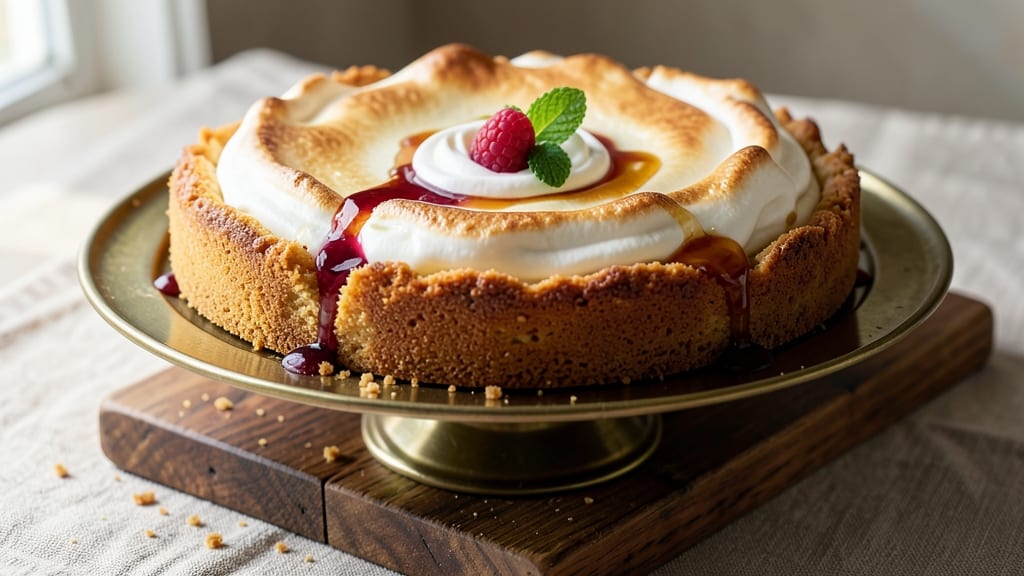
This American baked cheesecake recipe delivers the perfect balance of a buttery, flaky crust and an ultra-smooth, creamy filling that’s baked to golden perfection. 💛 The secret lies in a pre-baked crust and the water bath method, which prevents cracking and ensures a silky texture every time.
I’ve perfected this classic over years of testing, and it’s become a showstopper at gatherings—no one can resist that first slice.
The foundation starts with a crisp, buttery crust made from graham crackers and melted butter, baked just until set. The filling combines cream cheese, sugar, and eggs for that signature rich, velvety consistency, while a water bath keeps it moist and crack-free.
This isn’t your average cheesecake—it’s the kind that earns compliments and second helpings.
What sets this recipe apart is the attention to detail: precise measurements, gentle mixing, and the right baking temperature to achieve that signature dome shape. The result? A cheesecake with a tender crust and a filling so smooth it practically melts in your mouth.
Whether you’re serving it at a holiday dinner or as a decadent dessert, this recipe delivers restaurant-quality results at home.
Top it with fresh berries, a drizzle of caramel, or a dusting of powdered sugar for extra flair. The possibilities are endless, but the technique remains foolproof—perfect for both beginners and seasoned bakers. Let’s get started on creating your perfect slice.
Ingredients for american baked cheesecake
Buttery crust, velvety filling, and foolproof technique—this is your go-to cheesecake recipe.
| Ingredient | Amount | Notes |
|---|---|---|
| Graham Crackers 🍪 | 2 cups | Crushed into fine crumbs |
| Unsalted Butter 🧈 | ½ cup | Melted, full-fat preferred |
| Granulated Sugar 🍚 | 1 ½ cups | Superfine preferred for smoothness |
| Cream Cheese 🧀 | 32 oz | Full-fat, room temperature |
| Large Eggs 🥚 | 4 whole | Room temperature, separated |
| Sour Cream 🥛 | ½ cup | Full-fat for creaminess |
| Vanilla Extract 🌿 | 2 tsp | Pure vanilla, not imitation |
| Lemon Juice 🍋 | 1 tbsp | Freshly squeezed |
| Salt 🧂 | ½ tsp | Fine sea salt |
| Heavy Cream 🥛 | ¼ cup | For water bath |
| Powdered Sugar 🍚 | 1 cup | For garnish |
| Fresh Berries 🍓 | 1 ½ cups | Optional topping |
The graham crackers make or break the crust. Honey Maid or Keebler are my go-tos—they’re sturdy and sweet enough to balance the butter. Crush them into fine crumbs (a food processor makes this effortless) and mix with melted butter until it looks like wet sand. Don’t overmix—just combine until it holds together. The secret to a perfect crust? Bake it until it’s just set at the edges (about 10 minutes) and let it cool completely before adding the filling. If you’re in a rush, chill the crust in the freezer for 15 minutes to firm it up before pouring the batter.
Room-temperature cream cheese is non-negotiable—it mixes so much smoother and avoids lumps. Philadelphia brand is my go-to, but any full-fat cream cheese works. No vanilla extract? Vanilla bean paste or even a scraped vanilla bean will add depth. The sour cream adds that signature tang without overpowering. For the water bath, use a deep baking dish filled with about an inch of hot water—this keeps the cheesecake moist and prevents cracking. No fresh berries? Caramel sauce or chocolate ganache makes an equally impressive topping. And if you’re worried about cracking, bake it at 325°F instead of 350°F—slower and lower gives you that perfect dome.
This cheesecake tastes even better the next day once everything settles. Store it in an airtight container in the fridge for up to 5 days. For serving, let it sit at room temperature for 10 minutes—it’ll be cooler and more stable. Freeze portions for up to 3 months if you want to make ahead. The crust stays crisp, and the filling thaws beautifully. Pro tip: Brush the top with a little apricot jam before baking—it creates a stunning golden crust that everyone will notice. Trust me, it’s worth the extra minute.
Why You'll Love This Recipe
- No-Fuss Crust: I crush graham crackers with a rolling pin—no food processor needed—and mix in melted butter until it’s the perfect sandy texture. Five minutes, zero fuss, and that buttery crunch sets the whole thing up.
- Creamy Magic: The secret’s in the room-temp cream cheese—no lumps, just silky smoothness that blends with sugar and eggs like it was meant to. That first slice? Rich, dense, and just sweet enough without being cloying.
- Weeknight Flex: Between us, this is my go-to dessert when I’ve got company at 7 p.m. and zero energy. It bakes while I finish dinner, then sits pretty on the counter—no last-minute stress. (Yes, even on a Tuesday night.)
- Leftovers Win: Honestly, I make this just so I have slices for breakfast the next day. The texture holds up for days, and the graham crust stays crispy—no soggy bottoms. Plus, it’s cheaper than ordering pie every time.
Step-by-step instructions for American baked cheesecake
Here's how to bake the creamiest, most stable cheesecake you've ever made—no cracks in sight!
👨🍳 Step 1: Build the Perfect Graham Cracker Crust
Preheat your oven to 325°F and melt the 0.5 cup unsalted butter in a small saucepan over low heat until completely liquid. I like to use a heatproof bowl set over simmering water for even melting—this prevents burning. In a large bowl, combine the melted butter with the 2 cups graham cracker crumbs and 0.5 cup granulated sugar.
Use your fingers to work the mixture until it's evenly moistened and clumps together. Press this firmly into a 9-inch springform pan, creating an even layer up the sides. I use a measuring cup to compact it tightly—this prevents leaks during baking. Bake the crust for 10 minutes while you prepare the filling. It should be golden at the edges but not browned.
🍳 Step 2: Whip the Cream Cheese Filling to Smooth Perfection
While the crust bakes, beat the 32 oz cream cheese in a large mixing bowl using a hand mixer on medium speed until completely smooth. I've found that room-temperature cream cheese blends best—no lumps! Gradually add the 1.5 cups granulated sugar while mixing, then incorporate the 4 whole large eggs one at a time, mixing just until each is fully incorporated.
Add the 0.5 cup sour cream, 2 tsp vanilla extract, 1 tbsp lemon juice, and 0.5 tsp salt. Mix until completely smooth—this is where the magic happens. The batter should be thick but pourable. I like to scrape down the sides with a spatula to ensure even mixing. Real talk: don't overmix after adding the eggs or you'll get dense cheesecake.
🥘 Step 3: Assemble and Bake the Cheesecake
Pour the filling over the pre-baked crust, smoothing the top with a spatula. Here's the pro move: place the springform pan in a larger roasting pan and carefully pour 0.25 cup hot water into the bottom of the roasting pan. This creates a water bath that cooks the cheesecake gently and prevents cracking.
Bake at 325°F for 50-55 minutes until the edges are set but the center still jiggles slightly when shaken. The top should be golden and the sides should pull away from the pan. I check at the 45-minute mark—every oven runs hot differently. If it browns too quickly, tent with foil. The cheesecake is done when it's just set but still has a slight wobble in the center.
⏰ Step 4: Cool and Garnish for Restaurant-Worthy Results
Remove the cheesecake from the water bath and let it cool in the pan for 1 hour at room temperature. Then refrigerate uncovered for 4 hours or overnight—this gradual cooling prevents cracking. When ready to serve, dust the top with 1 cup powdered sugar sifted through a fine-mesh sieve for an elegant finish.
Top with the 1.5 cups fresh berries just before serving. I like to arrange them in concentric circles for a pretty presentation. The contrast of tart berries with the creamy cheesecake is unbeatable. Serve chilled—this cheesecake holds up beautifully for up to 5 days in the fridge, though it's hard to resist slicing into it earlier!
Pro Tips For Making American Baked Cheesecake
- CHILL THE CREAM CHEESE: I learned this the hard way—room-temperature cream cheese is your friend here. Take it out of the fridge 30-60 minutes before mixing, or even better, let it sit in a warm spot while you prep the crust. Cold cream cheese means overmixing and a dense, rubbery texture—no one wants that.
- PRESS THE CRUST HARD: This isn’t the prettiest method, but it’s the tastiest. After mixing the graham cracker crumbs with melted butter and sugar, press them into the pan firmly—like you’re trying to make a crust for a pie, not a granola bar. A loose crust cracks under the cheesecake’s weight, and we’re not starting over.
- BAKE LOW AND SLOW: Skip the urge to crank the oven to 350°F right away. Start at 325°F for the first 20 minutes, then bump it to 350°F. This gives the cheesecake time to set gradually without a domed center or a crust that burns before the filling’s done. Yes, it takes a little longer, but it’s worth it.
- SEPARATE EGGS LIKE A PRO: Crack those eggs into a bowl first—always. Eggshells in the batter mean lumpy cheesecake, and no one’s got time for that. Whisk the yolks and whites separately, then gently fold the whites into the batter last. Overmixing after adding the whites is how you end up with a dense, cakey mess instead of that perfect, creamy slice.
Common mistakes when making perfect results
Overmixing the Filling
I’ve seen this happen more times than I can count—overmixing the filling after adding the eggs turns your silky cheesecake into a dense brick. Once you’ve incorporated all four eggs, mix just until combined.
The batter should look smooth but still slightly thick, like thick pudding. If you continue mixing, you’ll incorporate too much air, which leads to cracks and a less creamy texture. 🥛
Skipping the Water Bath
The water bath isn’t just a fancy technique—it’s the secret to a crack-free cheesecake. Without it, the filling dries out too quickly on the outside while staying undercooked inside, creating a perfect recipe for cracks.
Place your springform pan inside a larger roasting pan and add about 1 inch of hot water to the bottom. This gentle steam keeps the temperature even and prevents the top from drying out too fast.
Not Pre-Baking the Crust
A soggy crust ruins everything. Always pre-bake your graham cracker crust for 10 minutes at 325°F before adding the filling. This ensures it’s set and won’t absorb moisture from the cheesecake mixture.
If you’re in a hurry, chill the crust in the freezer for 15 minutes after baking to firm it up before pouring the filling. Trust me, the difference is night and day.
Opening the Oven Too Soon
Peeking at your cheesecake too early is a surefire way to create cracks. The sudden temperature drop causes the filling to shrink and pull away from the edges. Wait until the 45-minute mark before checking, and even then, only open the oven if you absolutely must.
If the top starts browning too quickly, tent it with foil to protect the filling while it finishes baking.
Room-Temperature Ingredients
Cold cream cheese and eggs are the enemy of smooth cheesecake. Always let your cream cheese and eggs sit at room temperature for at least 30 minutes before mixing. Cold ingredients create lumps and uneven texture.
I like to place them in warm water for 10 minutes if I’m in a rush—just don’t let them get too warm or they’ll curdle. The goal is 68°F for cream cheese and 70°F for eggs.
Rushing the Cooling Process
Cheesecake needs time to set properly, and skipping the cooling steps is a fast track to cracks. After baking, let it cool in the pan for 1 hour at room temperature, then refrigerate it uncovered for 4 hours or overnight.
This gradual cooling allows the filling to firm up evenly. If you can’t wait, place it in the fridge for at least 2 hours, but don’t be surprised if it develops a few cracks—patience is key here. 💡
Nutrition facts
Frequently asked questions about American baked cheesecake
Why does my cheesecake crack even with the water bath?
Cracking often happens when the filling cools too quickly or if the oven temperature fluctuates. Always let the cheesecake cool gradually: 1 hour at room temperature, then 4 hours in the fridge uncovered. Also, avoid opening the oven door before the 45-minute mark—sudden temperature drops cause cracks. If it happens, cover the cracks with whipped cream or fruit compote!
Can I use a different crust instead of graham crackers?
For a nutty twist, try 1.5 cups crushed pecans or walnuts mixed with 0.25 cup melted butter. A classic shortbread crust (butter, flour, sugar) works beautifully too—just adjust baking time to 12-15 minutes for the crust. The key is ensuring it's fully set before adding filling to prevent sogginess.
How do I make this cheesecake lighter without it being too sweet?
Replace 0.5 cup sour cream with 0.5 cup Greek yogurt for tanginess and protein that lightens the texture. Use superfine sugar (or pulse regular sugar in a food processor) to dissolve faster, reducing graininess. For less sweetness, reduce sugar to 1.25 cups and add 1 tsp lemon zest to enhance flavor naturally.
Can I bake this cheesecake in a different pan size?
For a 9-inch pan, this recipe is perfect. In an 8-inch pan, reduce filling by 25% (about 24 oz cream cheese) and bake 5-10 minutes longer at 325°F. For a 10-inch pan, increase filling by 25% (about 40 oz cream cheese) but reduce baking time by 5 minutes—the wider surface area cooks faster.
What's the best way to store leftovers?
Wrap the entire cheesecake tightly in plastic wrap, then place it in an airtight container. It stays fresh in the fridge for 5 days and freezes beautifully for up to 3 months. To thaw, leave it at room temperature for 2 hours—never microwave it. The texture remains creamy when thawed properly, but it's best enjoyed within 2 days of thawing.