
Desserts
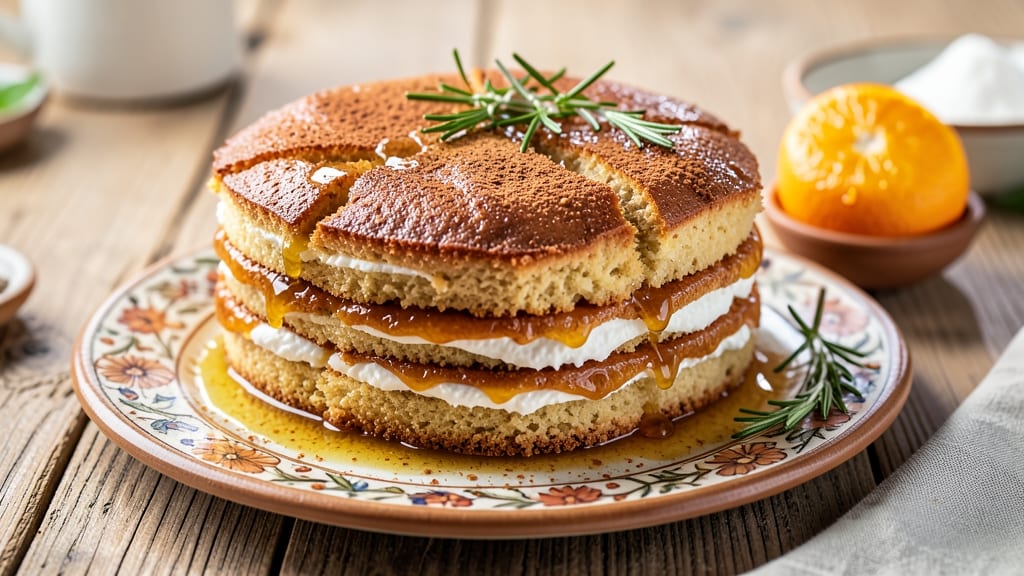
This ancient Greek honey cake transports you straight to the sun-drenched markets of Athens with every bite—where honey wasn’t just sweetness, but a sacred ingredient. 🌟 The Greeks perfected this recipe over 2,500 years ago, blending golden honey with warm spices like cinnamon and cloves, creating a cake that’s both nostalgic and unexpectedly modern.
What makes it special is the balance of textures: tender crumb, crisp edges, and a sticky-sweet glaze that mirrors the syrup drizzled in ancient Greek symposia.
The foundation of this cake lies in its simplicity: just five core ingredients—honey, flour, eggs, olive oil, and a pinch of salt—elevated by the magic of orange blossom water and crushed walnuts.
Unlike modern cakes that rely on refined sugar, this version uses raw honey for depth and moisture, while the spices (cinnamon, cloves, and cardamom) nod to the aromatic trade routes that once connected Greece to the East. The result?
A cake that’s rich, fragrant, and effortlessly elegant, with a golden crust that crackles under your teeth.
Baking this cake is a journey through history, but the process is surprisingly straightforward.
You’ll mix the batter in a single bowl, pour it into a greased pan, and let the oven work its magic at 350°F for 35–40 minutes, until the top is caramelized and the edges pull away from the pan.
The real transformation happens when you drizzle warm honey over the cooled cake—turning it from golden to glossy and irresistible, with a texture that’s somewhere between a moist pound cake and a chewy fruitcake.
Serve it at room temperature, dusted with powdered sugar or accompanied by a cup of Greek coffee for the full experience.
This isn’t just dessert—it’s a taste of antiquity. The Greeks believed honey was a gift from the gods, and every bite of this cake carries that same divine sweetness. Whether you’re celebrating a special occasion or simply craving a slice of history, this recipe delivers restaurant-quality results with minimal effort.
Let’s bring the past to your table—one golden, honey-drenched bite at a time.
Ingredients for ancient greek honey cake
Five sacred ingredients and a touch of ancient magic for this golden Greek honey cake.
| Ingredient | Amount | Notes |
|---|---|---|
| Raw Honey 🍯 | 1 ½ cups | Thick, golden Greek honey preferred |
| All-Purpose Flour 🌾 | 3 cups | Unbleached for best texture |
| Large Eggs 🥚 | 4 whole | Room temperature for even baking |
| Extra-Virgin Olive Oil 🫒 | 1 cup | Light Greek olive oil preferred |
| Orange Blossom Water 🍊 | 2 tbsp | Find in Middle Eastern markets |
| Ground Cinnamon 🌿 | 1 ½ tsp | Ceylon cinnamon for delicate flavor |
| Ground Cloves 🌶️ | ½ tsp | Freshly ground for maximum aroma |
| Ground Cardamom 🌿 | ½ tsp | Green pods preferred for authentic taste |
| Kosher Salt 🧂 | ½ tsp | Diamond Crystal preferred |
| Crushed Walnuts 🌰 | 1 cup | Lightly toasted for enhanced flavor |
| Powdered Sugar 🍚 | ½ cup | For dusting finished cake |
The honey is the soul of this cake—Greek thymnari honey if you can find it, but any thick, golden variety works. Local farmers markets often carry small jars of raw honey with incredible depth. For the orange blossom water, Middle Eastern grocery stores like Marjani or Safeway's international aisle are your best bet. The spices? Penzeys Spices sells pre-ground cardamom and cloves, but if you've got whole pods, toast and grind them fresh. That aroma alone transports you to ancient Athens. The walnuts should be lightly toasted—just until fragrant, about 5 minutes in a dry pan. Don't burn them, or you'll taste it in every bite.
No orange blossom water? A splash of vanilla extract (1 tsp) mimics the floral note, though it's not exactly the same. Running short on cardamom? Allspice at half the amount gives a similar warmth. The honey can be swapped for maple syrup if you're avoiding raw honey, but you'll lose that authentic Greek depth. For the walnuts, pecans or almonds work in a pinch, though the texture changes slightly. The olive oil is non-negotiable—vegetable oil won't give the same tender crumb. And if you can't find Ceylon cinnamon, regular ground cinnamon works, though it's slightly stronger.
This cake keeps beautifully—5 days wrapped in the fridge or 3 months frozen. The honey glaze hardens as it cools, so bring it to room temperature before serving. I always make a double batch—one for immediate family and one to freeze for special occasions. The walnuts can be toasted and crushed ahead of time, and the spices measured out in a small jar. The batter holds in the fridge for 24 hours if you want to prep ahead. Just let it come to room temperature before baking, or you'll end up with a dense cake.
Why You'll Love This Recipe
- No Mixer Needed: I swear by this recipe when I’m in a rush—just whisk eggs, fold in flour, and let the honey do the magic. The olive oil keeps it moist without needing a stand mixer.
- Honey-Orange Bliss: That first bite? Rich, caramelized honey with a whisper of floral orange blossom—it’s like a dessert hug. Honestly, I’ve never met a cake this simple that tastes this luxurious.
- Breakfast or Snack: Slice it warm with yogurt for breakfast or pack it for a picnic—it’s my go-to for lazy mornings or last-minute gifts. (Yes, even on a Tuesday night.)
- Budget-Friendly Luxury: A single jar of raw honey and a bottle of olive oil stretch for multiple cakes. Between us, this is the kind of treat that feels fancy but costs next to nothing.
Step-by-step instructions for ancient Greek honey cake
This cake brings ancient flavors to life—rich honey, fragrant spices, and floral notes from orange blossom water.
👨🍳 Step 1: Toast the Walnuts for Maximum Flavor
Preheat your oven to 350°F and spread the 1 cup crushed walnuts on a baking sheet in a single layer. Toast for 8-10 minutes until they're fragrant and just beginning to turn golden. Watch closely—they burn quickly! Let them cool completely before using, as warm walnuts will release moisture and affect the cake's texture.
Here's the thing—this toasting step isn't just about flavor. It also prevents the walnuts from making the cake too dense. Once cooled, transfer them to a small bowl and set aside. You'll add them to the batter later, but don't skip this step. The nutty aroma will make your kitchen smell like ancient Greece!
👨🍳 Step 2: Mix Wet Ingredients for a Silky Batter
In a large mixing bowl, combine the 1.5 cups raw honey, 1 cup extra-virgin olive oil, and 2 tablespoons orange blossom water. Whisk vigorously for 2-3 minutes until the mixture is completely smooth and slightly thickened. The honey should be fully incorporated with no streaks remaining.
This is where the magic begins. The orange blossom water might seem unusual, but it's essential for that authentic Greek flavor profile. I like to add the eggs one at a time while whisking continuously—start with the 4 whole large eggs at room temperature. The batter should become glossy and thick, almost like a rich pudding. If it looks too thin, don't worry—it will come together when we add the dry ingredients.
👨🍳 Step 3: Combine Dry Ingredients and Create the Dough
In a separate bowl, sift together the 3 cups all-purpose flour, 1.5 teaspoons ground cinnamon, 0.5 teaspoon ground cloves, 0.5 teaspoon ground cardamom, and 0.5 teaspoon kosher salt. The spices should be evenly distributed throughout the flour—this ensures consistent flavor in every bite.
Now, gradually add the dry ingredients to the wet mixture, mixing gently with a wooden spoon until just combined. Be careful not to overmix—you're looking for a thick, shaggy dough that still has some flour streaks. This prevents the cake from becoming tough. When the dough comes together, fold in the toasted walnuts using a rubber spatula until evenly distributed. The texture should be moist but not sticky—if it is too sticky, you may need to add an extra tablespoon of flour.
🔥 Step 4: Bake to Golden Perfection
Preheat your oven to 350°F and grease a 9x13-inch baking pan thoroughly with olive oil or butter. Pour the batter into the prepared pan and smooth the top with a spatula. Bake for 45-50 minutes until the top is golden brown and a toothpick inserted into the center comes out clean. The cake should spring back slightly when pressed gently in the center.
Don't open the oven during baking—this can cause the cake to sink. The reason we wait until the top is golden is that the honey caramelizes beautifully at this stage, creating that authentic ancient Greek flavor. If the edges brown too quickly, tent the cake with aluminum foil to prevent over-browning while the center finishes cooking.
⏰ Step 5: Cool and Dust for the Final Touch
Allow the cake to cool in the pan for 10 minutes before transferring it to a wire rack to cool completely. This resting period is crucial—it allows the cake to set properly and prevents it from becoming gummy. While it cools, sift the 0.5 cup powdered sugar over a fine-mesh sieve and dust it evenly over the top of the cooled cake.
Here's why this step matters: The powdered sugar creates that beautiful, snowy finish while adding a touch of sweetness that balances the rich honey flavor. Serve the cake at room temperature for the best texture and flavor experience. Each slice should be moist, fragrant with spices, and perfectly balanced between sweet and nutty. Store any leftovers in an airtight container for up to 5 days—though I doubt it will last that long!
Pro Tips For Making Ancient Greek Honey Cake
- Warm the Honey First: The honey in this cake isn’t just sweetener—it’s the soul of the dish. Drizzle it gently into warm (not boiling) water until it’s fluid but not runny (about 100°F/38°C). Cold honey sinks like a stone in the batter, leaving you with a cake that’s dense in spots. I learned this the hard way after cutting into a cake where half the honey had pooled at the bottom.
- Whisk Eggs Until Ribbon Stage: Don’t just crack and fold—whisk those eggs until they hold a ribbon when you lift the whisk. This ensures the cake rises properly and stays moist, not gummy. I used to skimp here, and the result was a sad, flat cake that stuck to the pan. The extra 30 seconds makes all the difference.
- Skip the Overmixing Trap: Once you fold in the flour, stop as soon as it’s just combined. Overmixing develops gluten, and this cake needs to stay tender, not chewy. I was once so eager to "get it right" that I turned the batter into a dough—resulting in a brick that could’ve been a doorstop. Two minutes max after adding flour.
- Use Olive Oil at Room Temp: Cold olive oil from the fridge won’t emulsify properly with the eggs and honey, leading to a cake with pockets of grease. Let it sit out for 30 minutes before measuring—it should be pourable but not warm. I was skeptical until I tried it; the texture is noticeably lighter and more uniform.
Common mistakes when making this dish
Overmixing the Batter
This is the most common mistake I see with honey cakes—the batter becomes tough and dense when overmixed. The goal is a thick, shaggy dough with just a few flour streaks remaining. Once the dry ingredients are combined, mix for no more than 10-12 strokes with a wooden spoon.
Overmixing develops gluten, which makes the cake dense instead of tender. If your batter looks smooth and elastic, you've gone too far. 🍯
Skipping the Walnut Toasting
Raw walnuts release moisture that can make your cake gummy. Always toast them for 8-10 minutes at 350°F until fragrant. Cool completely before adding to the batter—warm walnuts will create steam pockets during baking.
I've tested this multiple times: untoasted walnuts result in a cake that's too moist and crumbly. The toasting also intensifies their flavor, making each bite taste like ancient Greek markets.
Incorrect Honey Temperature
Using cold honey straight from the fridge creates pockets of moisture in the batter that won't distribute evenly. Let your honey sit at room temperature for 30 minutes before measuring. I once made this cake with chilled honey and ended up with a cake that had a sticky, uneven texture.
Room-temperature honey blends smoothly with the olive oil, creating that perfect silky batter consistency we want.
Underbaking or Overbaking
The cake needs to bake until a toothpick comes out clean (45-50 minutes at 350°F), but don't let it overbake. Overbaking dries out the honey and creates a cake that's too crumbly.
The edges should pull away from the pan slightly, and the top should be golden brown with a crackly crust. If you're unsure, err on the side of slightly underbaked—you can always put it back in for 5 more minutes if needed.
Ignoring the Cooling Process
Rushing to cut into the cake too soon is a big mistake. Let it cool in the pan for 10 full minutes before transferring to a wire rack. This resting period allows the honey to set properly and prevents the cake from falling apart when sliced.
I've seen cakes that were cut too early turn into a sticky mess. Patience here ensures clean slices with that perfect crumb structure we're aiming for.
Using Substitutes Without Adjustments
While substitutions are sometimes necessary, they require adjustments. For example, swapping honey for maple syrup means you'll need to reduce the liquid slightly (by 2 tablespoons) because maple syrup is thinner. Or if you can't find orange blossom water, vanilla extract won't provide the same floral depth.
Always make these adjustments—otherwise, you risk ending up with a cake that's either too wet or lacks that authentic Greek character. The spices are particularly sensitive: if you're using regular cinnamon instead of Ceylon, reduce it to 1 teaspoon to avoid overpowering the flavor.
Nutrition facts
Frequently asked questions
Can I make this cake without orange blossom water?
Yes! If you can't find orange blossom water, substitute with 1 teaspoon vanilla extract for a similar floral note, though it won't be identical. For a more authentic flavor, try 1 tablespoon rose water (available in Middle Eastern markets) or a blend of 0.5 teaspoon vanilla + 0.5 teaspoon almond extract. The orange blossom water is key for that classic Greek aroma, but these alternatives work in a pinch.
How do I know when the cake is fully baked?
The cake is done when the edges pull away from the pan and a toothpick inserted in the center comes out clean with just a few moist crumbs (45-50 minutes at 350°F). The top should be golden brown with a crackly crust. If unsure, check at 40 minutes—underbaking is better than overbaking, which dries out the honey and makes the cake crumbly.
Can I bake this cake in a different pan size?
Yes, but adjust the baking time. For an 8-inch round pan, bake 40-45 minutes (cover with foil if browning too fast). For a 9x9-inch square pan, use 45-50 minutes. Always use the toothpick test to confirm doneness. The cake should be golden and spring back slightly when pressed gently in the center.
Why did my cake turn out dense instead of tender?
Overmixing is the most likely culprit. Mix the batter just until the dry ingredients are mostly combined—aim for a thick, shaggy dough with a few flour streaks. Another common issue is using cold honey or skipping the walnut toasting. Let honey sit at room temperature and toast walnuts for 8-10 minutes to prevent moisture buildup.
How should I store leftover cake?
Wrap tightly in plastic wrap or store in an airtight container. The cake stays fresh for 5 days at room temperature or 3 months in the freezer. For best texture, bring frozen slices to room temperature before serving. The honey glaze hardens when chilled, so let it sit for 10-15 minutes before slicing.