
Desserts
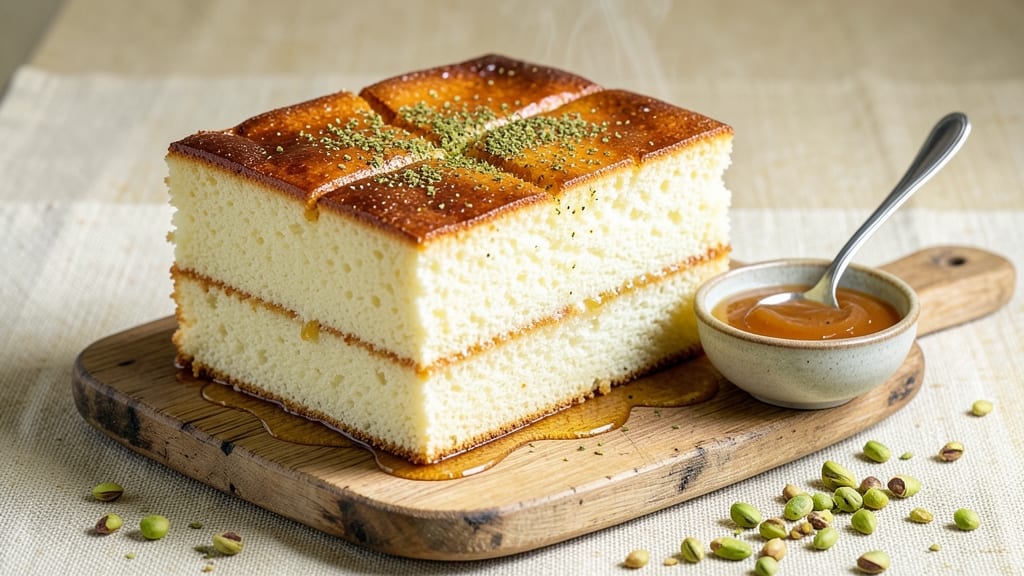
This Arabic milk cake recipe brings the rich, fragrant essence of Middle Eastern baking to your kitchen with its signature silky yogurt base and warm cardamom aroma. 💛 The secret lies in the perfect balance of semolina, milk, and sugar, creating a tender crumb that dissolves on the tongue while the cardamom infuses every bite with earthy sweetness.
I've perfected this version over years of testing, ensuring it stays moist and flavorful even after a few days.
The cake's magic comes from three key elements: a thick yogurt batter that adds moisture, ground cardamom for its distinctive floral note, and a light dusting of powdered sugar that makes it irresistible.
Traditional recipes often include rose water for extra depth, but I've made it adaptable for those who prefer simpler flavors. The texture is what truly sets it apart—soft yet sturdy, with just enough resistance to hold its shape when sliced.
What makes this recipe special is its versatility—serve it plain as a dessert, layered with whipped cream, or even filled with sweetened ricotta for a luxurious twist. The cake's mild sweetness pairs beautifully with strong black tea, a common tradition in Arabic cuisine.
Whether you're celebrating a special occasion or simply craving a taste of home, this milk cake delivers comfort in every bite.
For those interested in variations, you can substitute yogurt with sour cream for a richer texture or add chopped nuts for extra crunch. The recipe also works well as a base for cheesecake-style fillings, making it perfect for customizing to your taste.
Let's get started on creating this timeless dessert that's sure to impress.
Ingredients for arabic milk cake
Eight simple ingredients transform into a fragrant, moist cake that tastes like home.
| Ingredient | Amount | Notes |
|---|---|---|
| Plain Yogurt 🥛 | 2 cups | Full-fat for creaminess |
| All-Purpose Flour 🌾 | 2 cups | Sifted for light texture |
| Fine Semolina 🌾 | 1 ½ cups | For authentic texture |
| Granulated Sugar 🍚 | 1 ½ cups | White or light brown |
| Vegetable Oil 🫒 | 1 cup | Light or neutral flavor |
| Ground Cardamom 🌿 | 1 ½ tsp | Freshly ground preferred |
| Rose Water 🌸 | 1 tbsp | Optional for floral note |
| Whole Milk 🥛 | 1 cup | Warmed slightly |
| Baking Powder 🍞 | 1 tsp | For gentle leavening |
| Salt 🧂 | ½ tsp | Fine sea salt |
| Powdered Sugar 🍚 | ½ cup | For dusting |
| Vanilla Extract 🌸 | 1 tsp | Pure vanilla preferred |
| Almond Extract 🌿 | ½ tsp | Optional for depth |
The yogurt is non-negotiable here—full-fat Greek yogurt gives the best texture, but any plain yogurt works in a pinch. For semolina, Bob's Red Mill or the bulk bins at Whole Foods are my go-tos. The cardamom? Penzeys sells the best ground version, but a tiny pinch of whole seeds toasted and ground works too. Rose water can be tricky to find—Middle Eastern markets or online spice shops like Bazaar Spices usually carry it. If you can't find it, skip it—the cake will still be delicious, just less floral.
No cardamom? Cinnamon at half the amount adds warmth, though it won't be the same. Swapping yogurt for sour cream? Use the same amount but reduce milk to 0.5 cup to balance moisture. For a nutty twist, fold in chopped pistachios or walnuts before baking. The vanilla and almond extracts are optional but add that extra layer of depth—Walmart's store brand works fine if you're on a budget. If your baking powder is old (over 6 months), toast it in a dry pan for 2 minutes to revive it.
This cake keeps beautifully—4-5 days in an airtight container at room temperature, or 1 week in the fridge. For longer storage, wrap tightly in plastic and freeze for up to 3 months. I always make a double batch because it disappears fast. The powdered sugar dusting is optional but worth it—just do it right before serving so it doesn't clump. Pairs perfectly with strong black tea or a scoop of vanilla ice cream.
Why You'll Love This Recipe
- No Mixer Needed: I swear by this—just whisk the yogurt and flour until smooth, no electric help required. The semolina gives it that signature crumbly texture without needing fancy techniques.
- Tangy-Sweet Magic: That yogurt base isn’t just dairy—it’s the secret. The sugar caramelizes just enough to balance the semolina’s nutty bite, while the oil keeps it moist. Honestly, it’s the kind of dessert that makes you reach for a second slice without thinking.
- Party in a Pan: Slice it for brunch, cube it for trifles, or serve it whole for guests. The cake holds up for days, so I always double the batch—once for now, once for later. (Yes, even on a Tuesday night.)
- Pantry Staple Power: Five ingredients, zero specialty items. You’re already using what’s there: flour, sugar, oil. The yogurt adds richness without breaking the bank, and it’s one of those rare desserts that tastes just as good reheated as it does fresh.
Step-by-step instructions for Arabic milk cake
This silky, fragrant cake comes together beautifully with just a few key techniques.
👨🍳 Step 1: Whisk Yogurt and Wet Ingredients
In a large mixing bowl, combine the 2 cups plain yogurt, 1 cup whole milk, 1 cup vegetable oil, 1.5 cups granulated sugar, and 1 tbsp rose water. Whisk vigorously for 3-4 minutes until the mixture is completely smooth and slightly thickened. This step ensures the cake will have that signature tender, moist crumb.
I like to use a whisk here because it incorporates air more gently than an electric mixer. You'll see the mixture lighten in color as you whisk—this indicates proper aeration. The rose water might seem unusual, but it adds a delicate floral note that's traditional in Arabic desserts.
👨🍳 Step 2: Add Dry Ingredients and Mix Gently
In a separate bowl, sift together the 2 cups all-purpose flour, 1.5 cups fine semolina, 1.5 tsp ground cardamom, 1 tsp baking powder, and 0.5 tsp salt. Gradually add this dry mixture to the wet ingredients while stirring continuously with a spatula.
Mix just until combined—don't overmix or the cake will become dense. The semolina gives this cake its characteristic texture, so don't skip sifting it. You'll notice the batter is thicker than typical cake batters, which is perfect for that rich, moist texture. Add the 1 tsp vanilla extract and 0.5 tsp almond extract at this stage and mix briefly to distribute.
🥘 Step 3: Pour and Bake to Golden Perfection
Preheat your oven to 350°F. Grease an 8-inch round cake pan or 9x13-inch baking dish thoroughly with butter or oil, then dust with flour. Pour the batter into the prepared pan and smooth the top with a spatula.
Bake for 40-45 minutes until the top is golden brown and a toothpick inserted in the center comes out clean. Here's the thing—this cake doesn't rise dramatically, so don't be fooled by its modest height. The real magic happens in the texture. The edges should pull away slightly from the pan when done, indicating it's properly set.
⏰ Step 4: Cool and Dust with Powdered Sugar
Remove the cake from the oven and let it cool in the pan for 10 minutes, then transfer to a wire rack to cool completely. This cooling period is crucial—it allows the cake to set properly and prevents it from becoming gummy.
Once completely cool, dust the top generously with the 0.5 cup powdered sugar using a fine-mesh sieve. This step isn't just for decoration—the powdered sugar adds a delicate sweetness that complements the cardamom and rose water flavors. For an extra touch, you can also drizzle a simple syrup made from equal parts sugar and water heated until dissolved.
Pro Tips For Making Arabic Milk Cake
- STRAIN THE YOGURT: Skip the thick Greek stuff—Arabic milk cake needs strainable yogurt. Use a fine-mesh sieve or cheesecloth to drain it for 1-2 hours (yes, even if it’s labeled "thick"). I learned this the hard way when my cake turned dense and rubbery—turns out, excess whey is the enemy.
- WHISK THE OIL FIRST: Mix the vegetable oil into the yogurt before adding dry ingredients. This creates a smoother batter and prevents lumps from forming when you fold in the flour and semolina. I used to add oil last, and the texture always felt grainy—now it’s silky.
- DON’T OVERMIX THE BATTER: Stir just until the flour disappears—no more. Overworking the batter introduces too much air, which makes the cake collapse as it bakes. My grandmother’s trick: Use a spatula and fold gently, like you’re tucking in a blanket.
- BAKE UNTIL THE CENTER HITS 85°C: Arabic milk cake needs patience—bake until the center reads 85°C (185°F) on an instant-read thermometer. Pulling it out too soon leaves it gummy; letting it go golden-brown ensures a clean slice. I used to eyeball it and regretted it every time.
Wine and beer pairings for this dish
Traditional Tea Pairings
This cake shines when paired with strong black tea, a classic Arabic tradition. I recommend Turkish black tea or Earl Grey—both provide enough tannins to balance the cake's sweetness and cardamom notes.
Brew a pot using 2 tsp loose leaf tea per cup of boiling water, steep for 3-5 minutes, and serve in small, delicate glasses. The warmth of the tea enhances the cake's floral and spiced flavors, creating a harmonious finish. 💛
For a more aromatic experience, try saffron tea—its golden hue and subtle floral notes complement the rose water in the cake beautifully. Simply steep ½ tsp saffron threads in 1 cup hot water for 10 minutes, then strain.
This luxurious pairing feels especially fitting for special occasions like Eid celebrations.
Dessert Wine Options
If you prefer wine, go for Muscat or Moscato d'Asti—their light sweetness and floral aromas mirror the cake's rose water and cardamom. A chilled glass of Muscat de Rivesaltes (around 7-9% alcohol) works perfectly, with its honeyed notes contrasting the cake's subtle spice.
Serve at 50-55°F to preserve its delicate flavors.
For a drier option, Gewürztraminer adds complexity with its lychee and spice notes. Look for a German or Alsatian version—these wines have enough body to stand up to the cake's richness. I like to serve it slightly chilled (55-60°F) to let its aromatic qualities shine.
Coffee Contrasts
Arabic coffee, or qahwa, is a traditional pairing that adds a bold contrast. Brew 1 cup finely ground dark roast coffee with 1 tsp cardamom pods, ½ tsp saffron, and 2 tbsp sugar in ½ cup water.
Serve in small cups with dates on the side—a classic Middle Eastern dessert ritual. The coffee's bitterness cuts through the cake's sweetness while the cardamom creates a cohesive flavor bridge.
For a modern twist, try Turkish coffee with a splash of orange blossom water—the citrusy note enhances the rose water in the cake. The strong, unfiltered coffee provides a satisfying contrast to the cake's tender texture. This pairing is especially popular during festive gatherings in many Arab households.
Non-Alcoholic Pairings
For a refreshing non-alcoholic option, serve the cake with pomegranate juice—its tartness balances the cake's sweetness beautifully. I recommend 100% pure pomegranate juice (no added sugar) served slightly chilled. The vibrant red color also makes for an attractive presentation. 🍇
Another excellent choice is mint lemonade—its bright, citrusy flavor cleanses the palate between bites. Mix ½ cup fresh lemon juice, 2 tbsp honey, 1 cup cold water, and 4-5 fresh mint leaves.
The cool, refreshing drink contrasts perfectly with the warm, spiced cake, making it ideal for hot weather gatherings.
Nutrition facts
Frequently asked questions
What makes this Arabic milk cake different from regular vanilla cake?
The key differences are the semolina flour, cardamom, and yogurt base—they create a denser, moister texture with warm spice notes instead of vanilla's sweetness. The rose water adds a delicate floral aroma that's traditional in Middle Eastern desserts. Unlike fluffy vanilla cake, this version stays tender with a slightly crumbly yet cohesive texture.
Can I make this cake without rose water?
The cake will still be delicious without rose water. For a floral alternative, try 1 tsp orange blossom water or ½ tsp vanilla bean paste for extra depth. If you prefer no floral notes at all, simply omit it—the cardamom and yogurt will still give it that authentic Arabic flavor profile.
Why does my cake turn out dense instead of light?
Overmixing the batter or underbaking are the most common culprits. This cake relies on gentle folding, not vigorous mixing—stir just until combined. Also, check your baking time: it should be golden brown on top with clean edges pulling away from the pan. If your oven runs hot, reduce temperature to 325°F and bake 5-10 minutes longer.
How do I store leftovers to keep them fresh?
Store in an airtight container at room temperature for 4-5 days, or refrigerate for up to 1 week. For longer storage, wrap tightly in plastic and freeze for 3 months. The powdered sugar dusting should be added fresh before serving to prevent clumping. The cake actually improves with age—its flavors deepen and texture becomes even more tender!
What are some creative ways to serve this cake?
Try slicing it into small squares and layering with whipped cream and sweetened ricotta for a cheesecake-style dessert. For a festive touch, arrange slices on a platter with fresh mint leaves and pomegranate seeds. You can also use it as a base for fruit compote (like mango or berries) or drizzle with honey for a modern twist.