
Desserts
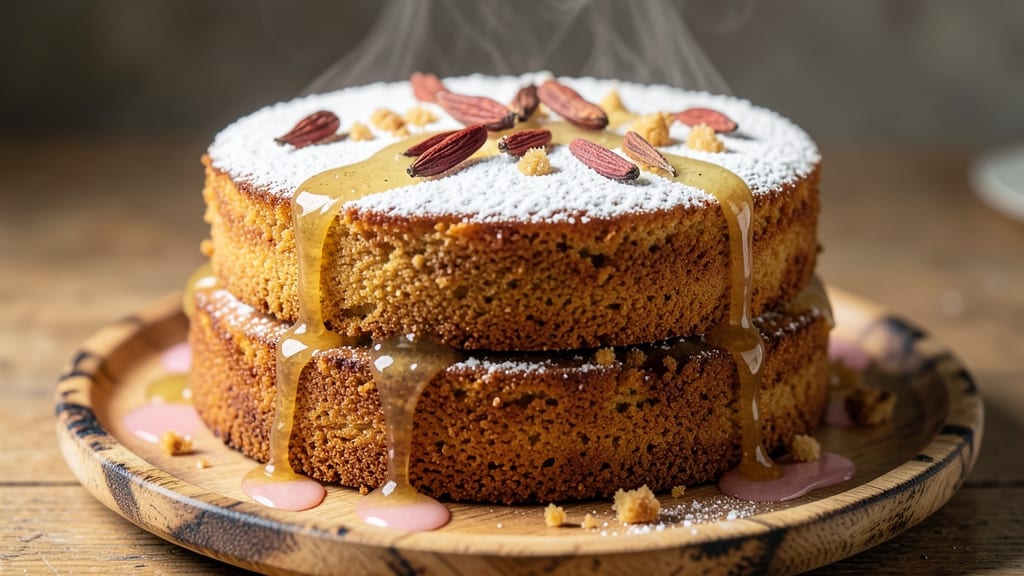
This Arabic semolina cake recipe delivers the fragrant, crumb-free perfection of Middle Eastern tradition—where delicate spices and toasted semolina create a texture unlike any other cake.
The secret lies in blending semolina with butter until it achieves that signature velvety consistency, a technique passed down through generations for celebrations like Eid and weddings. Unlike crumbly semolina desserts, this version bakes into a tender, moist cake with a subtle crunch from the semolina's toasted edges.
What sets this recipe apart is its balance of simplicity and tradition. You'll work with just a few key ingredients—semolina, butter, eggs, and a touch of baking powder—along with warm spices like cardamom and cinnamon that infuse every bite with aromatic depth.
The cake bakes in a round pan, a nod to its cultural roots where it's often served in slices at gatherings, paired with sweetened yogurt or honey. The absence of crumbs makes it uniquely satisfying, with each forkful offering that perfect contrast of softness and gentle texture.
By the time it emerges from the oven, you'll have a cake that's perfectly golden at the edges and tender throughout, with a faintly nutty aroma from the semolina. The spices linger on your palate, creating a dessert that feels both comforting and special.
This isn't just a cake—it's a taste of tradition, a dessert that transports you to the warmth of an Arabic kitchen with every bite. Ready to master this technique?
The beauty of this recipe lies in its versatility. While the classic version stays true to tradition, you can easily adapt it with additions like chopped pistachios, orange blossom water, or even a light citrus glaze.
Whether you're baking for a celebration or simply craving something different, this semolina cake delivers restaurant-quality results with minimal effort. Let's get started on creating your own piece of tradition.
Ingredients for arabic semolina cake
Toasted semolina, warm spices, and tender layers—just eight ingredients for tradition in every bite.
| Ingredient | Amount | Notes |
|---|---|---|
| Fine Semolina Flour 🌾 | 2 ½ cups | Toasted for nutty flavor |
| Unsalted Butter 🧈 | 1 cup | Softened, not melted |
| Large Eggs 🥚 | 4 whole | Room temperature preferred |
| Granulated Sugar 🍚 | 1 ½ cups | White or light brown |
| Ground Cardamom 🌿 | 1 tsp | Freshly ground preferred |
| Ground Cinnamon 🌶️ | ½ tsp | Freshly ground for warmth |
| Baking Powder 🍞 | 1 ½ tsp | Double-acting preferred |
| Vanilla Extract 🌸 | 1 tbsp | Pure vanilla preferred |
| Milk 🥛 | ½ cup | Whole milk for richness |
| Salt 🧂 | ¼ tsp | Fine sea salt preferred |
| Orange Blossom Water 🍊 | 1 tbsp | Optional but traditional |
| Chopped Pistachios 🥜 | ½ cup | For topping, optional |
The semolina is non-negotiable here—Bob's Red Mill or King Arthur brands work best. Toast it in a dry pan until golden and fragrant (about 5 minutes), then cool completely before mixing. Middle Eastern markets often carry pre-toasted semolina, saving you time. For the butter, Plugrá or Land O'Lakes unsalted is ideal—softened but not melted, or the cake won't blend right. Cardamom should smell vibrant; if it's dusty, toast the whole pods briefly before grinding. The pistachios? Trader Joe's unsalted ones are perfect—just chop them roughly for texture.
No cardamom? Allspice at half the amount gives a similar warmth, though it's not traditional. Short on vanilla? Vanilla bean paste adds flecks of surprise. The milk can be swapped for coconut milk for a nutty twist, but whole dairy keeps it authentic. For a citrusy kick, zest of 1 lemon replaces the orange blossom water—just skip the juice. The baking powder is crucial; Aluminum-free ensures no metallic aftertaste. And if you're feeling fancy, rose water at half the orange blossom amount adds floral depth.
This batter keeps for 1 day in the fridge—just whisk before baking. The cake itself? 3 days at room temp in an airtight container, or 1 week refrigerated. Freeze slices wrapped in parchment for 3 months—they thaw in 20 minutes at room temp. For serving, I always dust with powdered sugar and a sprinkle of pistachios. The golden edges? Don't overbake—they'll crisp as it cools.
Why You'll Love This Recipe
- No-Mix Magic: I swear by this recipe—just fold everything together, no beating or overworking. The semolina’s natural grit holds up even when I’m distracted (looking at you, laundry pile).
- Cardamom Kiss: That pinch of ground cardamom? It’s the star. Warm, floral, and just sweet enough—like a cozy hug in cake form. Honestly, it’s the reason I keep making it.
- Breakfast or Dessert: Serve it dusted with powdered sugar for morning coffee or drizzle honey for afternoon tea. My kids ask for it both ways, and I never run out of excuses to bake.
- Pantry Staple Power: Semolina, butter, eggs—these are things I always have. No fancy ingredients, no last-minute grocery runs. Even when I’m broke, this cake still feels special.
Step-by-step instructions for Arabic semolina cake
This cake delivers a moist, crumb-free texture with aromatic spices—here's how to nail it every time.
Toast the Semolina for Nutty Depth
Preheat your oven to 350°F. Spread the 2.5 cups fine semolina flour on a baking sheet in an even layer. Toast for 8-10 minutes, stirring every 2-3 minutes, until it turns a pale golden color and smells toasty. This step develops the nutty flavor that defines authentic Arabic semolina cake.
Let the toasted semolina cool completely before using—warm flour can cook the butter prematurely and make your batter gummy. I like to spread it on a wire rack to cool faster. The toasted flour should still be light in color but noticeably darker than when you started.
Cream Butter and Sugar to Lighten the Mixture
In a stand mixer fitted with the paddle attachment, beat the 1 cup softened unsalted butter and 1.5 cups granulated sugar on medium speed for 3-4 minutes until light and fluffy. You're looking for a color change from pale yellow to nearly white—this incorporates air that will help create the cake's signature tender crumb.
I press down on the butter mixture with a spatula occasionally to check for readiness. When it leaves clean streaks and nearly doubles in volume, it's ready. Don't rush this step—under-creaming leads to dense cake, while over-creaming can develop gluten in the semolina.
Add Eggs and Spices Gradually
Add the 4 whole large eggs, one at a time, mixing on low speed for 30 seconds after each addition. Then add the 1 tbsp vanilla extract, 1 tbsp orange blossom water, 1 tsp ground cardamom, 0.5 tsp ground cinnamon, and 0.25 tsp salt. Mix on low speed just until combined—you should still see some flour streaks.
Here's where the magic happens: the spices dissolve into the butter mixture, creating that signature aromatic flavor. I like to smell the mixture at this point—it should be fragrant with warm cardamom and cinnamon notes. The orange blossom water adds a delicate floral touch that balances the spices perfectly.
Combine Dry Ingredients and Bake
Sift the toasted 2.5 cups fine semolina flour and 1.5 tsp baking powder together into the wet mixture. Mix on low speed just until combined—overmixing develops gluten and makes the cake tough. Then gently fold in the 0.5 cup milk using a spatula until just incorporated.
Pour the batter into a greased and floured 9-inch round cake pan. Sprinkle the 0.5 cup chopped pistachios evenly over the top for texture and visual appeal. Bake at 350°F for 40-45 minutes, or until a toothpick inserted in the center comes out clean.
Cool and Serve for Perfect Texture
Let the cake cool in the pan for 10 minutes, then transfer to a wire rack to cool completely. This gradual cooling prevents cracking. The cake should be moist but firm to the touch when fully cooled—it will hold its shape when sliced.
For serving, slice into wedges and dust with powdered sugar if desired. The cake keeps well at room temperature for 3 days wrapped in plastic, or you can freeze slices for up to 1 month. The flavors actually improve as it sits, with the spices mellowing and blending beautifully.
Pro Tips For Making Arabic Semolina Cake
- Whisk Eggs Like Butter: Beat the eggs and sugar together until they’re pale, thick, and tripled in volume—about 5-7 minutes with an electric mixer. I used to rush this, and the cake turned dense. Trust me, the extra effort makes it light as a cloud.
- Toast the Semolina: Dry-toast the fine semolina in a pan over medium-low heat for 3-4 minutes, stirring constantly, until it smells nutty and golden. Skipping this step means a bland, gummy texture—your cake needs that toasted depth.
- Don’t Overmix the Batter: Fold the butter and semolina into the egg mixture just until combined—lumps are fine. Overworking it activates the gluten, and your cake will turn tough instead of tender. Stop when it looks like thick pancake batter.
- Chill Before Baking: Let the batter sit in the pan, uncovered, in the fridge for 20-30 minutes before baking. This prevents cracking and helps the edges set properly. I learned this after watching my first batch sink in the middle.
Regional styles of these flavors
Levantine Crumb-Free Style
In Lebanon and Syria, this cake is known as Ka'ak and is traditionally baked in a round, slightly domed shape—almost like a cross between a cake and a flatbread. The key difference?
A pinch of saffron threads (about ½ tsp) steeped in the milk for 10 minutes before using, which adds a golden hue and floral depth. Serve it with rose syrup drizzled over the top for extra elegance. 🌸
Gulf-Inspired Date Paste Version
The United Arab Emirates and Oman often incorporate date paste into the batter, replacing half the sugar. Use ½ cup date paste (like Al Wadi brand) mixed with ½ cup milk to create a thick filling.
Spread this mixture over the batter before baking, then sprinkle with toasted sesame seeds for crunch. This version is richer and more intense, perfect for Ramadan gatherings.
North African Orange Blossom Twist
In Morocco and Tunisia, the cake is often infused with orange blossom water (which we include) but also topped with a glaze made from ½ cup powdered sugar and 1 tbsp orange blossom water.
Brush this over the cooled cake for a sticky, fragrant finish. For extra flair, add edible silver leaf on top—it’s a showstopper at celebrations like weddings and Eid. 🍊
Yemeni Spiced Variation
Yemen takes this cake to another level by adding ground cloves (about ¼ tsp) and black cardamom (crushed pods, ½ tsp) to the spice mix. The result?
A deeper, almost smoky warmth that pairs beautifully with honeycomb served on the side. For texture, fold in chopped almonds (½ cup) instead of pistachios—they toast beautifully during baking.
Modern Fusion Adaptations
For a contemporary twist, try adding 1 tbsp matcha powder to the batter for a vibrant green hue and earthy notes. Or swap the pistachios for crushed hazelnuts and drizzle with dark chocolate ganache after baking.
These adaptations keep the traditional technique while making the cake feel fresh and exciting for modern palates. 💫
Nutrition facts
Frequently asked questions
Why does this Arabic semolina cake have no crumbs?
The secret lies in the semolina's texture and proper mixing technique. Toasting the semolina first removes moisture and prevents crumbling, while creaming the butter and sugar properly creates a tender, cohesive structure. The key is mixing just until combined—overmixing develops gluten in the semolina, which would create crumbs. The warm spices also help bind the ingredients together for that signature smooth texture.
Can I substitute semolina with another flour?
While you can use all-purpose flour, the texture will be completely different—more like a traditional cake rather than the signature crumb-free semolina cake. For a closer substitute, try a 50/50 blend of all-purpose flour and cornmeal, but the nutty flavor will be less pronounced. The toasted semolina gives this cake its unique character, so if possible, stick with the real thing for that authentic experience.
How do I know when the cake is fully baked?
Look for three key signs: the edges should be golden brown, the center should spring back when gently pressed, and a toothpick inserted should come out clean (with just a few moist crumbs, not wet batter). The cake will continue to set as it cools, so don't overbake—pull it out when it's just slightly underdone. This ensures that slice remains moist and tender rather than dry.
What's the best way to serve this cake?
Traditionally, this cake is served at room temperature, often dusted with powdered sugar and garnished with chopped pistachios or toasted nuts. For extra elegance, drizzle with orange blossom syrup or rose water. It pairs beautifully with Arabic coffee or mint tea. The cake's moist texture makes it perfect for slicing into wedges—each bite should reveal that perfect balance of tender crumb and nutty semolina flavor.
Can I make this cake dairy-free?
Yes, but with some adjustments. Replace the butter with an equal amount of coconut oil (melted and cooled slightly) and use dairy-free milk (like almond or oat milk). For richness, add 2 tablespoons of neutral oil to the batter. The texture will be slightly different but still delicious. Just be sure to toast the semolina thoroughly—this helps compensate for the lack of butter's fat content and keeps the cake moist.