
Desserts
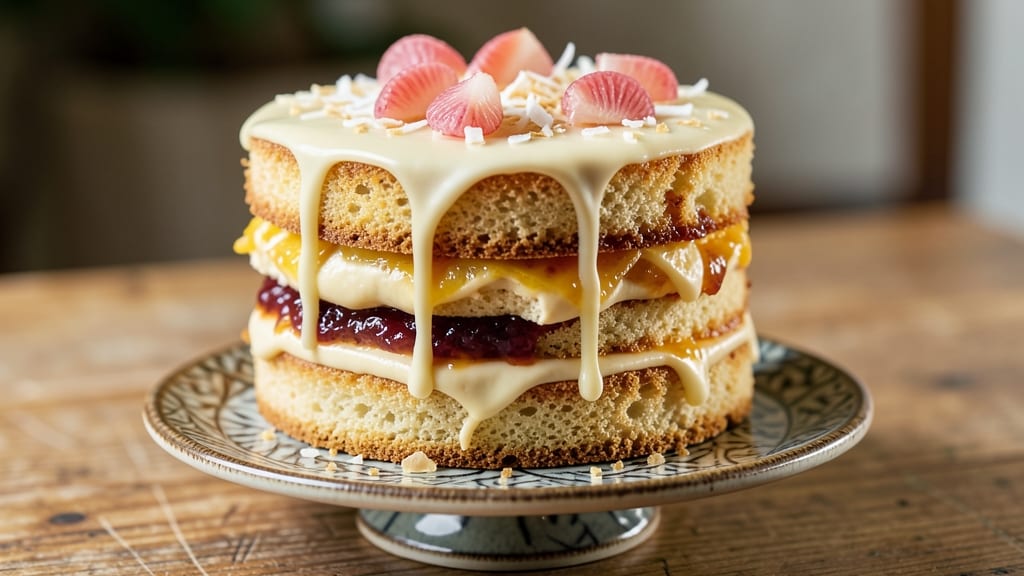
This Asian sponge fruit cake recipe transforms your kitchen into a tropical paradise with layers of delicate sponge, vibrant fruit, and a zesty citrus glaze. 🌺 The secret lies in a light, airy sponge that absorbs tropical flavors—think mango, pineapple, and a hint of lime—while the glaze adds a bright, tangy finish that cuts through the richness.
I developed this recipe after years of experimenting with Asian baking techniques, balancing traditional methods with modern convenience for home cooks.
The cake features a three-layer structure: a buttery sponge base, a middle layer of fruit compote, and a final citrus-infused glaze that ties everything together. The sponge is baked just until golden, ensuring it stays tender, while the fruit layer adds natural sweetness and moisture.
This isn’t your average fruit cake—it’s a celebration of texture and flavor, where each bite delivers a harmonious blend of spongy, juicy, and citrusy notes.
What makes this recipe stand out is its versatility. You can customize the fruit layer with your favorite tropical fruits—lychee, passionfruit, or even a touch of matcha for depth. The glaze, infused with lime zest and a splash of orange juice, adds a professional touch without complicating the process.
Perfect for gatherings, holidays, or a special treat, this cake is designed to impress with minimal fuss.
Once baked, let the cake cool before applying the glaze, ensuring it sets beautifully for clean slices. Serve at room temperature with a cup of Earl Grey tea or chilled coconut milk for the full experience.
The result? A showstopping dessert that’s as delicious as it is visually stunning. Ready to bake?
Ingredients for asian sponge fruit cake
Twelve ingredients for a showstopping cake that balances delicate sponge, tropical fruit, and citrus glaze.
| Ingredient | Amount | Notes |
|---|---|---|
| All-Purpose Flour 🌾 | 3 cups | Sifted for lightness, plus extra for dusting |
| Unsalted Butter 🧈 | 1 ½ cups | Cold, cubed, European-style preferred |
| Granulated Sugar 🍚 | 2 cups | Superfine for smoother texture |
| Large Eggs 🥚 | 6 whole | Room temperature, separated |
| Baking Powder 🧂 | 1 ½ tsp | Diamond Crystal preferred |
| Salt 🧂 | ½ tsp | Fine sea salt |
| Vanilla Extract 🌿 | 1 tbsp | Pure Madagascar bourbon |
| Ripe Mangoes 🥭 | 3 whole | Peeled, seeded, diced (about 2 cups) |
| Fresh Pineapple 🍍 | 1 ½ cups | Diced, juices reserved |
| Lime Zest 🍋 | 1 tbsp | Finely grated, organic preferred |
| Orange Juice 🍊 | ½ cup | Freshly squeezed, no pulp |
| Powdered Sugar 🍚 | 2 cups | For glaze, sifted |
| Cornstarch 🌾 | 1 tbsp | For glaze stability |
The butter and eggs are non-negotiable for that signature Asian sponge texture. European-style butter has higher fat content, which creates a richer, more tender crumb. For the fruit layer, ripe mangoes and fresh pineapple are essential—they should be sweet but not mushy. I always grab organic limes from the produce section at Whole Foods for the zest, as their skins are thicker and more aromatic. The vanilla extract? Madagascar bourbon has deeper flavor notes than imitation, and a little goes a long way here. If you're short on time, frozen mango chunks work in a pinch, but fresh is ideal for that vibrant color and natural sweetness.
No fresh pineapple? Canned pineapple juice reduced by half mimics the texture, though it lacks the fresh fruit's brightness. Substituting mango with peaches or passionfruit changes the flavor profile but keeps the tropical theme. For the glaze, if you can't find powdered sugar, superfine sugar blended with cornstarch works just as well. The citrus zest is where the magic happens—if you're out of limes, lemon zest at double the amount gives a similar tang. And if you're feeling adventurous, swap the orange juice for lychee juice or passionfruit pulp for a more exotic twist. Just remember: the glaze should coat the back of a spoon but remain pourable.
This cake is best made a day ahead—the flavors meld beautifully overnight. Store the assembled cake in an airtight container at room temperature for up to 3 days, or freeze the layers separately for up to 2 months. The glaze sets best at room temperature, so avoid refrigerating the cake until just before serving. For presentation, dust with matcha powder or toasted coconut flakes right before slicing. Trust me, the first slice is always the best—save a small piece for later, but don't blame me if you eat the whole cake in one sitting.
Why You'll Love This Recipe
- No-Fuss Mixing: I swear by the creamy butter-egg batter—just fold in flour and baking powder until just combined. No overworking, no guesswork, and that signature light sponge texture happens every time. (Yes, even if I rush.)
- Sweet & Spiced Magic: The sugar caramelizes into a subtle crunch on top while keeping the inside tender—like a cross between a buttery pound cake and a fragrant Asian tea cake. Honestly, the aroma alone makes my kitchen smell like a bakery.
- Weekend or Weeknight: Slice it for breakfast with tea, pack it for lunch, or serve it at gatherings—it’s that adaptable. I’ve even used leftover cubes in milkshakes (don’t judge).
- Budget Bakery Trick: Butter and eggs make it feel special, but the ingredient list is shockingly affordable. A single batch stretches into days of snacks, and the leftovers? They disappear faster than I can reheat them.
Step-by-step instructions for tropical fruit cake with citrus glaze
Here's how to build layers of light sponge and vibrant tropical fruit for a cake that's as beautiful as it is delicious.
👨🍳 Step 1: Prepare the Tropical Fruit Filling
In a medium bowl, combine the 2 cups diced mango and 1.5 cups diced pineapple with the 0.5 cup orange juice and 1 tbsp lime zest. Toss gently to coat the fruit evenly. Let the mixture sit for 10 minutes while you prepare the cake batter—this allows the flavors to meld and the juices to soften slightly.
Here's the thing—don't skip the zest. That bright citrus flavor cuts through the sweetness and adds that signature Asian twist. I like to use a fine grater for the lime zest to avoid any bitter pith. Once prepped, cover the fruit mixture and refrigerate until ready to use. The colder filling will help keep the sponge layers moist during baking.
🍳 Step 2: Bake the Sponge Layers
Preheat your oven to 350°F and grease three 6-inch round cake pans with butter, then dust with flour. In a stand mixer fitted with the paddle attachment, beat the 1.5 cups cold cubed butter and 2 cups granulated sugar on medium speed for 3-4 minutes until light and fluffy. Scrape down the sides as needed.
Add the 6 whole room-temperature eggs one at a time, mixing just until each is incorporated. In a separate bowl, whisk together the 3 cups sifted all-purpose flour, 1.5 tsp baking powder, and 0.5 tsp salt. Gradually add the dry ingredients to the butter mixture in three additions, mixing on low speed just until combined. Fold in the 1 tbsp vanilla extract by hand.
Divide the batter evenly among the prepared pans. Bake for 20-25 minutes or until a toothpick inserted in the center comes out clean. The edges should be just set while the centers remain slightly springy—overbaking leads to dry sponge. Let the layers cool in their pans for 5 minutes, then transfer to a wire rack to cool completely.
🥘 Step 3: Assemble the Cake Layers
Once all layers are completely cool, level the tops if needed using a serrated knife. Place the first layer on a cake stand or plate. Spread half of the reserved fruit mixture evenly over the top, leaving a ½-inch border around the edges. This prevents the filling from oozing out during assembly.
Drizzle 2 tablespoons orange juice over the fruit to help it adhere to the next layer. Place the second layer on top, then repeat with the remaining fruit mixture and juice. Top with the final layer. Here's where it gets fun—press down gently on each layer to ensure good contact. This creates a solid base for the glaze and prevents shifting when you slice.
🍽️ Step 4: Make and Apply the Citrus-Zing Glaze
In a medium bowl, whisk together the 2 cups powdered sugar and 1 tbsp cornstarch. Slowly add 3-4 tablespoons orange juice (from the reserved pineapple juice) while whisking until smooth. The glaze should be thick enough to coat the back of a spoon but still drizzle easily. If it's too thick, add more juice 1 teaspoon at a time.
Immediately pour the glaze over the assembled cake and spread it evenly using an offset spatula. Work quickly—the glaze sets fast. For extra shine, I like to dip the spatula in warm water between applications. Let the glaze set for 10 minutes before slicing. This resting time allows the glaze to firm up slightly, making clean cuts easier.
⏰ Step 5: Rest and Serve
Cover the cake loosely with plastic wrap and refrigerate for at least 2 hours (or up to 24 hours) before serving. This chilling time lets the flavors meld and the glaze set properly. When ready to serve, slice with a warm, clean knife to get those perfect, clean cuts.
Each slice should reveal layers of moist sponge, vibrant fruit, and glossy glaze. The texture contrast—light sponge, juicy fruit, and silky glaze—is what makes this cake truly special. Serve at room temperature for the best experience, and pair with a cup of strong chai or fresh lychee tea for a complete tropical experience.
Pro Tips For Making Asian Sponge Fruit Cake
- Whip Eggs to Stiff Peaks: Don’t stop at soft peaks—keep beating those eggs until they hold a sharp peak when you lift the whisk. I learned this the hard way when my cake collapsed like a sad soufflé. For this recipe, stiff peaks mean a light, airy texture that actually holds up to the fruit’s weight.
- Use Room-Temp Butter: Cold butter makes tough cakes, and this one’s no exception. Let that butter sit out for 30-45 minutes until it’s soft but not melted—press your finger in and it should leave a slight dent. I was skeptical until I tried it; the crumb became noticeably richer and more tender.
- Fold Dry Ingredients Gently: Dump the flour and baking powder all at once? Bad idea. Sift them first, then fold in with a spatula using a J-shaped motion—just enough to combine without deflating the batter. I used to overmix, and my cakes turned dense. This keeps the air in, which is the whole point of a sponge.
- Bake at 325°F (Not Higher): Your oven runs hot, and this cake needs patience. Bake at 325°F (163°C) for the full time—no rushing. I burned my first attempt by cranking it to 350°F, and the outside was dry before the center set. The lower temp guarantees even baking without a gummy middle.
Perfect pairings for this dish
Tea Pairings
Earl Grey tea is my go-to pairing for this cake—its bergamot notes complement the citrus glaze beautifully. Brew a strong cup using 2 teaspoons loose-leaf tea per 8 ounces of hot water, steeping for 4-5 minutes.
The floral aroma enhances the tropical fruit flavors without overpowering them. For a bolder match, try jasmine green tea—its delicate floral notes harmonize with the cake's vanilla and citrus. 🍵
Coffee Contrasts
If you prefer coffee, a light roast Vietnamese drip coffee with a splash of condensed milk creates a delightful contrast. The natural sweetness of the coffee balances the cake's acidity, while the bold roast adds depth.
I recommend brewing 1.5 tablespoons of coffee per 6 ounces of water and serving it slightly sweetened. For an Asian-inspired twist, try a matcha latte with oat milk—its earthy notes pair surprisingly well with the tropical fruit. ☕
Tropical Drink Pairings
For a refreshing summer pairing, serve the cake with lychee tea or a pineapple-mango smoothie. Lychee tea (brewed from dried lychee fruit) mirrors the cake's tropical theme, while the smoothie's vibrant flavors echo the fruit layers.
To make the smoothie, blend 1 cup frozen mango, ½ cup frozen pineapple, ½ cup coconut water, and ½ cup ice—it’s the perfect palate cleanser between bites. 🥥
Alcoholic Pairings
A chilled glass of sparkling lychee wine (like those from China) adds an elegant touch to your dessert spread. The effervescence cuts through the cake's richness, while the lychee flavor enhances the tropical theme.
For something stronger, a rum-infused orange juice cocktail (mix 2 oz dark rum with 6 oz fresh orange juice and a splash of lime) complements the citrus glaze beautifully. 🍹
Non-Alcoholic Mocktails
For a kid-friendly or alcohol-free option, mix ½ cup coconut milk, ½ cup pineapple juice, and 1 tbsp lime juice in a shaker with ice. Strain into a glass and garnish with a lime wheel.
The creamy coconut balances the cake's sweetness, while the tart lime ties back to the glaze. This drink is especially refreshing when served chilled. 🍹
Nutrition facts
Frequently asked questions
Can I substitute fresh tropical fruits with canned or frozen options?
Yes, but with some adjustments. For mango, frozen chunks work well—just thaw and drain excess liquid first. With canned pineapple, use 1 cup drained pineapple plus 2 tablespoons reserved juice to replace the fresh version. The texture will be slightly softer, but the flavor remains bright. For a more authentic texture, blend frozen fruit into a smooth puree before using.
Why does my sponge cake turn out dense instead of light and airy?
Overmixing the batter or using warm eggs/butter are the most common culprits. Always use cold cubed butter and room-temperature eggs, and mix just until combined. Another tip: don't overfill the pans—fill them only ⅔ full to allow proper rising. Finally, check your baking powder—old baking powder loses its lift.
How do I store leftover cake to keep it fresh?
Store the cake in an airtight container at room temperature for up to 3 days. For longer storage, wrap each layer individually in plastic wrap and freeze for up to 2 months. Thaw overnight in the fridge before reassembling. The glaze will soften slightly when thawed, so let it sit at room temperature for 30 minutes before serving.
Can I make this cake gluten-free or vegan?
For a gluten-free version, substitute the all-purpose flour with a 1:1 gluten-free baking flour blend (like Bob's Red Mill) and add ½ teaspoon xanthan gum. For vegan, replace the butter with 1.5 cups vegan butter or coconut oil and use flax eggs (1 tbsp ground flaxseed + 3 tbsp water per egg). The texture may be slightly denser, but the tropical flavors will still shine.
What's the best way to level my cake layers for even slices?
Use a serrated knife and a leveling guide (like a cake leveler or even a glass jar). Place the cake on the guide and gently press down with the knife at a slight angle. For extra precision, dip the knife in hot water between cuts—it stays sharper longer. Always level layers before assembling to ensure even glaze distribution.